Why does sauerkraut turn sour instead of rotting?
A jar of cabbage is a microbial relay race, and each team of bacteria acidifies the jar for the next.
▶ Start the storySauerkraut sours instead of rotting because its makers hand the cabbage over to one particular crowd of microbes, and those microbes poison the rest. Shred cabbage, layer it with salt and shut out the air: the lactic acid bacteria that already live on the leaves thrive in salty, oxygen-poor conditions, eat the cabbage's sugars and turn them into lactic acid. That acid is both the sour taste and the preservative. Properly cured sauerkraut is acidic enough that even Clostridium botulinum, the cause of botulism, can't grow.
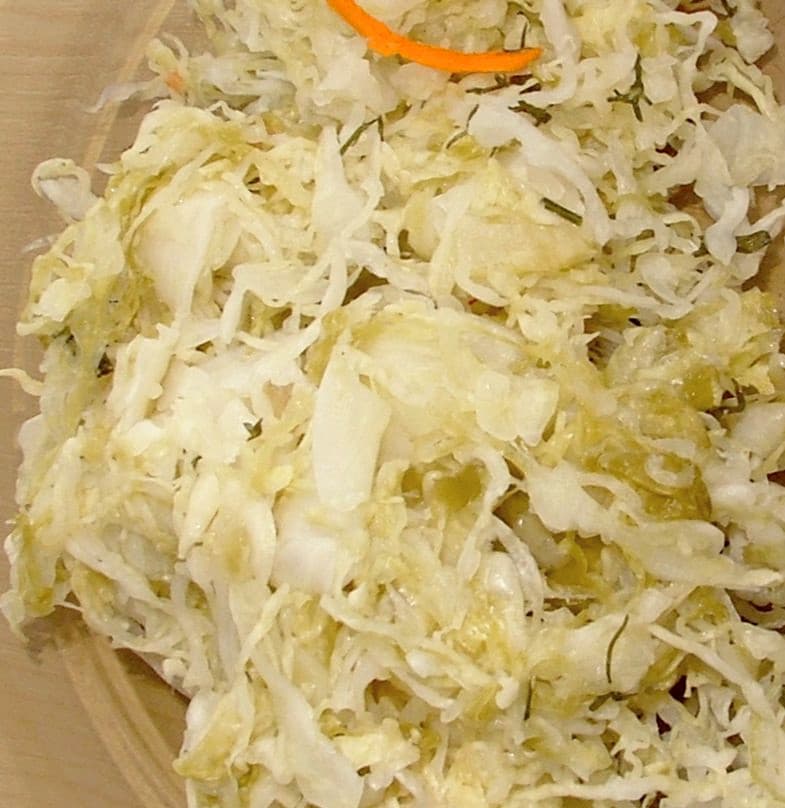
What makes it fascinating is that it is a relay, not a single act. First, bacteria such as Klebsiella and Enterobacter start the job and make the jar slightly acidic. That acidity favours the next team, Leuconostoc, which takes over once the acid is too much for many other bacteria. Finally Lactobacillus species finish off the leftover sugars and push the acidity even higher. Each wave prepares the ground for the one that replaces it.
The same chemistry sours yogurt and sourdough bread, and it also runs inside your own muscle cells. Its discovery was a fight: in 1857 Louis Pasteur showed that lactic acid is made by living microbes, which the chemist Justus von Liebig refused to accept. Long before anyone understood it, sailors relied on it: Captain James Cook carried sauerkraut on his voyages to prevent scurvy.
Quiz me
0/3
Recap
Salt picks the team, the bacteria make the acid, and the acid guards the jar.
Surprising fact · Pasteur discovered microbial lactic fermentation in 1857 while helping a distillery in Lille, and the chemist Liebig refused to believe him.
Connects to
Sources (3)
No source, no claim. Every fact in this lesson (25 claims) cites at least one of these.