Why can sugar turn into alcohol without a single living cell?
Louis Pasteur was sure fermentation needed living yeast. In 1897 a chemist ground dry yeast with quartz in a pestle and mortar, and the juice still turned sugar into alcohol.
▶ Start the storyBecause the work is done by a molecule, not by life itself: an enzyme. An enzyme is a biological macromolecule, usually a protein, that acts as a catalyst, speeding up a chemical reaction without being used up. In 1897 the chemist Eduard Buchner showed that yeast's fermenting power survives even when no yeast cell is left alive.
Louis Pasteur had thought otherwise. Studying how yeast turns sugar into alcohol, he concluded fermentation was caused by a vital force inside living yeast cells, "ferments" thought to work only within living organisms. He wrote that fermentation was tied to the life of the yeast cells, not their death.
Buchner put that to the test. He combined dry yeast with quartz and kieselguhr and pulverized it with a pestle and mortar, producing a cell-free extract. In a series of experiments at the University of Berlin, he found that sugar was fermented by such yeast extracts even when there were no living yeast cells in the mixture. He named the responsible enzyme "zymase", and in 1907 he won the Nobel Prize in Chemistry for his discovery of cell-free fermentation.
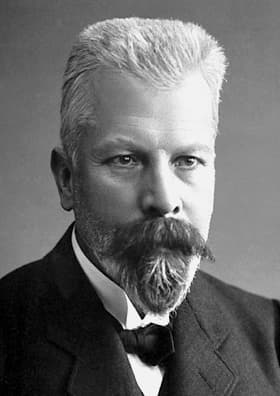
That discovery helped reframe what an enzyme is: not a spark of life, but a molecule with a job. Enzymes are known to catalyze over 5,000 types of biochemical reactions, and they work by lowering the energy a reaction needs to get started, often by factors of millions. One enzyme, orotidine 5′-phosphate decarboxylase, speeds up a reaction that would otherwise take millions of years so that it happens in milliseconds. Their high specificity comes from their three-dimensional shape, which fits the molecule they act on, an idea first pictured as a lock and its key.
Quiz me
0/3
Recap
It's the molecule's shape doing the work, not the "life" of the cell it came from.
Surprising fact · Cell-free yeast extract, with no living cells left, still ferments sugar, the discovery that won Eduard Buchner the 1907 Nobel Prize.
Connects to
- 🧬 Why do nine amino acids have to come from your food?
- 🐟 How can lime juice 'cook' raw fish without any heat?
- 🏃 Why do your muscles keep working when you can't breathe fast enough?
- 🧼 Why did doctors once refuse to believe that washing their hands saved lives?
- 🥬 Why does sauerkraut turn sour instead of rotting?
Sources (2)
No source, no claim. Every fact in this lesson (19 claims) cites at least one of these.