Why does bread rise?
Every fluffy loaf is inflated by microscopic living cells breathing out gas into a stretchy protein balloon.
▶ Start the storyBread rises because living yeast inside the dough eats sugars and breathes out gas. Baker's yeast is a single-celled microorganism that converts the fermentable sugars in dough into carbon dioxide and ethanol. On its own, that gas would simply escape. What holds it in is gluten, an elastic network of wheat proteins that forms when flour meets water and is kneaded. The carbon dioxide bubbles get trapped in that stretchy mesh, and the whole dough puffs up like thousands of tiny balloons. In the oven, the gluten sets and, together with the starch, locks the bubbles in place: that is the airy crumb you see when you slice a loaf.
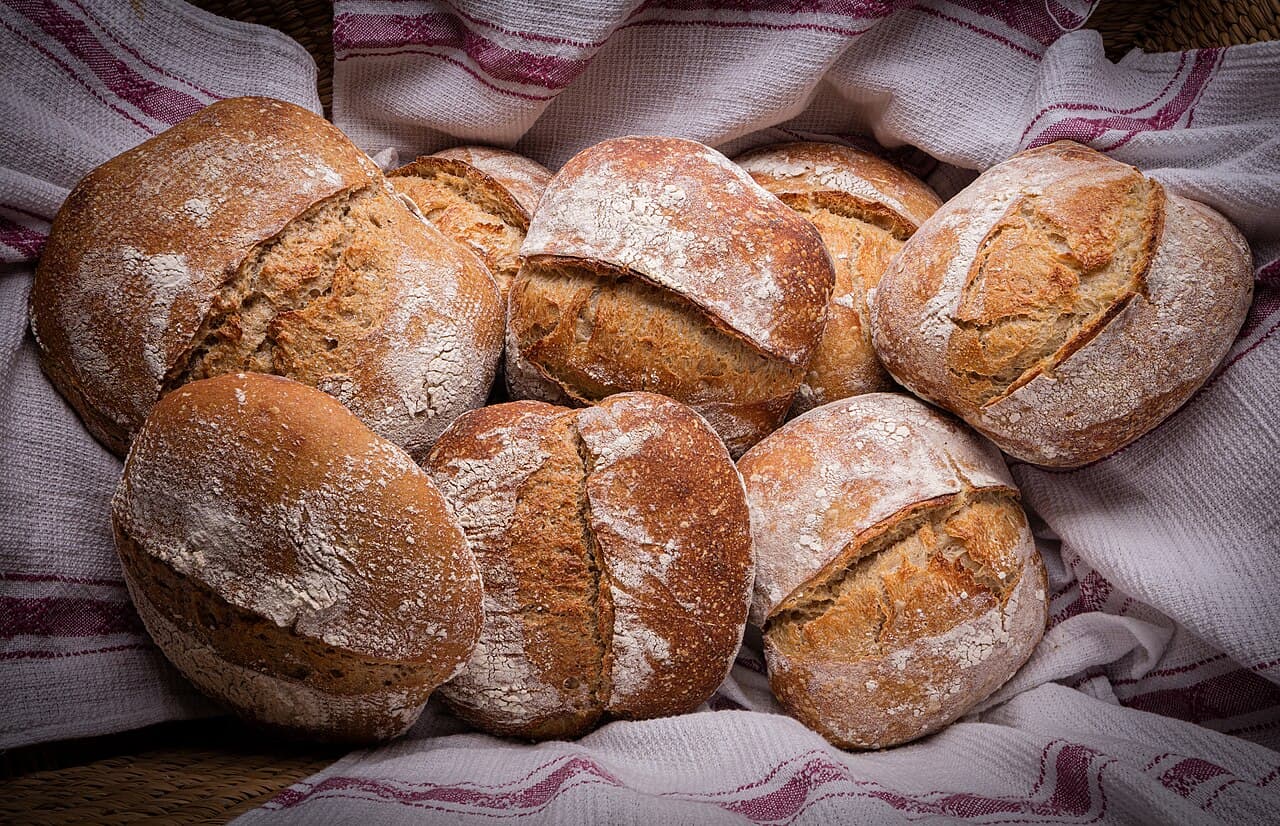
The yeast in your bread is the same species as the yeast that makes beer, only a different strain. Humans probably stumbled on it by accident. The earliest definite records of yeast bread come from ancient Egypt, and researchers think a mix of flour and water was left out on a warm day until wild yeasts in the flour started fermenting it.
For most of history, bread rose thanks to sourdough, a living culture passed from batch to batch. Gold miners in the Klondike guarded their pouches of starter so fiercely that old-timers were nicknamed 'sourdoughs'.
Quiz me
0/3
Recap
Yeast makes the gas, gluten holds it, and the oven locks the bubbles in place.
Surprising fact · Packaged baker's yeast is less than 150 years old; before that, bread rose with sourdough starters passed from batch to batch.
Sources (4)
No source, no claim. Every fact in this lesson (16 claims) cites at least one of these.