What is gluten, and who first washed it out of flour?
Chinese cooks were turning wheat dough into a stretchy meat substitute more than a thousand years before a European treatise described how to wash gluten out of flour.
▶ Start the storyGluten is the stretchy protein network that forms in wheat dough, built mainly from two proteins, glutenin and gliadin, and the oldest records of people pulling it out of flour to eat on its own come from China, not from European laboratories. Gluten makes up 75 to 85 percent of the protein in bread wheat, and it also shows up in barley, rye, and some oats.
What actually happens during kneading is a kind of molecular construction project: glutenin molecules link up with each other through chemical bonds to form a microscopic network, and gliadin attaches to that network to add thickness and stretch. The longer you knead, the more of these links form, which is why a well-kneaded bread dough turns chewy instead of crumbly.
Long before any of this was understood chemically, people in China had already worked out how to separate gluten from the rest of the flour. Wheat gluten, called miànjīn or "wheat tendon", appears in a Chinese agricultural encyclopedia written in 535, and it is believed to have begun as a meat substitute for Buddhists, particularly Mahayana monks who are strict vegetarians. Gluten only reached the West many centuries later: an Italian treatise on wheat from 1728 described washing wheat dough in water to extract the gluten, leaving the starch behind, the same basic method still used today.
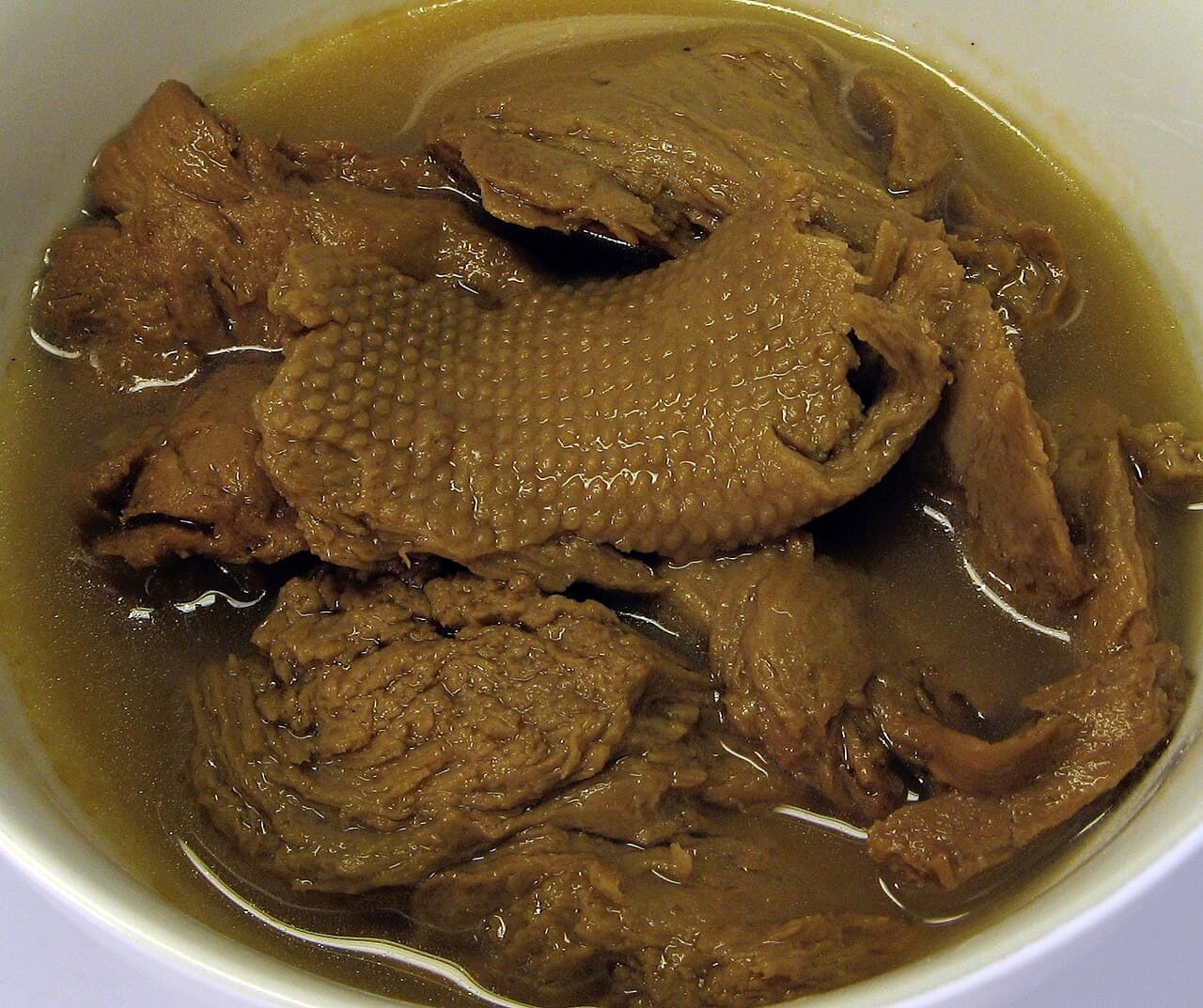
The name most people know this product by now, seitan, is much newer still. It was coined in 1961 by a Japanese macrobiotic food advocate, sold commercially in Japan the following year, and only reached Western shelves under that name in 1969, nearly a millennium and a half after Chinese cooks first figured out how to make it.
Quiz me
0/3
Recap
Kneading wheat dough in water and washing away the starch leaves behind pure gluten, a technique used in China for over a thousand years before reaching the West in 1728.
Surprising fact · The oldest known record of extracted wheat gluten comes from a Chinese encyclopedia written in 535, while the now-common name 'seitan' was only coined in 1961.
Sources (2)
No source, no claim. Every fact in this lesson (13 claims) cites at least one of these.