How did people keep meat edible for months before refrigerators existed?
Some fourteen thousand years before the first fridge hummed to life, people were already drying food to make it last.
▶ Start the storyLong before anyone could keep food cold, people had already worked out how to keep it from spoiling at all, by taking away the one thing spoilage microorganisms need most: water. The earliest and simplest method was plain drying, air, sun or wind pulling moisture out of meat or fish until there was too little water left for bacteria to multiply, and the earliest known practice dates back to 12,000 BC, in what is now Asia and the Middle East, some fourteen thousand years ago.
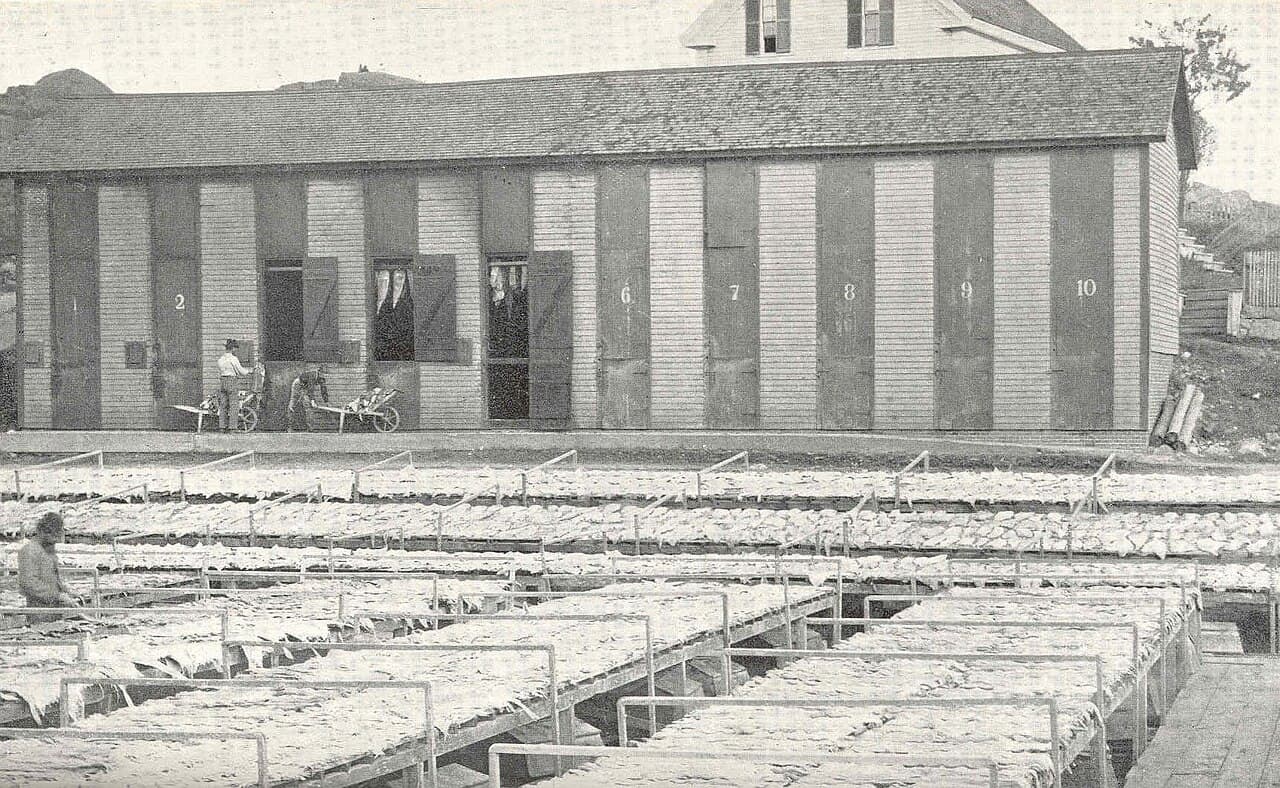
Salt made the same idea more effective. Rubbed into meat or fish, salt pulls water out through osmosis even faster than air alone, while also making conditions actively hostile to common spoilage bacteria. Smoking added a further layer of protection on top of drying, since the smoke itself deposits antimicrobial compounds onto the food's surface as it dries. None of this is risk-free: in 2015, the World Health Organization's cancer research agency classified meat that has been salted, cured and smoked as carcinogenic to humans, a reminder that these ancient preservation methods trade one danger, bacteria, for another, slower one.
People also discovered that some microorganisms could be turned into allies rather than enemies. Fermentation, used to make foods like cheese, wine and beer, works by deliberately cultivating microorganisms that produce acid or alcohol, substances that eventually become too hostile even for the microorganisms that made them, let alone for the harmful bacteria that cause spoilage. Simplest of all was burial: packed into cool, dark, oxygen-poor soil, sometimes salted or fermented first, food could be kept edible using nothing more than a hole in the ground.
Quiz me
0/3
Recap
Removing water, through drying, salting, or smoking, is the oldest trick in food preservation, because spoilage microorganisms can't multiply without it.
Surprising fact · Drying meat to preserve it dates back to at least 12,000 BC, long before any form of mechanical refrigeration existed.
Sources (1)
No source, no claim. Every fact in this lesson (10 claims) cites at least one of these.