Why did a wine problem end up saving the world's milk supply?
Louis Pasteur wasn't trying to protect milk. He was trying to stop French wine from turning sour, and the gentle heating he found ended up making milk safer.
▶ Start the storyBecause the trick Louis Pasteur found for wine was gentle enough to use on other liquids. During a summer holiday in Arbois in 1864, he was trying to stop the local aged wines from turning acidic. He found that heating a young wine to only about 50–60 °C for a short time killed the microbes responsible, and the wine could still age without losing quality. Pasteurization was first used to keep wine and beer from souring; it was many years before anyone pasteurized milk.
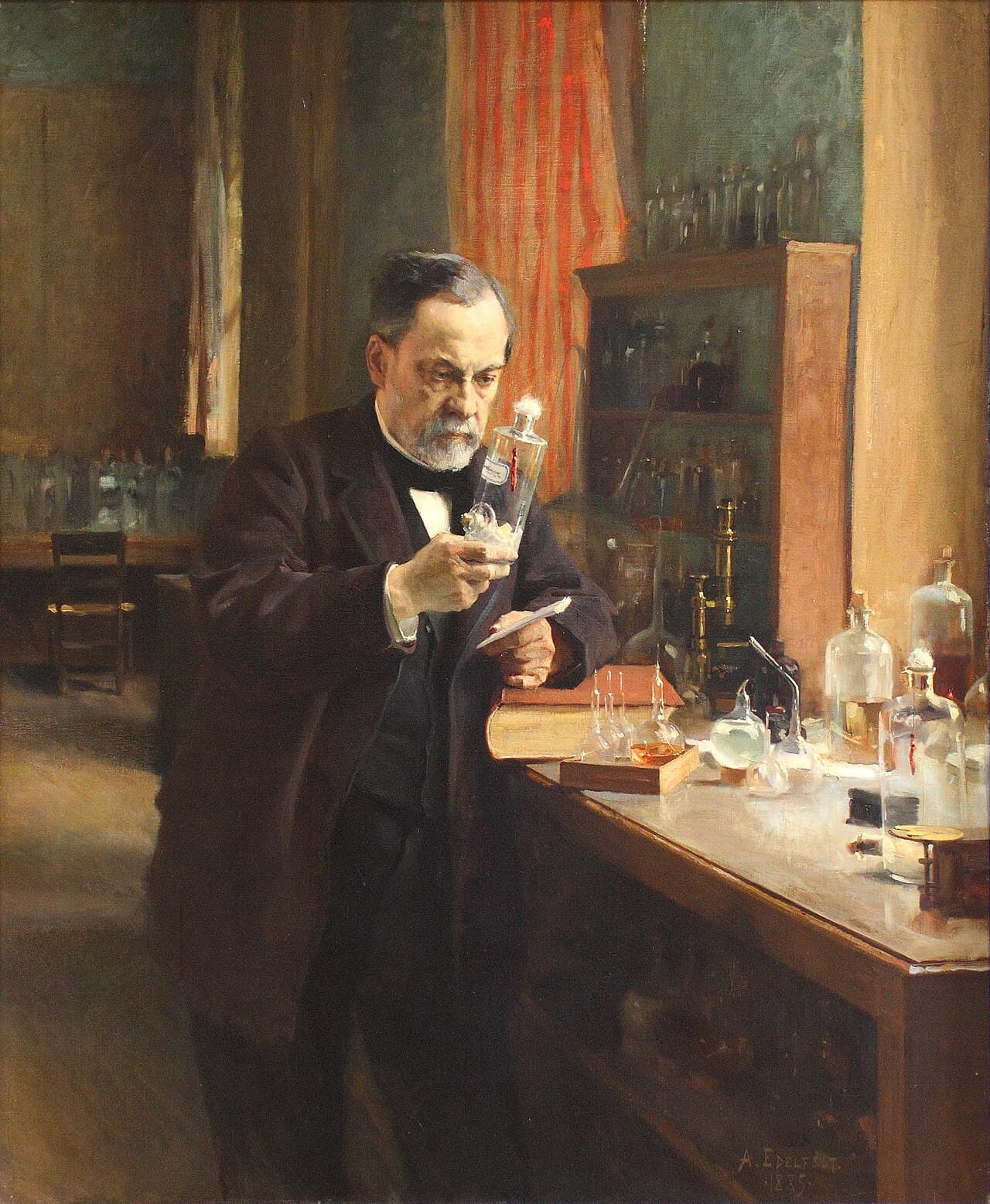
The underlying idea wasn't entirely new. Heating wine to preserve it had already been practiced in China since the year 1117, and Japanese monks documented the same trick between 1478 and 1618. Nearly a century before Pasteur, the Italian priest and scientist Lazzaro Spallanzani had even proven, in 1768, that boiling meat broth for an hour and sealing it immediately kept it free of microorganisms. What Pasteur added was the demonstration that heat worked by deactivating microbes, and a temperature low enough not to spoil the wine.
Milk needed it badly. As cities grew and milk travelled further from farm to town, raw milk, often days old, became recognized as a source of disease: between 1912 and 1937, some 65,000 people in England and Wales died of tuberculosis caught from milk. Franz von Soxhlet had suggested pasteurizing milk in 1886. Because the heat is mild, usually under 100 °C, it destroys or deactivates most disease-causing microbes and spoilage enzymes while changing nutrition and flavour only slightly. It isn't sterilization, though: most bacterial spores survive and not every spoilage organism is destroyed, which is why pasteurized milk still goes in the fridge.
Quiz me
0/3
Recap
Pasteurization was invented to rescue wine from spoiling, then went on to make the world's milk supply safe.
Surprising fact · Heating liquids to preserve them was already known in China since 1117 and in Japan by the 15th century, long before Pasteur explained why it worked.
Connects to
Sources (1)
No source, no claim. Every fact in this lesson (11 claims) cites at least one of these.