Why do old Technicolor films look more colourful than real life?
The colours of The Wizard of Oz weren't photographed so much as printed, with dyes, like a magazine page.
▶ Start the storyBecause classic Technicolor wasn't really colour photography as we know it. The camera split the light into three parts and recorded each on its own strip of black-and-white film. The prints were then made almost like a magazine page: each strip became a printing plate soaked in its own dye, cyan, magenta or yellow, and the three dyes were transferred one after another onto the final film. The result became famous for its highly saturated colour, and those printed dyes were more stable than the colours in ordinary film prints.
The inventors started small. The company's founders, Herbert Kalmus and Daniel Comstock, had studied at MIT, the 'Tech' in Technicolor, and their first system, in 1916, could only record red and green. The full three-strip process arrived in the early 1930s. Walt Disney tried it first in the cartoon Flowers and Trees in 1932, which won the first ever Oscar for an animated short, and the first live-action feature shot entirely in it, Becky Sharp, followed in 1935.
That look came at a price. The film was extremely slow, so sets needed blinding light: on The Wizard of Oz, the studio lamps reportedly often pushed temperatures past 38 °C. Studios couldn't even buy the cameras, only rent them, along with a colour supervisor who policed the sets, costumes and makeup. Often it was Natalie Kalmus, ex-wife of the company's boss, and the director Vincente Minnelli complained he couldn't do anything right in her eyes.
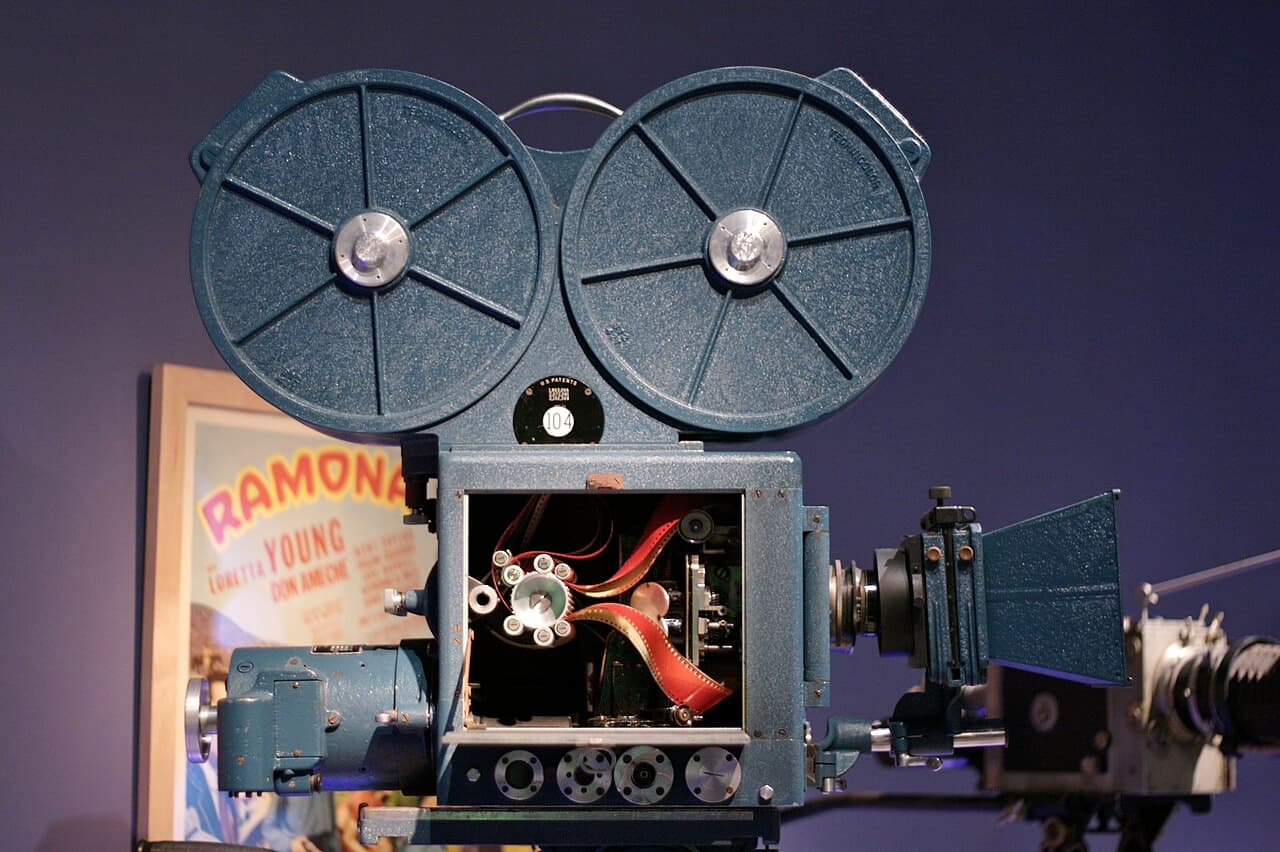
Cheaper single-strip colour film from Kodak arrived in 1950, and the last American three-strip feature was shot in 1954.
Step 1: Split the light
A prism sends green one way, red and blue the other
Step 2: Three negatives
Each black-and-white strip records one third of the spectrum
Step 3: Dye the matrices
Cyan for red, magenta for green, yellow for blue
Step 4: Print with dye
Each matrix is pressed onto a clear strip that soaks up its dye
Step 5: Full colour
Three dyes stack into one saturated image
Quiz me
0/3
Recap
Classic Technicolor was less photographed than printed: three strips, three dyes, one vivid image.
Surprising fact · The film was so slow that the lights on The Wizard of Oz reportedly often pushed the set above 38 °C.
Connects to
Sources (1)
No source, no claim. Every fact in this lesson (25 claims) cites at least one of these.