How do our eyes see so many colours with only three kinds of detectors?
No cell in your eye can tell red from green. Your brain works out colour by comparing notes.
▶ Start the storyYour eyes see colour by comparison. The retina holds three kinds of cone cells, called short, medium and long after the wavelengths they respond to best. No single cone can tell what colour it is looking at: its signal only says how much light it absorbed. But each type responds to a broad, overlapping range of wavelengths, so any light excites the three in a particular mix. Your brain compares the ratios between them, and that comparison is the colour you see.
Yellow is a good example. There is no yellow cone. You see yellow when your long cones are stimulated slightly more than your medium ones. This also means that very different mixtures of light can look exactly the same to you, as long as they produce the same ratios.
The idea of three receptors goes back to the 19th century, to Thomas Young and Hermann von Helmholtz. And one of the first people to study what happens when the system breaks was the chemist John Dalton, who realised in 1794 that he didn't see colours like other people. He guessed the fluid in his eye was tinted. In 1995, about 150 years after his death, geneticists tested his preserved eyeball and found he lacked working medium cones.
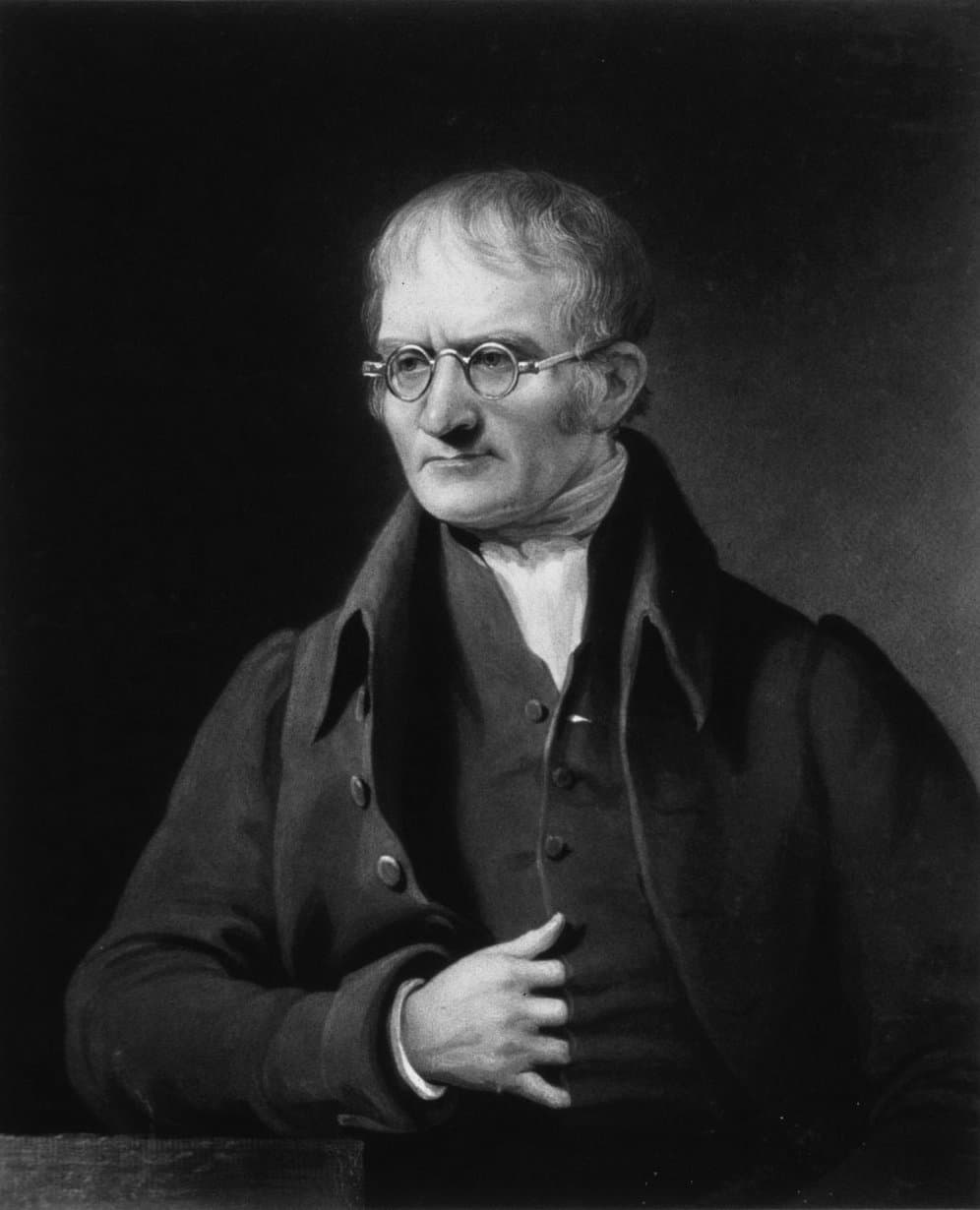
He had plenty of company. Red–green colour blindness affects up to 1 in 12 men, because the genes for these cones sit on the X chromosome.
Quiz me
0/3
Recap
Colour is a ratio: your brain compares short, medium and long cones instead of measuring wavelengths directly.
Surprising fact · Very different mixtures of light can look like exactly the same colour to us.
Sources (4)
No source, no claim. Every fact in this lesson (17 claims) cites at least one of these.