How much of the movie that ended the silent era was actually talking?
The Jazz Singer is famous for killing silent film. Watch the 89-minute movie that did it, and barely two minutes contain any actual spoken dialogue.
▶ Start the storyThe Jazz Singer gets the credit, or the blame, for ending the silent film era. What actually plays on screen is far less talky than its reputation suggests. The Jazz Singer is a 1927 part-talkie musical drama, the first feature-length movie with both synchronized recorded music and lip-synchronous singing and speech in several isolated sequences, and its release effectively marked the end of silent film using the Vitaphone sound-on-disc system, with six songs performed by Al Jolson. But in total, the movie contains barely two minutes' worth of synchronized talking, much or all of it improvised; the rest of the dialogue is presented through the caption cards standard in silent movies of the era, the exact format the film is supposedly destroying.
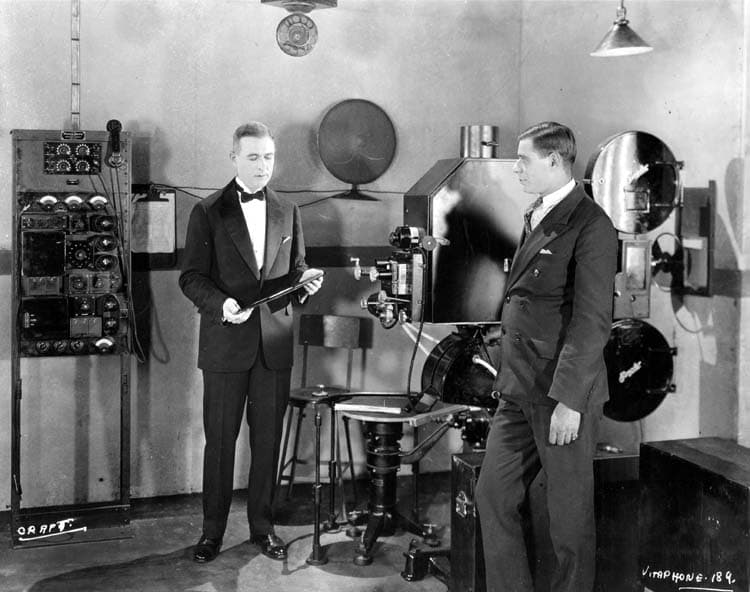
Warner Bros. had already tested the waters. Earlier Vitaphone features like Don Juan and The Better 'Ole had only a synchronized instrumental score and sound effects, no actual speech at all, essentially silent films with a soundtrack bolted on. The Jazz Singer's leap was that it also contained a handful of spoken moments, most famously Jolson's line to a cabaret crowd, 'Wait a minute, wait a minute, you ain't heard nothin' yet,' which wasn't written for the film at all: it was well-established stage patter of Jolson's, and he had even spoken very similar lines in an earlier short the year before.
That casualness carried into the filming itself. Both Jolson and the studio executive credited with the idea would later claim ownership of the ad-libbed dialogue scene between Jack and his mother, one of the film's only two minutes of actual conversation, with competing stories about who decided, mid-shoot, to just let the actors talk.
None of that mattered to the people in the theater on opening night. When Jolson's face filled the screen in close-up and he spoke his famous line, the audience, who had never heard a movie character speak before, reacted with stunned, delighted noise. One critic, Life magazine's Robert E. Sherwood, understood what it meant: the end of the silent drama, he wrote, was in sight, even if, technically, what he'd just sat through was still mostly silent.
Quiz me
0/3
Recap
A technology doesn't have to be fully realized to be remembered as the moment everything changed; it just has to arrive at the right instant, in front of the right audience.
Surprising fact · Out of an 89-minute film, barely two minutes contain actual synchronized speech; everything else uses silent-film title cards.
Sources (1)
No source, no claim. Every fact in this lesson (15 claims) cites at least one of these.