Why did Hollywood censor itself for 34 years, with no law requiring it?
No government ever forced American studios to follow the Hays Code. They wrote the rulebook themselves, put a former Postmaster General in charge, and lived by it for over three decades.
▶ Start the storyBecause the studios were more afraid of the alternative: dozens of different government censors. In 1915 the US Supreme Court had ruled that free speech did not extend to films, and after a run of notorious Hollywood scandals, legislators in 37 states introduced almost one hundred film censorship bills in 1921 alone. Rather than face hundreds of inconsistent local decency laws, the studios chose to regulate themselves. The Motion Picture Production Code, popularly called the Hays Code, applied to most major studio films from 1934 to 1968, and it was never created or enforced by any federal, state or city government.
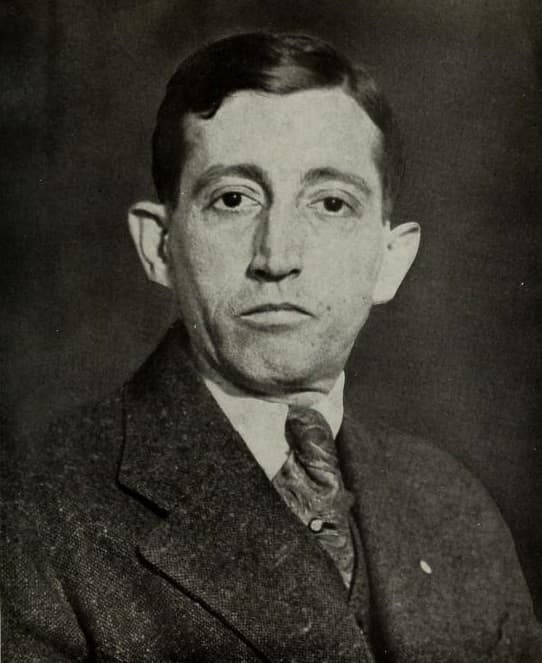
To run that self-policing, the studios hired Will H. Hays, a former Postmaster General, at the lavish salary of $100,000 a year. In 1927, studio executives drew up the "Don'ts and Be Carefuls", eleven subjects to avoid and twenty-six to handle very carefully, based on what local censor boards had already objected to. It banned pointed profanity such as "Hell" and "damn", along with words like "God" and "Christ" unless used reverently in religious ceremonies. The Code itself was drafted in 1929 by the Jesuit priest Daniel A. Lord and the trade-paper editor Martin Quigley. Lord was blunt about what sound changed: "Silent smut had been bad. Vocal smut cried to the censors for vengeance."
It got teeth in 1934, when the new Production Code Administration began requiring every film to earn a Seal of Approval before release. Defiance came later. Howard Hughes's The Outlaw was refused a seal over advertising that focused on Jane Russell's breasts, and Otto Preminger released The Moon Is Blue in 1953 without one, the first film distributed by an MPAA member to do so. In 1952 the Supreme Court gave films First Amendment protection, and in 1968, after years of minimal enforcement, the Code was replaced by the MPAA film rating system.
Quiz me
0/3
Recap
Self-censorship can be just as strict, and just as long-lasting, as any outside law, especially when an industry is more afraid of regulation than of the rules it writes for itself.
Surprising fact · No government ever required the Hays Code; studios wrote and enforced it themselves for over three decades, including a ban on words like 'Hell' and 'damn'.
Sources (2)
No source, no claim. Every fact in this lesson (18 claims) cites at least one of these.