Why is Mars red?
The Red Planet is covered in rust, and its sunsets, strangely, are blue.
▶ Start the storyMars is red because it is rusty. Iron is one of the most common elements in the Martian crust, and iron minerals in the dirt have oxidised, the same chemical reaction that turns an old bicycle orange. The red-orange colour comes mainly from iron oxide and a related iron mineral called goethite. Much of the planet is blanketed in very fine iron oxide dust, which reflects little blue light but a lot of red, so Mars looks reddish-orange even to the naked eye.
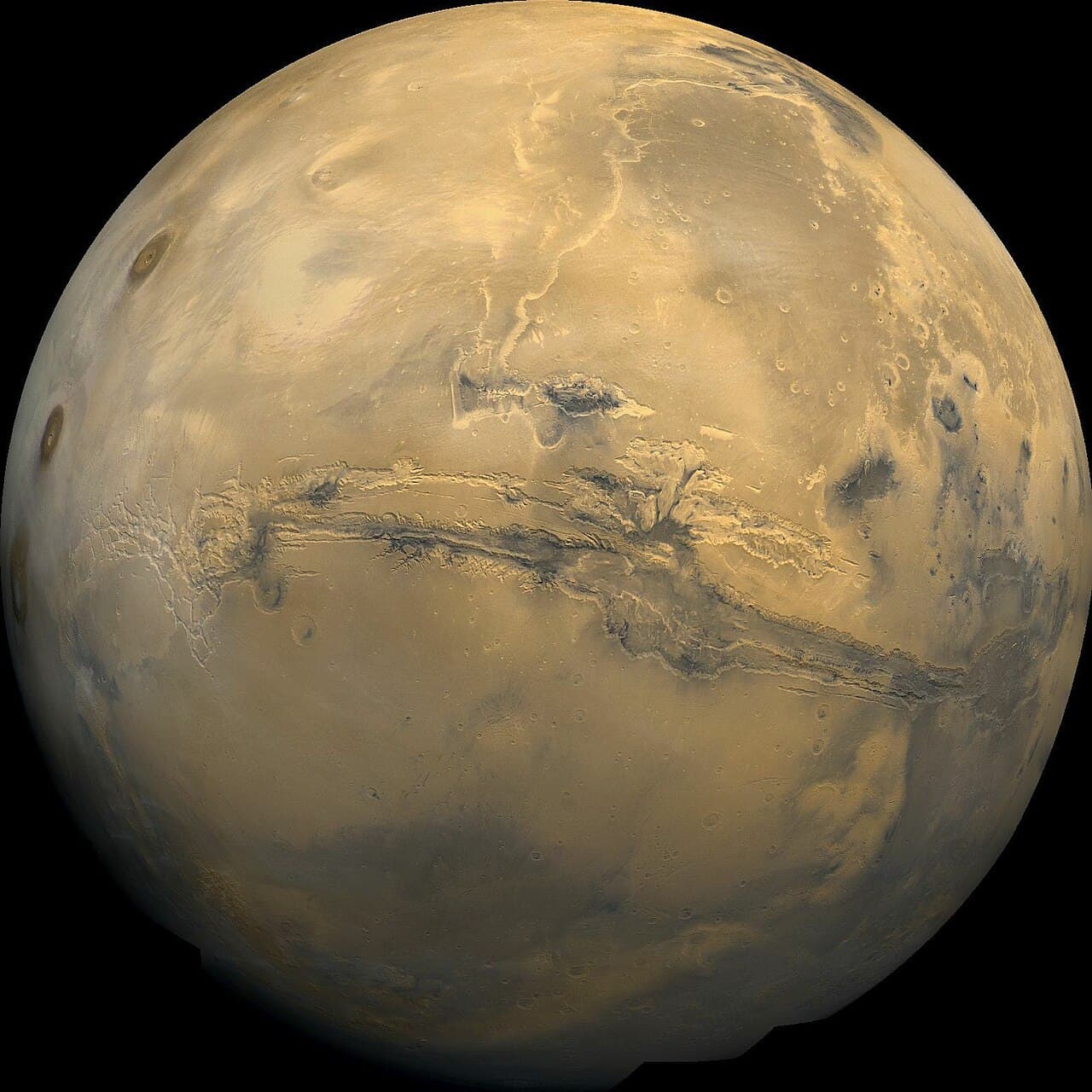
The dust is so fine that weak winds, helped by Mars's low gravity, lift it into the thin atmosphere, where enough stays to tint the sky. The rust itself probably formed billions of years ago, when Mars was warm and wet. Today, with the planet cold and dry, the rusting may continue thanks to a reactive chemical that forms on minerals exposed to ultraviolet sunlight.
People noticed the colour long before anyone knew about iron. The Egyptians called the planet Her Desher, the red one, and the Romans named it after their god of war because its colour reminded them of blood. And here's a twist: because the dust scatters light differently from Earth's air, sunsets on Mars look blue.
Quiz me
0/3
Recap
Iron plus oxidation equals rust, and Mars is wrapped in a coat of rusty dust.
Surprising fact · Under the red dust, many areas are dark grey rock, and Martian sunsets look blue.
Sources (5)
No source, no claim. Every fact in this lesson (16 claims) cites at least one of these.