Why do astronauts' bones get weaker in space?
An astronaut can lose over 1 percent of their bone mass for every month spent in orbit, and it can take two to three years back on Earth just to get it back.
▶ Start the storyBones aren't fixed structures; they constantly rebuild themselves based on how much stress they carry, getting denser where they bear weight and thinner where they don't. On Earth, gravity means your legs and spine are always under load, so your skeleton stays in balance. In orbit, that load disappears, and astronauts lose more than 1 percent of their bone mass for every month they spend in space.
The mechanism is a breakdown of a normally balanced system. Bone is constantly being broken down by cells called osteoclasts and rebuilt by cells called osteoblasts, and on Earth the two stay in step. In microgravity, osteoclast activity surges, especially in the pelvis, which normally carries the body's biggest load, while osteoblast activity doesn't keep pace. In one study, mice showed nearly triple the normal number of bone-destroying cells after just sixteen days in microgravity, with bone-building activity suppressed at the same time. The result resembles osteoporosis, but it happens far faster: astronauts on the Mir space station lost 1 to 2 percent of their bone per month, about as much as an elderly person loses in a whole year.
This isn't just a cosmetic problem. The calcium leaching out of weakening bones raises calcium levels in the blood, which can lead to kidney stones and dangerous calcification of soft tissue. The good news is that, unlike people with osteoporosis, astronauts do eventually regain their bone density, though a three to four month mission can mean two to three years of recovery back on Earth, and it is still unknown whether bone recovers completely.
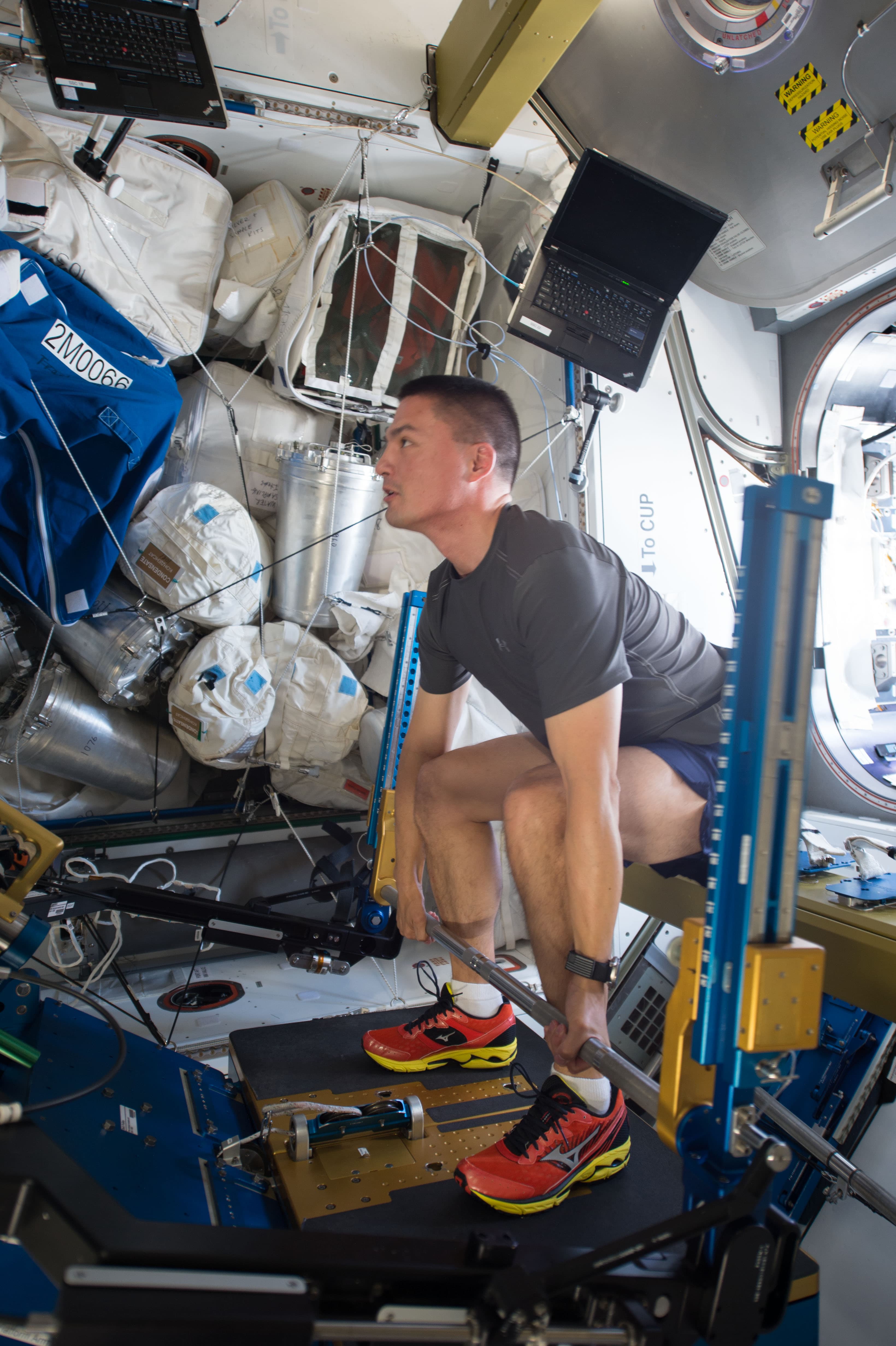
Astronauts fight back with hours of exercise. The International Space Station carries treadmills and a resistance machine, and crew members spend at least two hours a day working out on them. The resistance machine adds muscle but does nothing for bone density, and exercise, tried since the 1960s, has not been shown to stop bone loss, partly because, as of 2005, no controlled study had been done to test it.
Quiz me
0/3
Recap
Without gravity's load, osteoclasts that break down bone speed up while osteoblasts that rebuild it fall behind, and it can take astronauts two to three years back on Earth to recover the bone lost on a few months in orbit.
Surprising fact · In one study, mice showed a 197 percent jump in bone-destroying cell activity after just sixteen days in microgravity.
Connects to
Sources (2)
No source, no claim. Every fact in this lesson (13 claims) cites at least one of these.