Why do movies run at exactly 24 frames per second?
Cinema's magic number wasn't chosen for your eyes. It was chosen for your ears, and for the price of film.
▶ Start the storyMovies run at 24 frames per second because of sound, and money. When talking pictures arrived in the late 1920s, the film had to move at a perfectly steady speed, because the human ear notices changes in speed far more than the eye does. Twenty-four was a compromise close to the speeds many theatres already used for silent films, and it was the slowest, and so cheapest, speed that still gave good enough sound. Warner Bros. set the standard with The Jazz Singer in 1927.
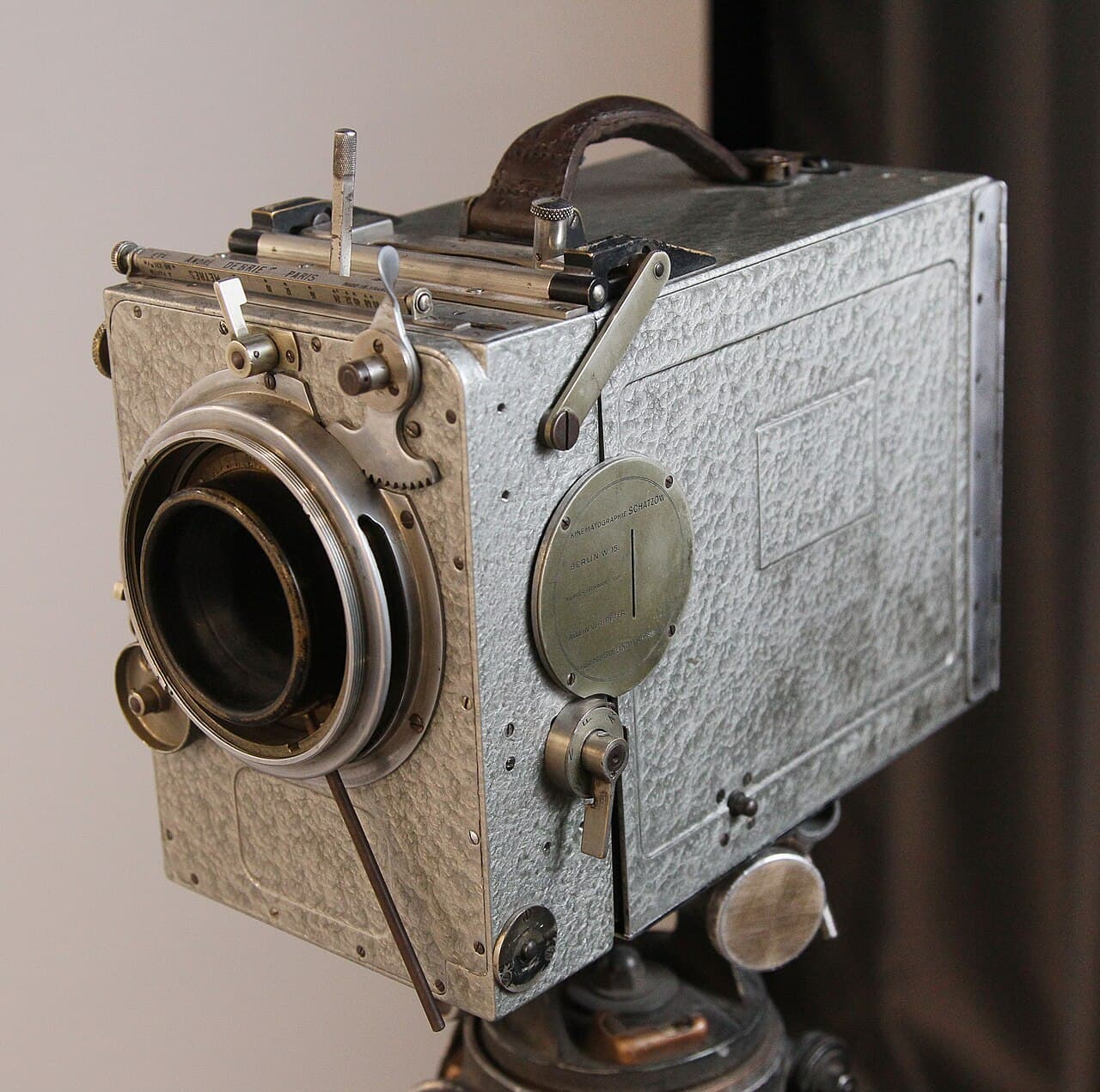
Before that, there was no real standard at all. Silent-film cameras were cranked by hand, so the speed drifted, sometimes on purpose to fit the mood of a scene. Most films were shot somewhere between 16 and 23 frames per second. Theatres played fast and loose too: projectors were often run too fast to shorten each film and squeeze in extra shows.
Our eyes don't need much to be fooled. We can take in about 10 to 12 separate images per second; beyond that, they blur into motion. The bigger problem was flicker. Thomas Edison insisted that 46 frames per second was the minimum, warning that anything less would strain the eye. The fix was clever: a two-blade shutter in the projector flashes each frame twice, so 24 frames become 48 flashes, and Edison got his wish without anyone buying twice as much film.
Frames versus flashes
per second
| Images per second | |
|---|---|
| Silent films (typical low) | 16 per second |
| Sound film frames | 24 per second |
| Edison's minimum | 46 per second |
| Two-blade shutter flashes | 48 per second |
| Three-blade shutter flashes | 72 per second |
A century later, the number has stuck so firmly that digital cameras now shoot at 24 on purpose, just to look like film.
Quiz me
0/3
Recap
Twenty-four frames per second was chosen for the ears and the budget, not for the eyes.
Surprising fact · A two-blade projector shutter flashes each frame twice, turning 24 frames into 48 flashes and satisfying Edison's demand for at least 46.
Sources (4)
No source, no claim. Every fact in this lesson (16 claims) cites at least one of these.