Why aren't the Canary Islands named after canary birds?
It sounds backwards, but the canary bird is named after the Canary Islands. The islands themselves were probably named after dogs.
▶ Start the storyBecause the naming went the other way round. The canary bird did not give its name to the Canary Islands: the small songbird is named after the islands, and the islands themselves were most likely named after dogs.
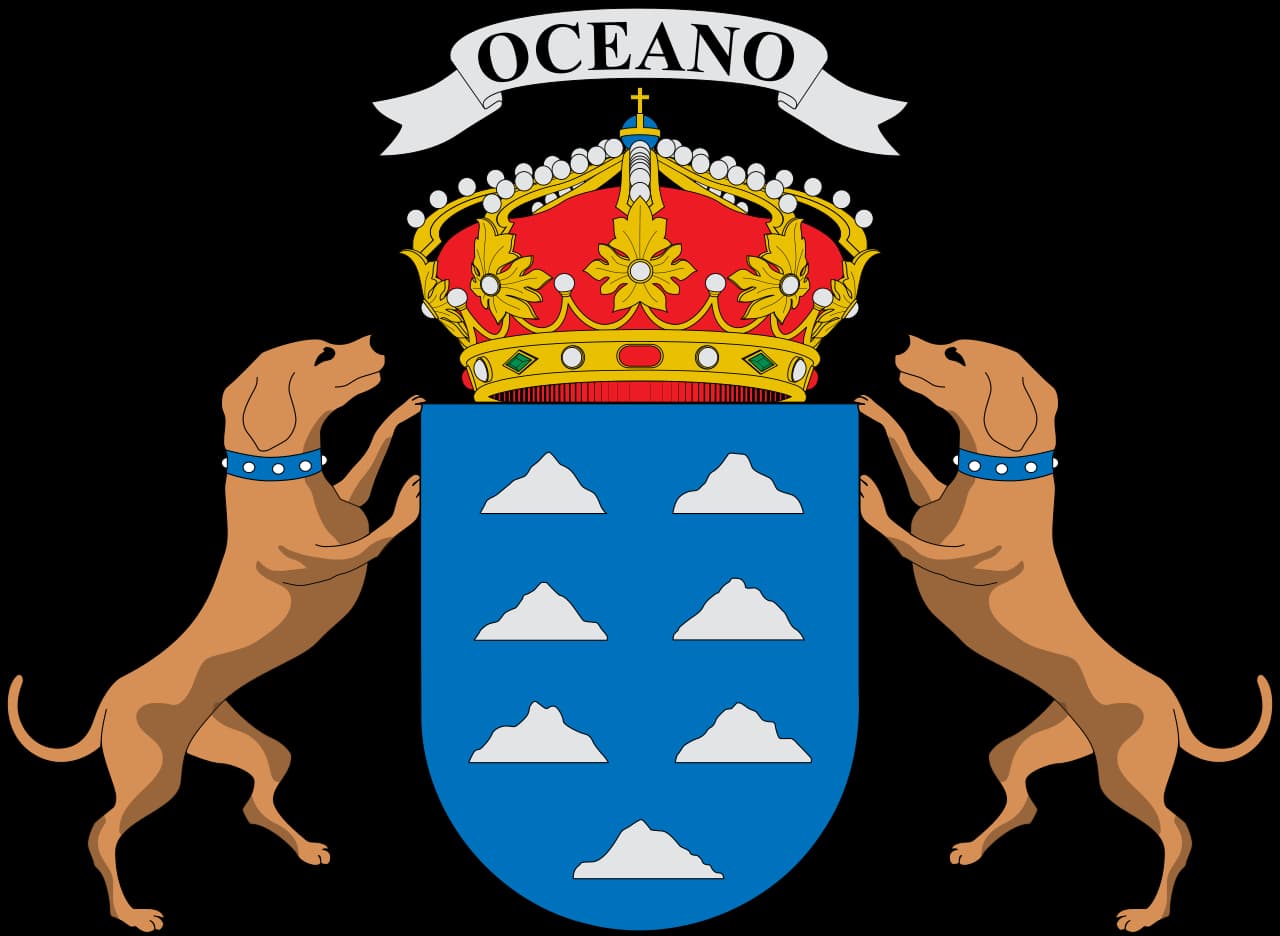
So where does the island name come from? The Spanish name Islas Canarias likely comes from the Latin Canariae Insulae, meaning 'Islands of the Dogs', perhaps because monk seals, or 'sea dogs', were abundant there. The Roman historian Pliny the Elder wrote that one of the islands was home to 'vast multitudes of dogs of very large size', and that connection to dogs still appears on the islands' coat of arms today. Historically, the archipelago also went by a more flattering name: the Fortunate Isles. There is also a rival theory, that the name comes from the Nukkari, a Berber people of North Africa whom Roman sources called the Canarii, though Pliny ties even that word back to dogs.
The bird we call a canary is a domesticated form of the wild canary, a small finch native to the Macaronesian Islands. After Europeans conquered the islands where its wild ancestor lived, people began keeping it as a pet, and by the 17th century canaries had become prized possessions in Europe, loved for their song and eventually popular even among poorer households. Later, miners carried canaries into coal mines as a sentinel species: a bird's death warned of carbon monoxide or other toxic gases.
The islands even lent their name to a corner of London: Canary Wharf sits on the Isle of Dogs, and was named after a warehouse that handled imports from the Canaries.
Quiz me
0/3
Recap
When a name seems to explain itself, like 'canary bird' and 'Canary Islands', check which one actually came first.
Surprising fact · Female canaries were once taken into coal mines as a sentinel species, because a bird's death signalled carbon monoxide or other toxic gases.
Sources (2)
No source, no claim. Every fact in this lesson (12 claims) cites at least one of these.