How can people hold a conversation just by whistling?
On a Spanish island, whistled Spanish is a compulsory school subject, and a whistle can carry a sentence across a ravine.
▶ Start the storyPeople can talk by whistling because a whistle can copy the melody and key sound qualities of an ordinary language. Whistled speech isn't a separate code: it is a normal language transposed into whistles, and anyone who speaks that language and has trained their ear can follow it. Speakers of more than 80 languages practise it to some degree, mostly in mountains or dense forests, because a whistle carries much farther than a voice, typically 1 to 2 kilometres and up to 5 in the mountains, without the strain of shouting.
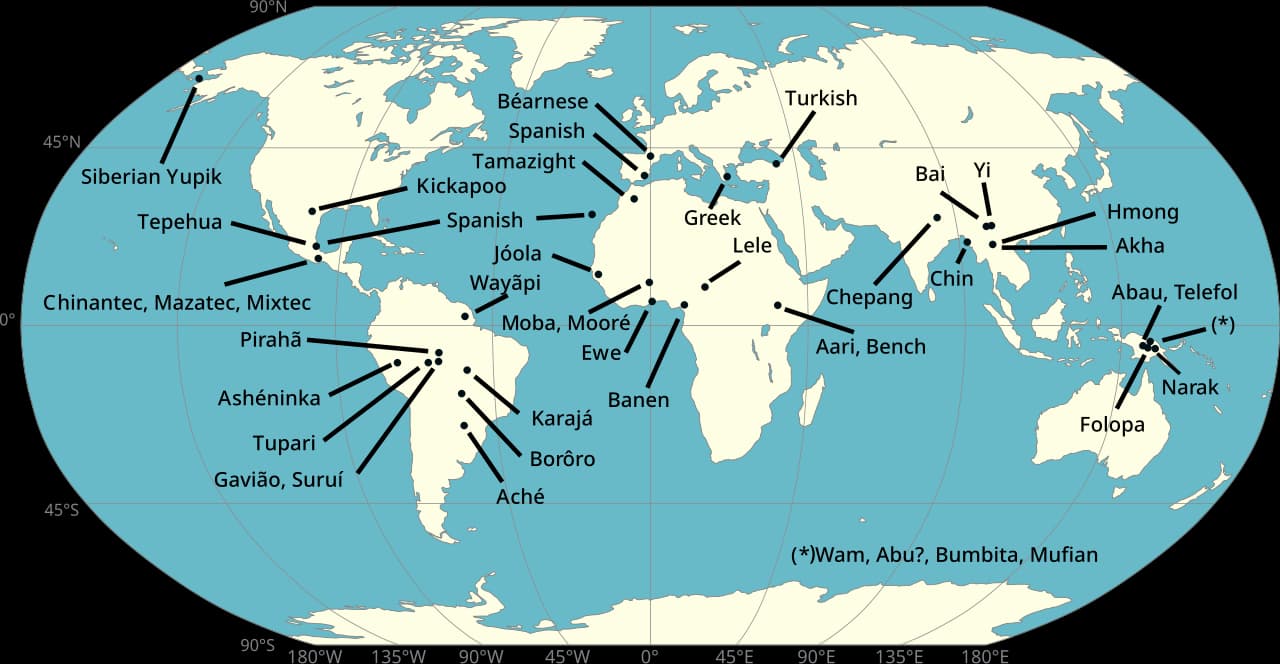
How it works depends on the language. In tone languages, where pitch changes meaning, the whistle simply carries the tones of each syllable. In a language like Spanish, whistlers turn the different vowels and consonants into changes of pitch and into breaks or glides in the sound.
up to 10 km
The most famous example is Silbo Gomero, a whistled Spanish used on La Gomera in the Canary Islands to talk across deep ravines. Brain scans show that trained whistlers process it in the same language areas as spoken Spanish, while other listeners just hear whistling. After nearly disappearing, it became a compulsory school subject in 1999. France has its own: the whistled Béarnese of the Pyrenean village of Aas, now being revived in local schools.
Quiz me
0/3
Recap
A whistle is the melody of speech without the words' full sound, and a trained brain fills in the rest as language.
Surprising fact · Silbo Gomero has been a compulsory school subject on La Gomera since 1999.
Sources (3)
No source, no claim. Every fact in this lesson (16 claims) cites at least one of these.