Why do some languages use pitch to change a word's meaning?
In Mandarin, 'ma' can mean mother, hemp, horse or scold, and many of those tones are the ghosts of consonants that vanished centuries ago.
▶ Start the storyEvery language uses pitch to show emotion or emphasis, but in tonal languages pitch does the job that consonants and vowels do: it tells words apart. In Mandarin, the syllable ma means 'mother', 'hemp', 'horse' or 'scold' depending on its tone, which lets you say 'Māma mà mǎde má ma?', 'Is mom scolding the horse's hemp?'. Tonal languages are common in East and Southeast Asia, in most of Africa and among some indigenous peoples of the Americas.
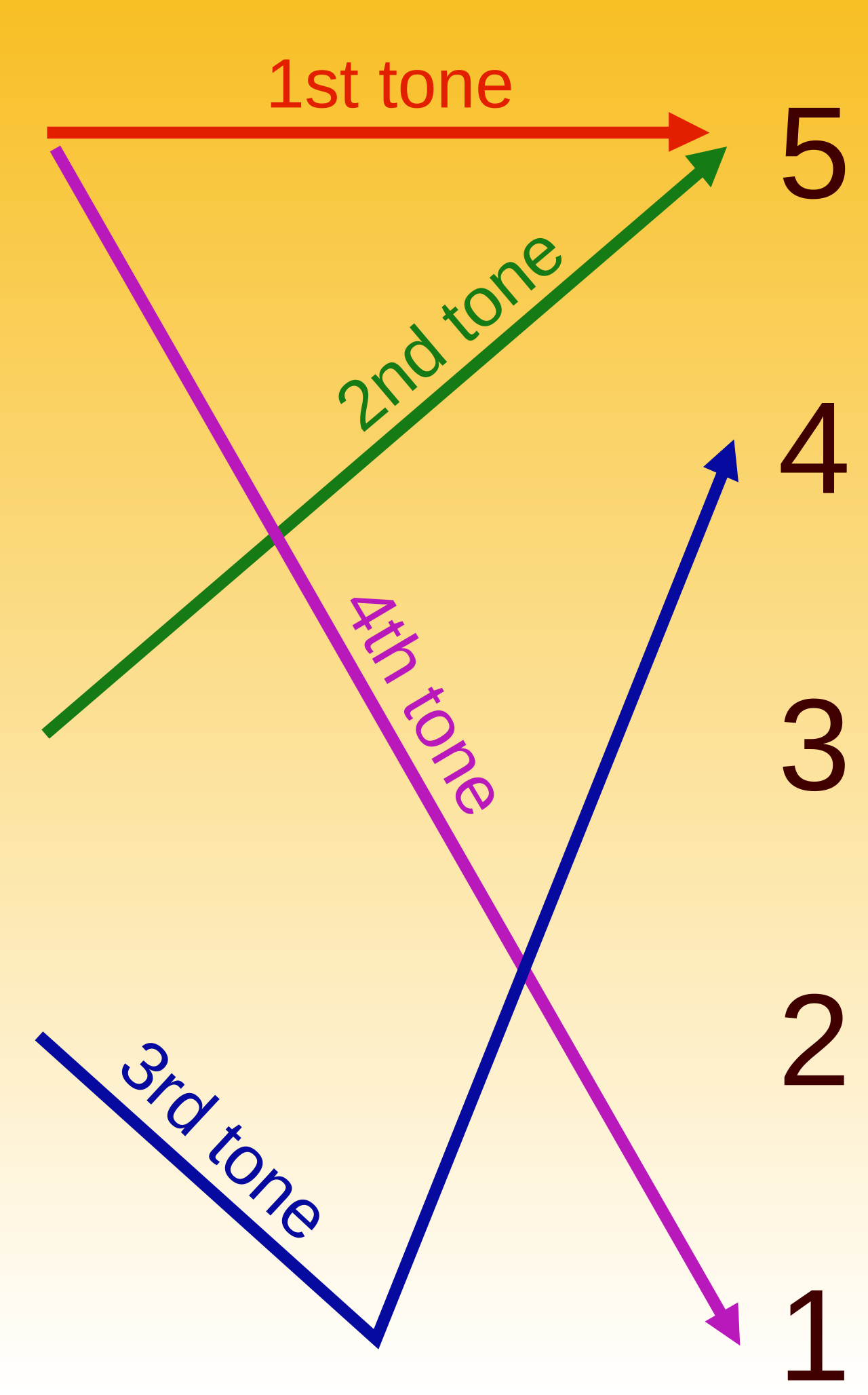
Why would a language do this? Very often, tones are leftovers of lost consonants. In any language, a voiced consonant such as b or d tends to make the following vowel come out slightly lower in pitch, a detail nobody notices. If that voicing later disappears, the pitch difference can stay behind and take over the job of telling words apart. Linguists call the birth of tone tonogenesis. Old Chinese is now widely thought to have had no tones at all, and two of the tones of Middle Chinese grew out of final consonants that vanished.
It can happen quickly. The Cherokee spoken in Oklahoma has tone, while the Cherokee of North Carolina does not, although the two communities were only separated in 1838. And it may be happening right now in Seoul: comparing recordings from 1935 and 2005, researchers found Korean consonant contrasts turning into pitch differences, a change started by women born in the 1950s.
Quiz me
0/3
Recap
Tones are often the ghosts of lost consonants: the pitch they caused stays behind and takes over their job.
Surprising fact · Seoul Korean may be gaining tones right now, in a change started by women born in the 1950s.
Sources (3)
No source, no claim. Every fact in this lesson (22 claims) cites at least one of these.