How dry is the desert where NASA tests its Mars robots?
Some weather stations in this Chilean desert have never recorded rain, and parts of it may have gone four centuries without significant rainfall: dry enough that NASA sent a four-wheeled robot named Zoë there to practice for Mars.
▶ Start the storySo dry that some of its weather stations have never recorded rain. The Atacama Desert in northern Chile, the driest non-polar desert in the world, gets around 15 mm of rain a year on average, and evidence suggests it may have received no significant rainfall at all from 1570 to 1971. Its soil and near-total absence of microbial life have made it a testing ground for Mars mission instruments: NASA has tried out small vehicles there before sending them to explore Mars.
The dryness comes from geography. The Atacama sits between two mountain chains, the Andes and the Chilean Coast Range, tall enough to block moisture from both the Pacific and the Atlantic: a rain shadow working from two sides at once. A semi-permanent high-pressure zone, the Easter Island anticyclone, adds dry, sinking air that kills off clouds and rain, and the cold Humboldt Current along the coast reinforces the effect.
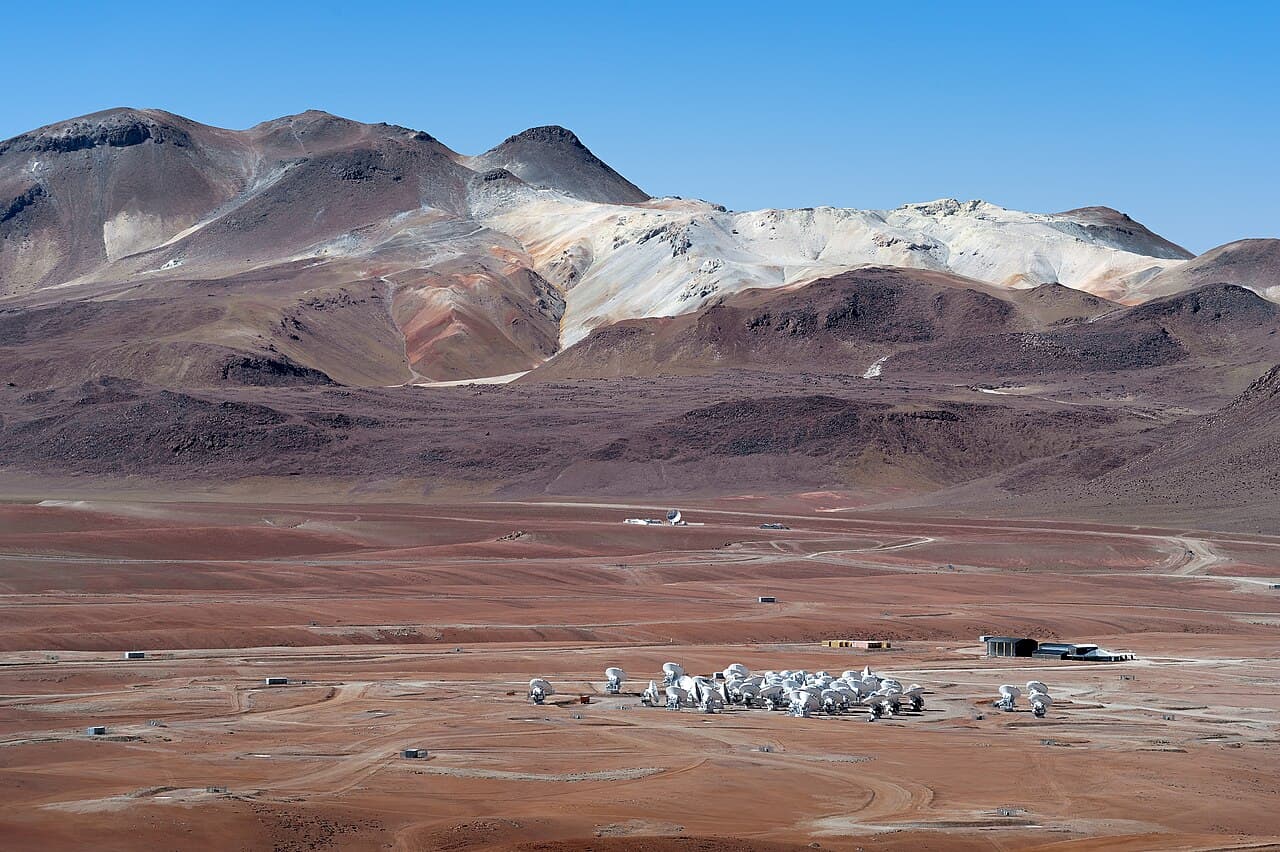
That combination of dry air, high altitude and almost no light pollution also makes the Atacama one of the world's best places to watch the sky, home to observatories like the Atacama Large Millimeter Array. And it held a surprise for NASA's four-wheeled robot Zoë: in a desert with the lowest density of organic activity on Earth, it found colonies of bacteria and lichens at two separate sites.
The desert isn't empty of life, or of people. In some spots a marine fog that locals call the camanchaca brings just enough moisture for algae, lichens and even some cacti. And humans have lived here since at least 7000 BCE, when the Chinchorro culture settled along the coast.
Quiz me
0/3
Recap
Some Atacama weather stations have never recorded rain, yet a coastal fog called the camanchaca still supports pockets of algae, lichen, and cacti.
Surprising fact · NASA's four-wheeled robot Zoë, tested in the Atacama, found bacteria and lichens at two sites in the desert with the lowest density of organic activity on Earth.
Sources (2)
No source, no claim. Every fact in this lesson (11 claims) cites at least one of these.