How did a Roman emperor get bishops to agree on the nature of Jesus?
Constantine wasn't a bishop and didn't vote. But he paid for the meeting, joined the debates, and exiled those who refused to sign its creed.
▶ Start the storyIn the year 325, the Roman emperor Constantine, who was not a bishop, brought the church's leaders together to settle a dispute over the nature of Jesus. He convened at least 200 bishops at Nicaea, paid for their travel out of the imperial treasury, and joined in the debates, though he did not see himself as a voting member. The dispute at the center of it all pitted an Alexandrian priest named Arius, who argued that the Son had been created by the Father and so came after him and was subordinate to him, against his own bishop, Alexander, who taught that the Son was eternally generated from the Father. The council sided with Alexander, producing a creed that described the Son as "of one substance" with the Father — a Greek term, homoousios, that the historian Eusebius of Caesarea ascribes to Constantine himself.
This wasn't merely a theological ruling, though. The creed ended with a formal list of condemnations aimed squarely at Arius's position, and Constantine had already made clear that anyone who refused to sign it would be exiled. When Arius and two followers held their ground, the emperor exiled them, had Arius's writings ordered burned, and declared his remaining supporters enemies of Christianity. It was, in effect, the first time a Christian emperor used the power of the state to enforce a single accepted doctrine — a precedent later Christian emperors would follow.
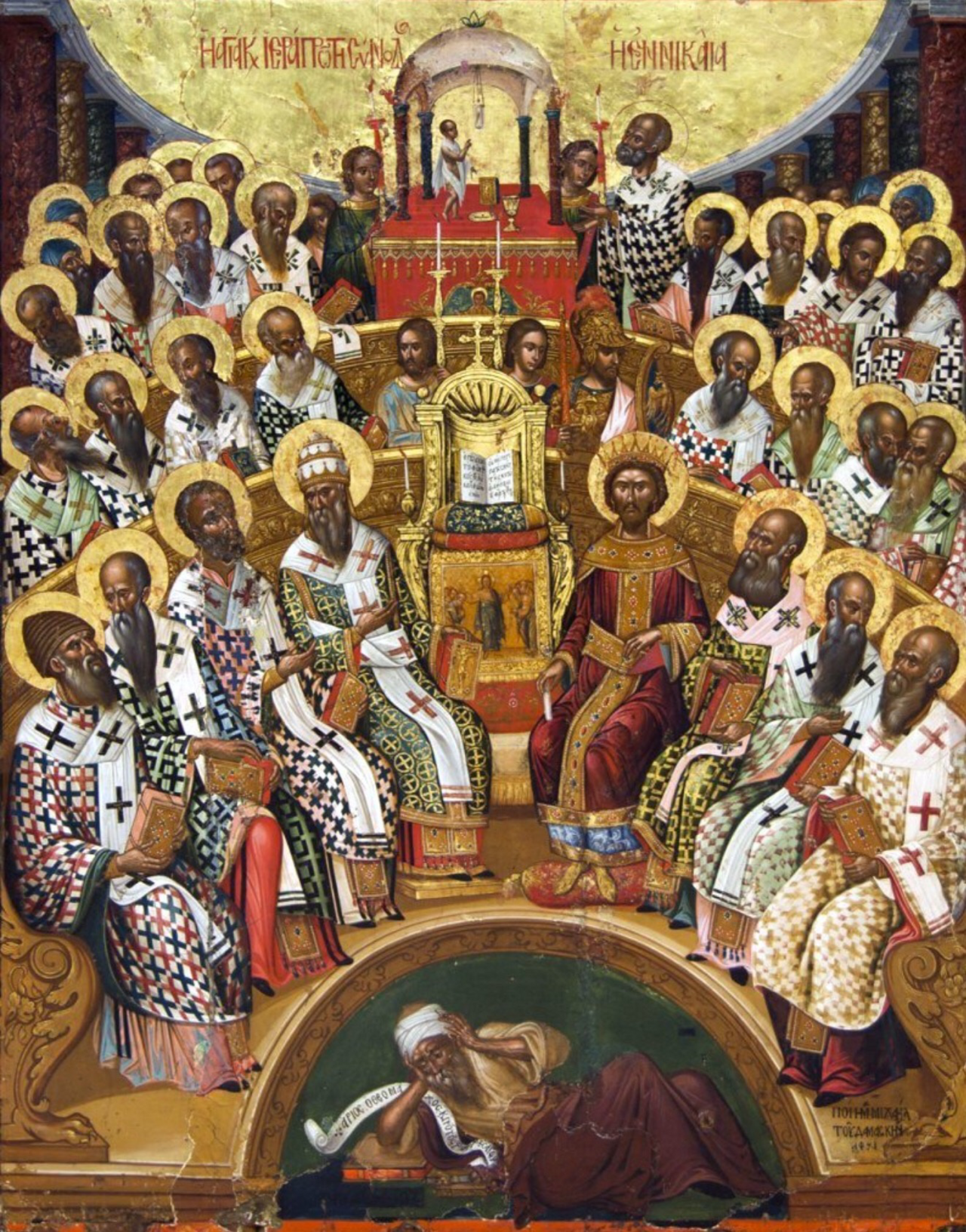
The bishops at Nicaea also tackled a second, more practical problem: churches across the empire were celebrating Easter on different dates. They settled on the method already used in Rome and Alexandria, over objections from some eastern bishops, mandating that all Christians observe Easter on the same day. When the council closed in July, the bishops were invited to Constantine's celebration of his twentieth year on the throne, a fitting end for an emperor who, as the one responsible for civil order, wanted the church to be of one mind and at peace.
Quiz me
0/3
Recap
The council was as much an act of imperial politics as of theology: Constantine paid for it, joined its debates, and enforced its outcome.
Surprising fact · Those who refused to sign the creed, including Arius himself, were exiled by imperial order, and his writings were ordered burned.
Sources (1)
No source, no claim. Every fact in this lesson (16 claims) cites at least one of these.