Why did one added Latin word help split Christianity in two?
Filioque means simply "and the Son." Adding it to one line of a shared creed became a central dispute in the split between the Catholic and Orthodox churches.
▶ Start the storyBecause it touched two things at once: what the creed says about God, and who has the authority to change it. Filioque, Latin for 'and (from) the Son,' was added in the Western church to the Latin text of the Nicene Creed, so that it states the Holy Spirit proceeds from the Son as well as from the Father, a doctrine the Catholic Church, Anglicans and Protestant churches generally accept. The Eastern church holds that by inserting it unilaterally, without consulting or holding council with the East, the West broke communion. A council in Constantinople in 879–880 anathematized the phrase as 'a novelty and augmentation of the Creed,' and an 1848 encyclical of the Eastern patriarchs called it a heresy.
That dispute, together with clashing claims of papal authority, came to a head in 1054. In 1053, Patriarch Michael Cerularius of Constantinople ordered all Latin churches in the city closed. The next year a papal legation arrived to deny him the title 'ecumenical patriarch,' insist that he recognize the pope as head of all the churches, answer attacks on Western customs, and seek imperial help against the Normans in southern Italy. When Cerularius refused, its leader, Cardinal Humbert, excommunicated him, and Cerularius excommunicated Humbert and the other legates in return.
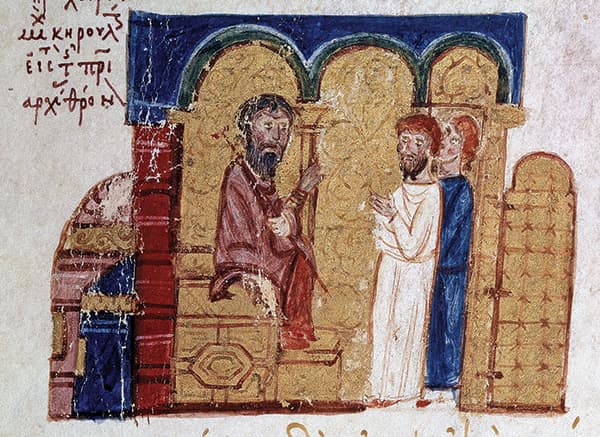
The breach has never been formally healed. In 1439, at the Council of Ferrara-Florence, a Byzantine emperor pressed by the Ottoman Turks persuaded all the Eastern bishops present but one, Mark of Ephesus, to accept the Filioque, but back home the union was broadly rejected and has never been accepted by the Eastern churches. In 1965, Pope Paul VI and Patriarch Athenagoras I nullified the anathemas of 1054, a gesture of goodwill rather than a reunion, and popes have since recited the Creed with Orthodox patriarchs in Greek, without the Filioque.
Quiz me
0/3
Recap
In 1054, two church leaders excommunicated each other almost simultaneously, and in 1965 their successors formally lifted those excommunications without declaring the churches reunited.
Surprising fact · In 1439, nearly all Eastern bishops at Florence signed an agreement accepting the Filioque and papal supremacy, but the union was rejected in the East.
Sources (1)
No source, no claim. Every fact in this lesson (14 claims) cites at least one of these.