Why does an 800-year-old peace deal, Magna Carta, still matter?
Magna Carta failed within months and was a deal between a king and his barons. Its fame as a charter of everyone's freedom came centuries later.
▶ Start the storyMagna Carta still matters less for what it said in 1215 than for what people later decided it meant. It began as a peace deal between King John of England and a band of rebel barons, sealed at Runnymede on 15 June 1215. It promised the barons protection from illegal imprisonment, swift and impartial justice and limits on royal payments. Within months it had collapsed: neither side kept its word, the Pope annulled it, and civil war followed.
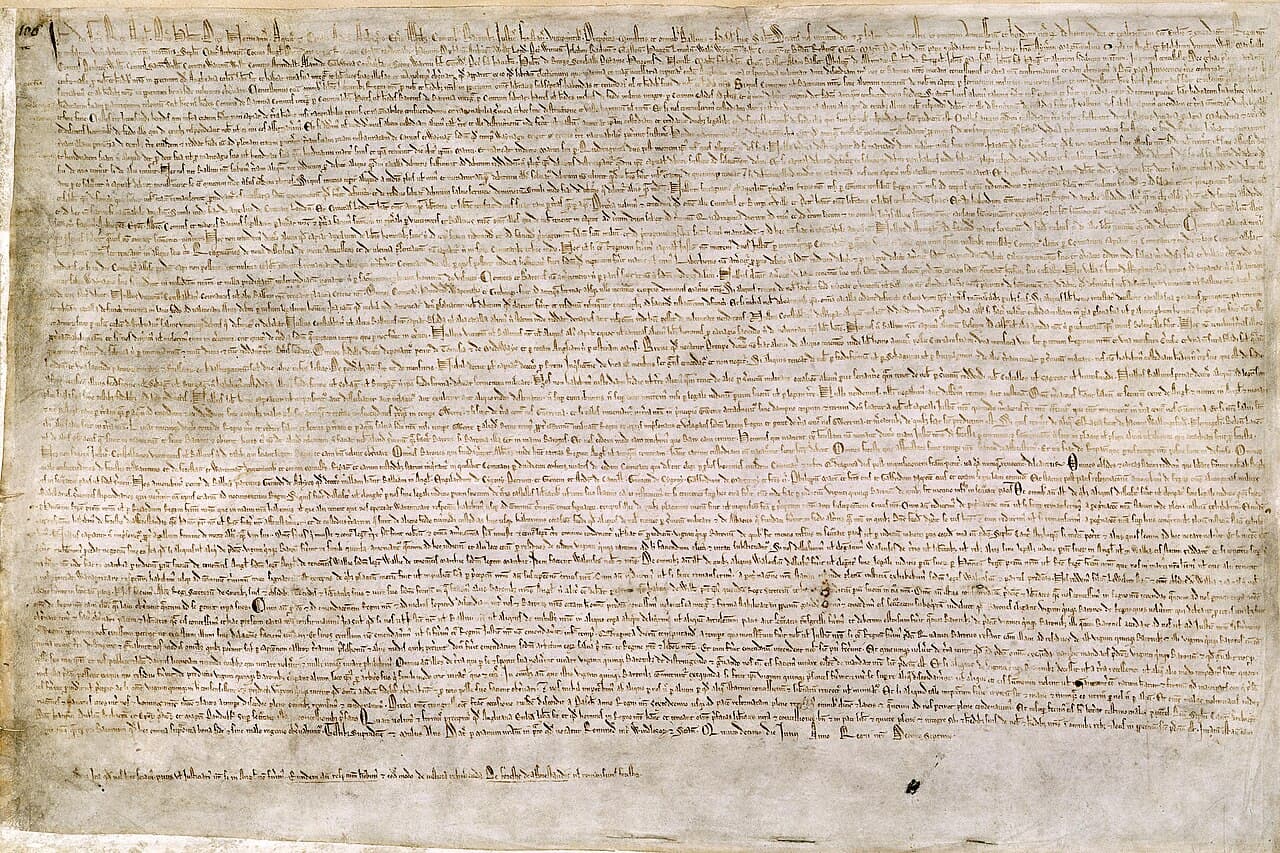
Yet the charter refused to die. Kings reissued it, sometimes in exchange for new taxes, and in 1297 it became part of English statute law. In 1354 a new statute stretched its protection from "free man" to "no man, of whatever estate or condition he may be", and introduced the phrase "due process of law".
The real turning point came in the 1600s. Lawyers like Sir Edward Coke used Magna Carta as a weapon against kings who claimed to rule by divine right, recasting it as an ancient charter of English liberty. Historians now consider that story a myth: the 1215 text was about barons, not ordinary people. But the myth crossed the Atlantic, shaped the colonists' thinking, and the US Constitution's promise of "due process of law" comes straight from it.
So Magna Carta is a symbol that grew bigger than its text. Only three of its clauses are still law in England and Wales, including the right to due legal process. Still, the core idea it came to stand for, that even a ruler must obey the law, is why the English judge Lord Denning called it "the greatest constitutional document of all times".
Quiz me
0/3
Recap
Magna Carta's power comes less from its 1215 text than from the myth that later generations built around it.
Surprising fact · It was annulled by the Pope within months, and only three of its clauses are still law in England and Wales.
Connects to
- 🕊️ How did a declaration that isn't a law become the world's most translated document?
- 📏 What does "no one is above the law" really mean?
- 🏛️ Was "an eye for an eye" actually meant to stop revenge?
- ⚖️ Why do so many countries split power into three branches?
- 🌍 Did people in the Middle Ages think the Earth was flat?
Sources (1)
No source, no claim. Every fact in this lesson (19 claims) cites at least one of these.