How did judges get the power to strike down a law Congress passed?
In 1803 the Supreme Court handed a disappointed office-seeker a legal loss — and quietly claimed for itself the power to veto Congress.
▶ Start the storyIn 1803, the US Supreme Court handed down one of its strangest rulings: it sided with William Marbury on every point of fact — then ruled against him anyway. Marbury was one of several dozen "midnight judges" outgoing president John Adams rushed to appoint two days before leaving office, stacking the courts with his own party before rival Thomas Jefferson took over. Adams ran out of time to deliver all the paperwork, and Jefferson's new secretary of state, James Madison, refused to hand over the rest — including Marbury's. Marbury sued to force delivery, and the Supreme Court agreed that withholding his commission was illegal. Then it declined to order Madison to do anything, because the law Marbury had relied on to bring the case to the Supreme Court directly, it said, conflicted with the Constitution — and courts, it ruled, have the power to throw out any law that does.
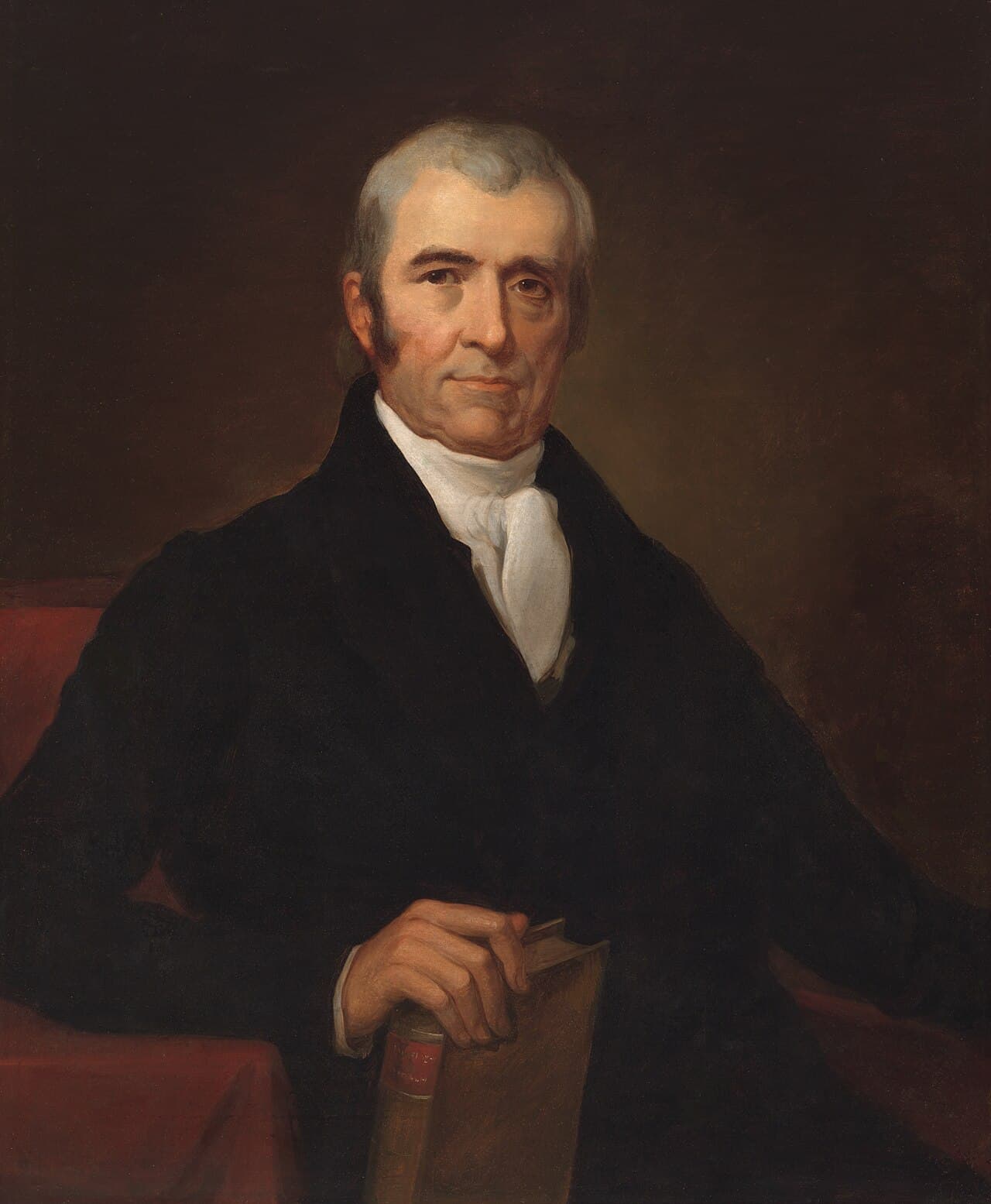
That throwaway-sounding move was the whole point. Chief Justice John Marshall wasn't really deciding Marbury's case; he was establishing judicial review — courts' power to strike down laws that violate the Constitution. Nothing in the Constitution's text grants that power. Marshall argued it anyway, reasoning that the US was "a government of laws, and not of men" and that it is "emphatically the province and duty of the judicial department to say what the law is." Marshall faced a dilemma: had the court ordered Madison to deliver, Jefferson and Madison would probably have ignored the order and made the court look powerless. By giving them the result they wanted, Marshall dodged that trap while quietly cementing a check on Congress and the president that the court could use for the next two centuries.
By 2014, the Supreme Court had struck down 176 acts of Congress as unconstitutional; between 1960 and 2019 alone, it held 483 laws unconstitutional in whole or in part. The bar for doing so stays deliberately high: as one justice put it, "the Constitution does not prohibit legislatures from enacting stupid laws" — only unconstitutional ones.
It's a vivid example of how checks and balances can grow: not everything was written into the Constitution at once; some powers were claimed later, case by case. Congress writes the laws, the president enforces them, and — thanks to one case about a stack of undelivered paperwork — the courts get the last word on whether either one went too far.
483
Quiz me
0/3
Recap
Checks and balances aren't a neat diagram — they're built case by case, as branches of government claim authority over each other.
Surprising fact · The Supreme Court claimed this power in a case where it actually ruled against the person who sued for it.
Sources (2)
No source, no claim. Every fact in this lesson (20 claims) cites at least one of these.