Why doesn't honey go bad?
Honey is so full of sugar and so short of water that microbes trying to live in it get sucked dry.
▶ Start the storyHoney doesn't go bad because it is a terrible place for microbes to live: it holds too much sugar, too little water and too much acid. Bees evaporate nectar until only 15.5% to 18% of it is water. At that concentration, for osmotic reasons, microbes can't reproduce, and fermentation stops. Put simply, any bacterium or yeast landing in honey has its water pulled away by all that sugar around it. On top of that, bees add an enzyme, glucose oxidase, that produces gluconic acid and hydrogen peroxide, making honey acidic and helping to suppress bacteria. Its average pH is 3.9.
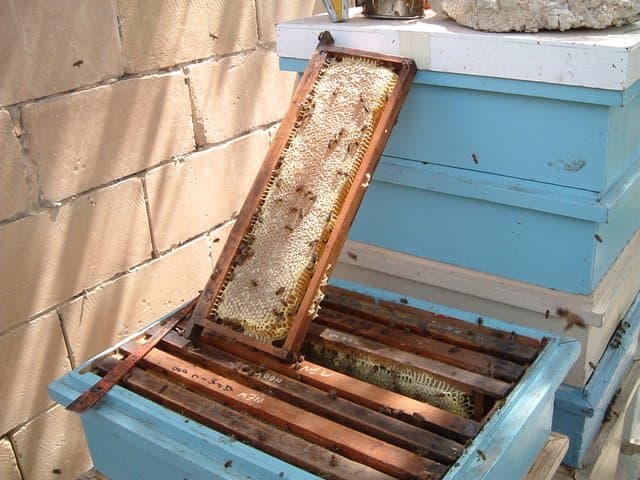
The result is a food with an indefinite shelf life, as long as its water content doesn't creep much above 18%. That is the one catch. Honey absorbs moisture straight from the air, and because it naturally contains yeast, it can start fermenting if its water content rises much above 25%. So the only real rule is to keep the lid on.
You may have heard that archaeologists found edible honey in Egyptian tombs. It's a good story, but not true: all such cases turned out to be other substances or only chemical traces. Honey has, however, preserved itself and objects dipped in it for centuries.
Quiz me
0/3
Recap
Too much sugar, too little water and a dash of acid: keep the lid on and honey keeps indefinitely.
Surprising fact · Bees make it antibacterial on purpose, adding an enzyme that produces gluconic acid and hydrogen peroxide.
Connects to
- 🥓 How did people keep meat edible for months before refrigerators existed?
- Osmosis
- Hygroscopy
- Honey bee
Sources (1)
No source, no claim. Every fact in this lesson (16 claims) cites at least one of these.