Why do onions make you cry?
An onion is a chemical weapon that stays unarmed until your knife breaks its cells open.
▶ Start the storyOnions make you cry because cutting them triggers a tiny chemical defence system. When your knife breaks the onion's cells, enzymes called alliinases spill out and start turning sulfur compounds into sulfenic acids. A second enzyme, lachrymatory factor synthase, quickly converts one of those acids into a volatile liquid called syn-propanethial S-oxide. It drifts up through the air, reaches your eyes and activates sensory neurons there. Your lacrimal glands respond the only way they know: with tears, to dilute the irritant and wash it away.
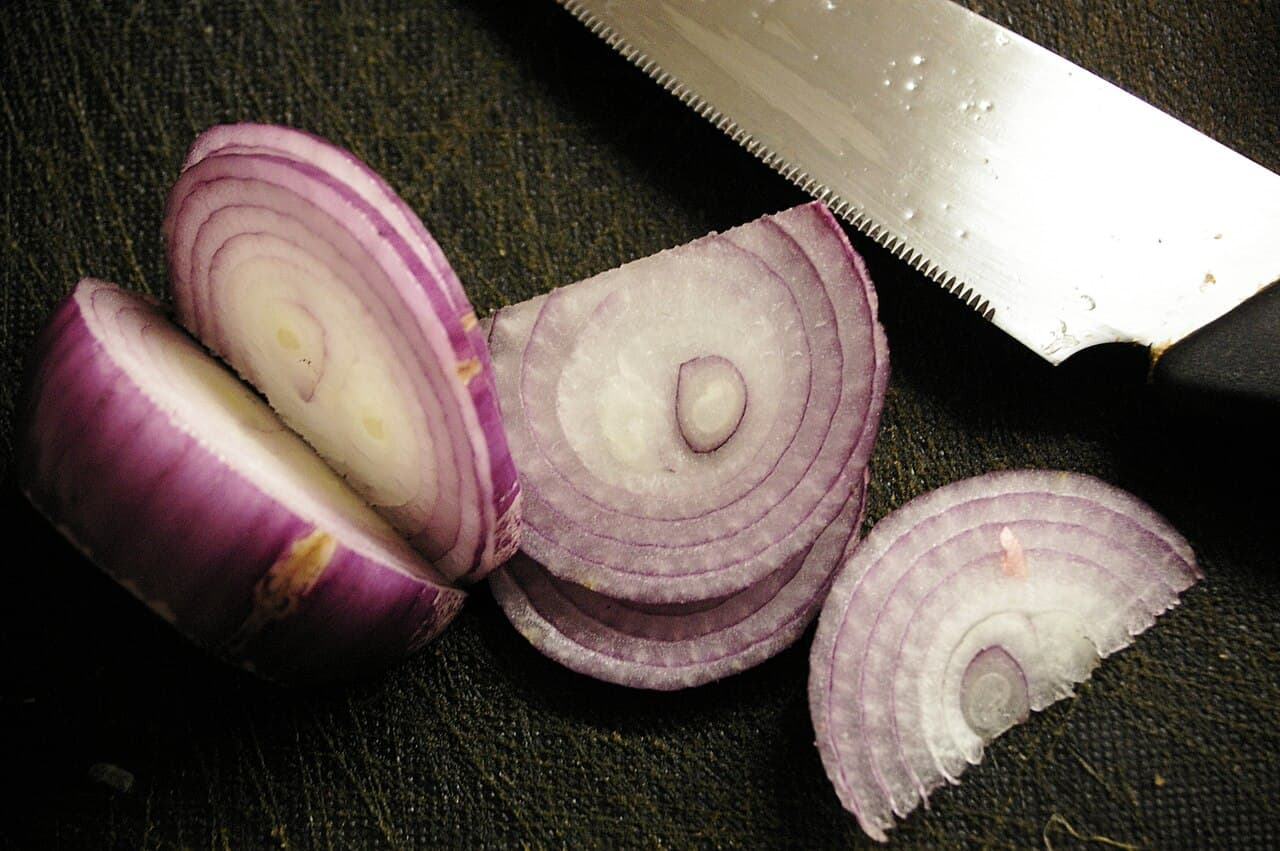
So a whole onion sitting on the counter is harmless. The weapon is assembled only at the moment of damage, which is exactly what makes it a good defence.
Knowing the chemistry gives you a few tricks. Cutting the onion under running water or in a basin of water reduces the sting. Leaving the root end intact helps too, because the base holds more of the sulfur compounds. And since the tear-making reaction works best at room temperature, chilling the onion first slows it down.
Plant breeders have gone further. After 30 years of cross-breeding, Bayer released tearless 'Sunions' in 2018, although some people find onions without the tear enzyme less flavorful.
Quiz me
0/3
Recap
Cutting breaks cells, enzymes mix, an irritant gas forms, and your tear glands wash it out of your eyes.
Surprising fact · Tearless onions now exist, bred over 30 years, although some people find them less flavorful.
Connects to
- 🧪 Why can sugar turn into alcohol without a single living cell?
- Tears
- Plant defense against herbivory
Sources (3)
No source, no claim. Every fact in this lesson (15 claims) cites at least one of these.