Why do so many epic poems start in the middle of the story?
The Iliad begins nine years into the Trojan War, straight on Achilles' rage. A Roman poet later held it up as the ideal opening, and epics from the Aeneid to Paradise Lost kept the trick.
▶ Start the storyBecause it grabs the listener and skips straight to what matters. Around 13 BC, the Roman poet Horace, who coined the phrases ab ovo ("from the egg") and in medias res ("into the middle of things"), described the ideal epic poet as one who does not begin the Trojan War from the egg, but "hurries to the action, and snatches the listener into the middle of things". His model was Homer. The Iliad begins nine years after the start of the Trojan War and opens abruptly on the rage of Achilles and its immediate causes; earlier events come later, through flashbacks, and the hero is typically at his lowest point when the story begins.
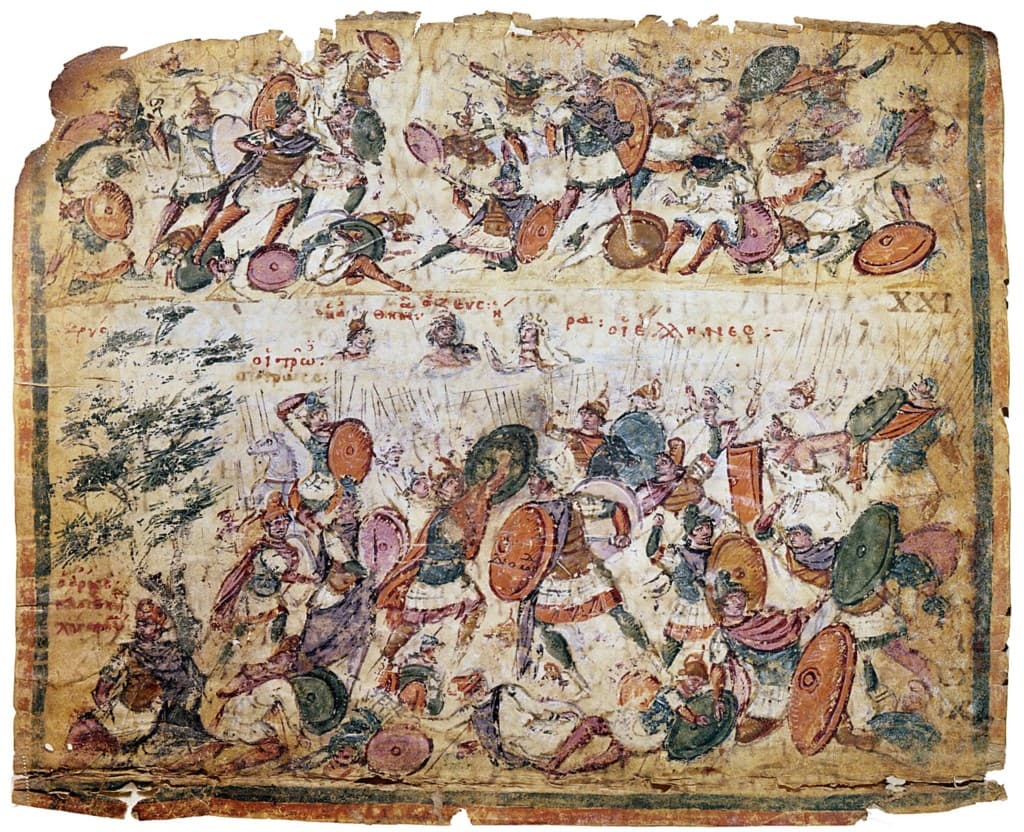
The Odyssey works the same way. We first meet Odysseus held captive on Calypso's island, Ogygia, and only in Books IX to XII do we learn that most of his journey happened before that moment. The habit probably goes back to oral tradition. Homer's epics were composed before writing existed, by bards who used complex rhetorical and metrical schemes to memorize the poem as they had received it and to add to it in performance, with stock phrases like "rosy-fingered dawn" and "wine-dark sea".
Once it was a convention of the genre, later poets kept it. Virgil used it in the Aeneid, and Dante's Divine Comedy and Milton's Paradise Lost also start in medias res. So does the Indian Mahabharata, the longest written epic from antiquity at about 1.8 million words. Not every epic does it, but the trick spread far beyond poetry: Shakespeare opens Hamlet after the old king's death, skipping exposition so the play can focus on Hamlet's state of mind and his desire for revenge.
Quiz me
0/3
Recap
When a story starts in the middle of the action and loops back later, it's using a move Horace praised in Homer more than two thousand years ago.
Surprising fact · The Mahabharata runs to about 1.8 million words, roughly ten times the length of the Iliad and Odyssey put together.
Sources (2)
No source, no claim. Every fact in this lesson (21 claims) cites at least one of these.