Why does Frankenstein's monster get to tell his own story?
Mary Shelley's novel is a letter, inside a confession, inside another confession. To reach the creature's own voice, you have to open three boxes first.
▶ Start the storyBecause Mary Shelley built the novel as stories nested inside each other, and the innermost one belongs to the creature. Robert Walton, leading an expedition to the North Pole, writes letters to his sister, and in them he records the story of Victor Frankenstein, whom he rescued on the Arctic ice. Midway through Victor's story, the creature meets him on the Mer de Glace and tells his own story, because he wants something: he asks Victor to create a female companion, which he believes is his only chance at happiness.
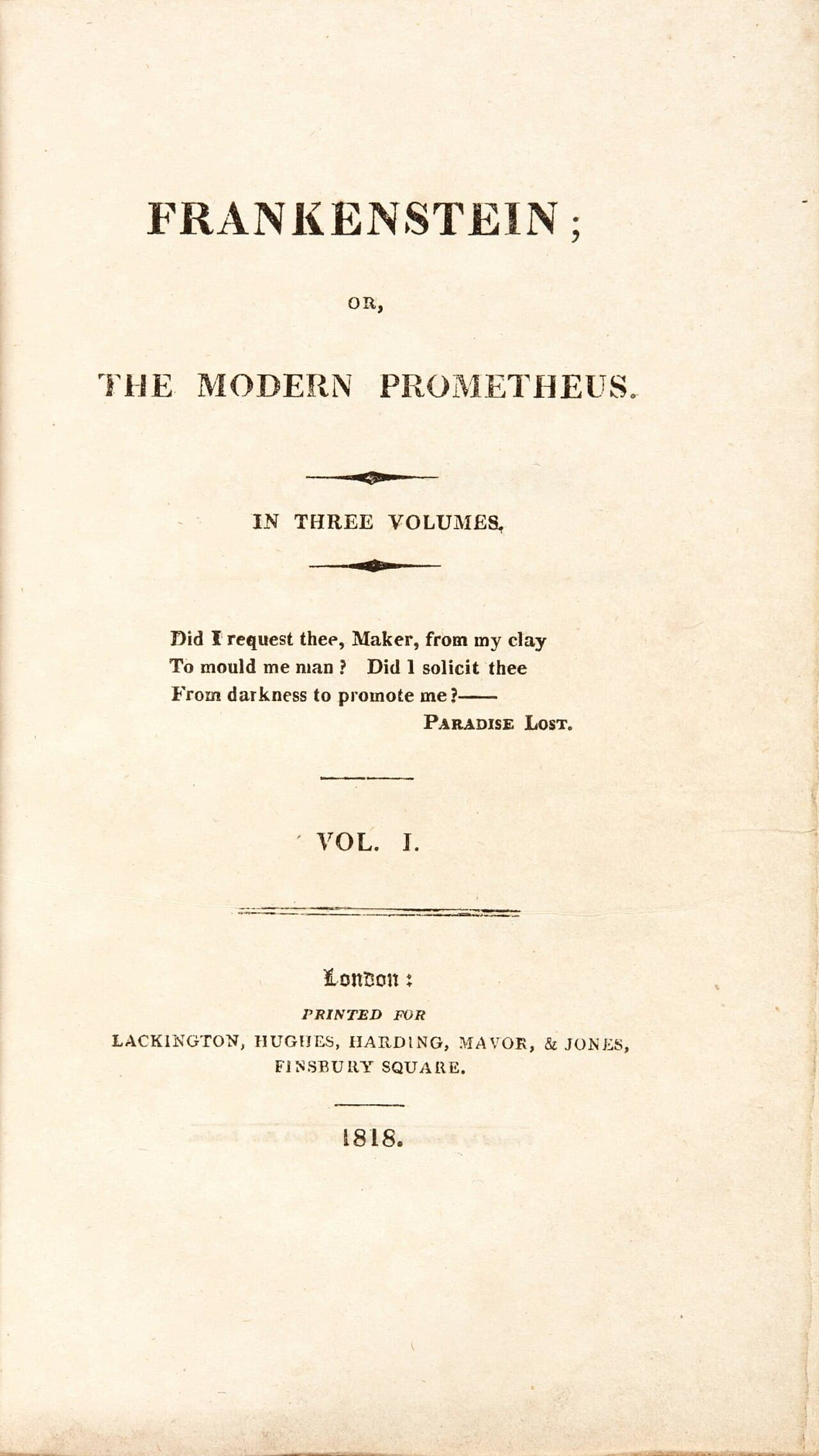
He can tell it well because of what happened to him. People found him frightening, so he hid beside a family's house, learned to speak and write by watching them teach their language to a foreigner, and learned to read from books including Paradise Lost. When the family finally saw him, they were horrified and chased him away. Letting him narrate this matters: a frame can position the reader's attitude toward a tale, and making a narrator a character inside the frame lets the writer keep a distance from what that narrator says.
This kind of structure is a frame story, and a set that fits together like Frankenstein's is sometimes called a Chinese box narrative, as in Plato's Symposion or Conrad's Heart of Darkness. The device is ancient: some of the earliest frame stories come from ancient Egypt, and Homer's Odyssey already has Odysseus tell of his wanderings at the court of King Alcinous. Not every critic admires Shelley's version, though: Germaine Greer claimed that its three narrators all speak in the same way.
Quiz me
0/3
Recap
When a book hands you a letter, or a diary, or someone recounting what someone else told them, ask what the frame lets the author get away with hiding or shading.
Surprising fact · The reader never hears the creature's story directly: it comes secondhand through Victor Frankenstein and thirdhand through Robert Walton's letters home.
Sources (2)
No source, no claim. Every fact in this lesson (17 claims) cites at least one of these.