How was writing invented?
The oldest name we can read may belong not to a king or a poet, but to someone keeping track of barley.
▶ Start the storyWriting was not invented once by a genius: it was invented at least four separate times, and each time it grew slowly out of bookkeeping. Scholars recognize independent inventions in Mesopotamia around 3400 to 3100 BC, in Egypt around 3250 BC, in China before about 1250 BC and in Mesoamerica before about 1 AD. For a long time experts assumed it had happened only once, in Sumer, and spread from there.
c. 3400–3100 BC
Mesopotamia
c. 3250 BC
Egypt
before c. 1250 BC
China
before c. 1 AD
Mesoamerica
In Mesopotamia, the story starts with counting. Small clay tokens stood for amounts of livestock or goods, and were sealed inside round clay envelopes. Later, people simply marked signs on flat clay tablets. The first cuneiform was a number system pressed into clay, soon joined by little pictures of what was being counted: sheep, barley, beer. This was proto-writing, useful for records but unable to capture a sentence.
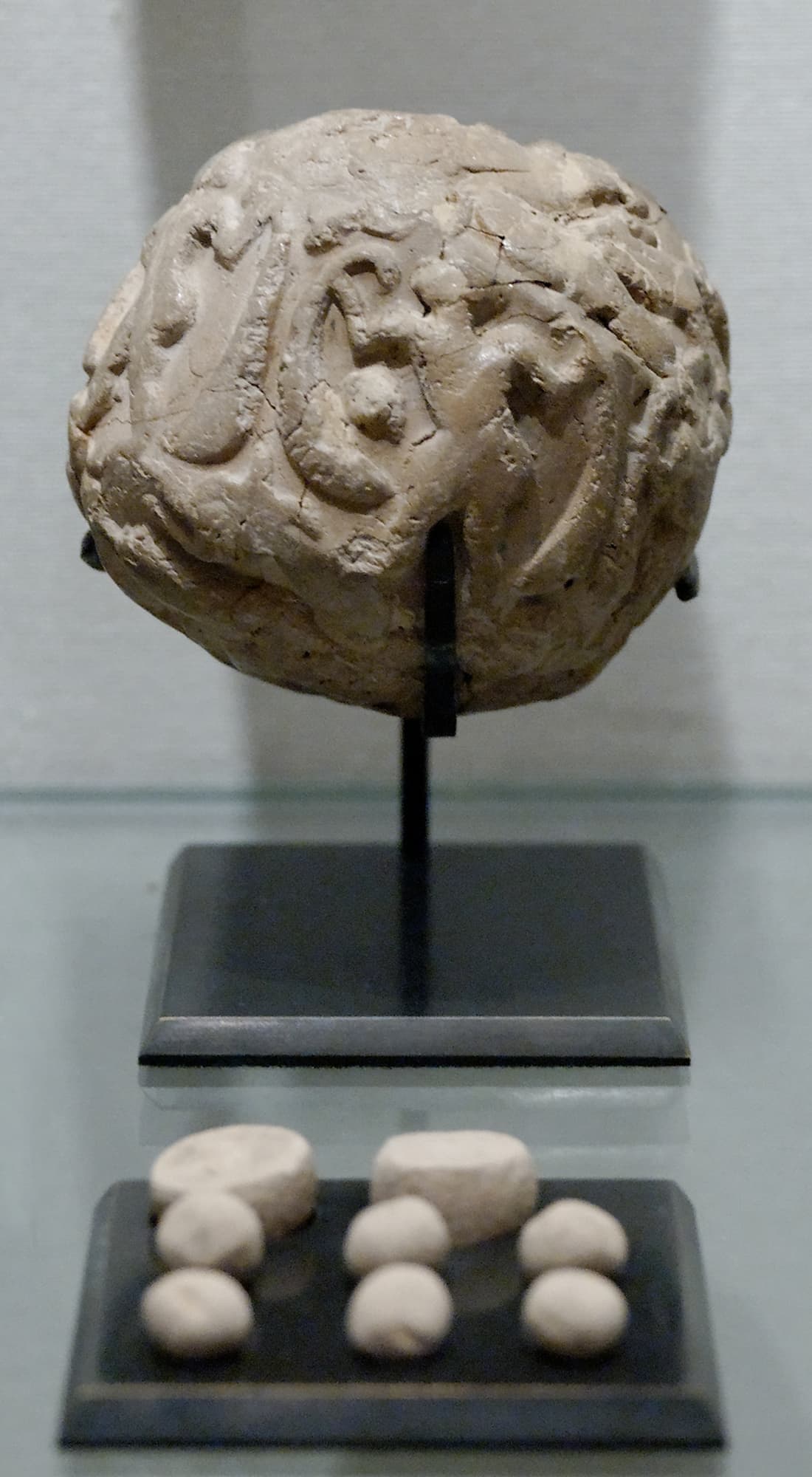
The leap to true writing came with the rebus trick, the same one used in picture puzzles: using a sign for its sound instead of its meaning. It made abstract words and names writable, and by the 29th century BC cuneiform had signs for Sumerian syllables. One of the earliest known names in writing, Kushim, appears on tablets tracking barley, one of them among the first examples of rebus writing. Poems had to wait about another thousand years.
Quiz me
0/3
Recap
Counting came first, pictures second, and the rebus trick of using signs for sounds turned records into real writing.
Surprising fact · Literature appears about a thousand years after the first writing, which was mostly bookkeeping.
Connects to
- 📜 How did scholars learn to read the world's oldest writing again?
- 🪨 How did the Rosetta Stone crack Egyptian hieroglyphs?
- Proto writing
- History of accounting
- Sumer
Sources (4)
No source, no claim. Every fact in this lesson (16 claims) cites at least one of these.