Why did a brand-new luxury skyscraper start sinking and leaning?
San Francisco's Millennium Tower opened in 2009 as the tallest residential building west of the Mississippi. By 2016 it had sunk 16 inches, and by 2022 it leaned 28 inches, on piles that stopped in sand instead of reaching bedrock.
▶ Start the storyBecause its foundation stops short of solid rock. San Francisco's Millennium Tower, a 58-story, 645-foot condominium tower that opened in 2009 as the tallest residential building west of the Mississippi, stands on concrete friction piles only 60 to 90 feet deep, embedded in dense sand and held up by friction with the soil. Some nearby buildings pushed their piles directly into bedrock 200 feet below. A foundation's job is to carry a building's weight into the ground, and what designers fear most is settlement, especially one part sinking more than another.
That is what the tower did. By 2016 it had sunk 16 inches and tilted about six inches at the top; by 2022 the tilt, measured from the roof, had reached 28 inches. Who is to blame is still disputed: the developer points at construction of the neighbouring Transbay Transit Center, but the sinking reportedly began before that work broke ground. When residents were told in 2016, several lawsuits followed.
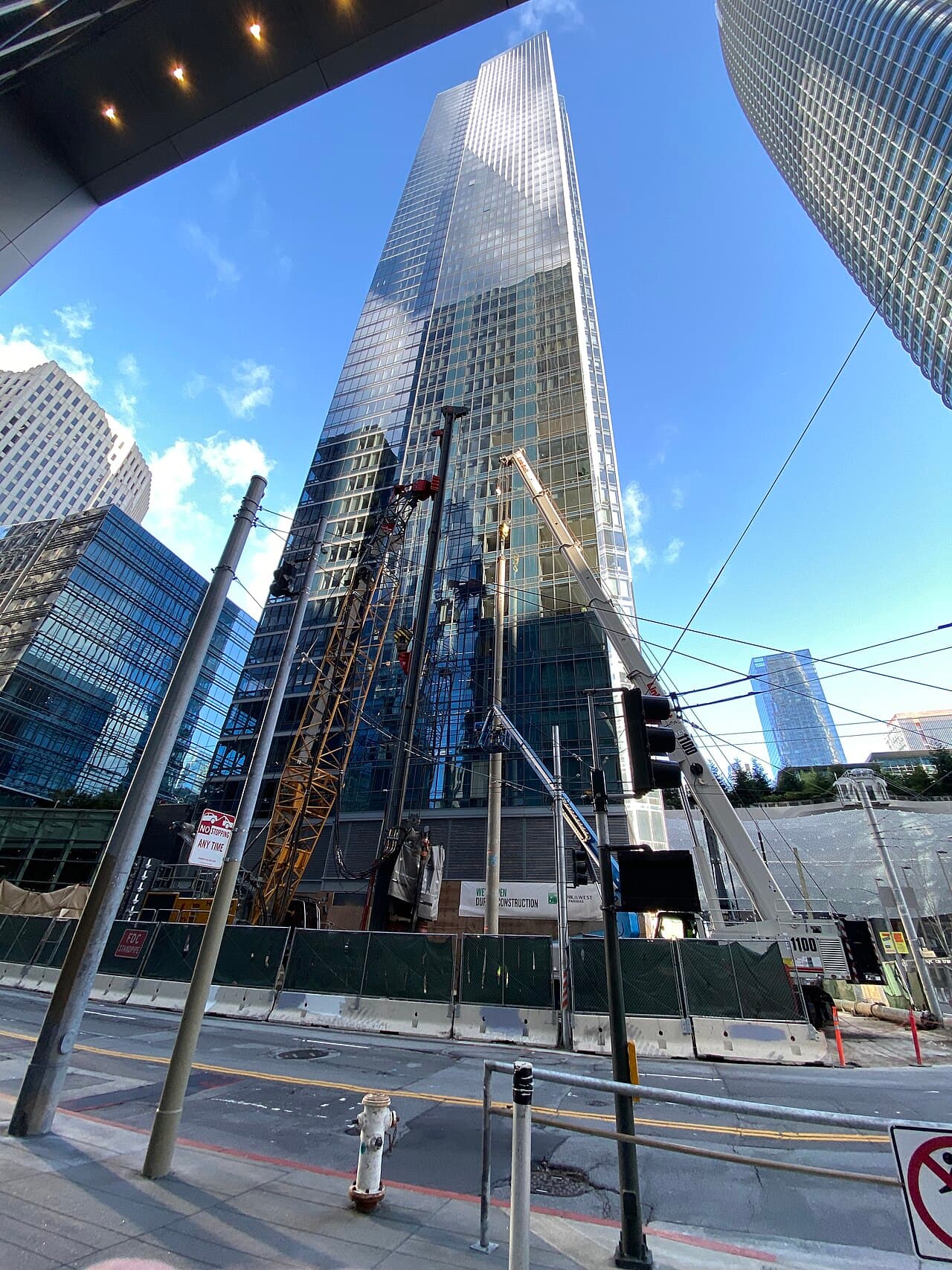
The fix was to reach bedrock after all. Engineers first proposed 52 new piles along the north and west sides, 250 feet down into bedrock and tied into the original foundation, at an estimated $100 million. A scaled-down version with 18 piles, on the two sides where the tower leans most, was completed in June 2023. It immediately stopped the lean from growing and even reversed it by a quarter inch, then a full inch, though more slowly than the engineers' model had predicted. In 2025 the retrofit won a Structure of the Year award.
Quiz me
0/3
Recap
Deep foundations anchor a structure in strong ground below weak soil; the Millennium Tower sank and tilted for years on piles that relied on friction in sand instead of reaching bedrock.
Surprising fact · The Millennium Tower's friction piles stopped 60 to 90 feet down in sand, while the planned fix sent new piles 250 feet down into bedrock.
Sources (2)
No source, no claim. Every fact in this lesson (16 claims) cites at least one of these.