Why does the Leaning Tower of Pisa lean, and why hasn't it fallen?
A century of wars may have saved the tower, and in the 1990s engineers rescued it by digging away the ground beneath it.
▶ Start the storyThe Leaning Tower of Pisa leans because it was built on ground too soft to hold it. In 1178, when the builders had reached only the second floor, the tower began to sink: its foundation was just three metres deep, in weak, unstable subsoil. The design was flawed from the start.
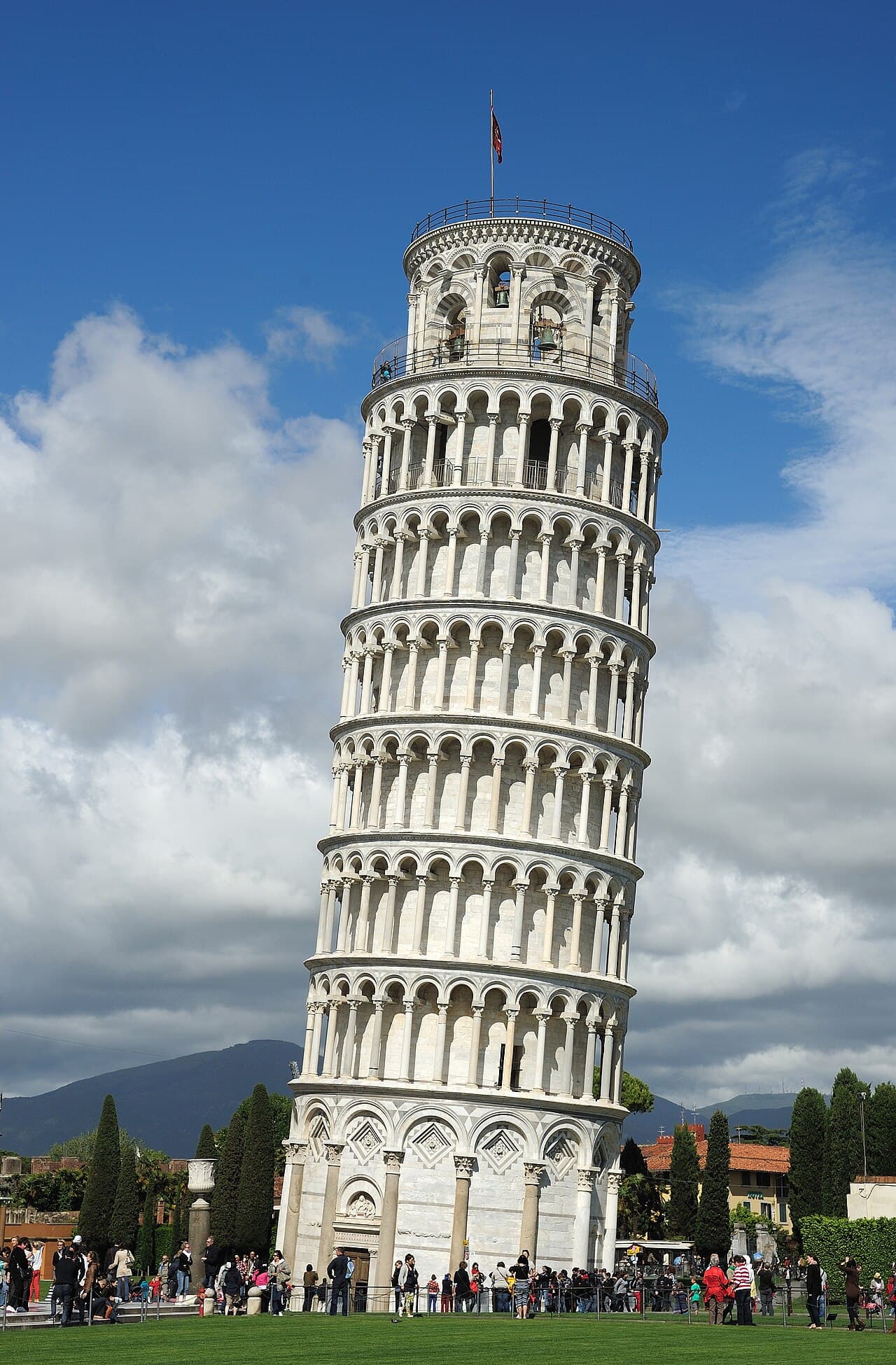
It hasn't fallen thanks to a strange mix of luck and engineering. First, war. Pisa was fighting Genoa, Lucca and Florence almost constantly, so construction stopped for most of a century. That long pause let the soil settle under the weight, and without it the tower would almost certainly have toppled. When work resumed, builders tried to correct the lean by making the upper floors taller on one side, which is why the tower is actually slightly banana-shaped.
By 1990 the tilt had reached 5.5 degrees, and after a tower collapsed in Pavia, Pisa's was closed. Engineers couldn't touch the ground on the leaning side without risking disaster, so they did the opposite: they gently removed soil from under the high side, letting it sink back. The top moved back 45 centimetres, and the tilt fell to 3.97 degrees. Nobody wanted it straight, though: the lean is what brings the tourists. In 2008 engineers announced that the tower had stopped moving for the first time in its history.
1178
Tower starts sinking at the second floor
~1180s–1270s
Wars halt work; the soil settles
1990
Tilt reaches 5.5°; tower closed
1993
870 tonnes of lead counterweights
2001
Soil removed; tilt 3.97°; reopened
2008
Tower stops moving for the first time
Quiz me
0/3
Recap
Soft soil made it lean, a long pause let it survive, and removing soil from the high side made it safe.
Surprising fact · A century-long pause caused by wars let the soil settle; without it the tower would almost certainly have fallen.
Sources (2)
No source, no claim. Every fact in this lesson (16 claims) cites at least one of these.