Why do racing cyclists ride in a tight pack?
Tucked in the middle of the bunch, a rider can face up to 95% less drag. Even the rider in front saves a little.
▶ Start the storyRacing cyclists bunch together because the riders behind are hiding from the air. A rider tucked close behind another sits in the low-pressure pocket the leader drags along, so there is far less air to push through. This is called drafting, or slipstreaming, and in a pack the payoff is dramatic: in the middle of a well-formed group, drag can drop by as much as 95 percent. Oddly, even the rider in front saves a little energy when someone sits on their wheel.
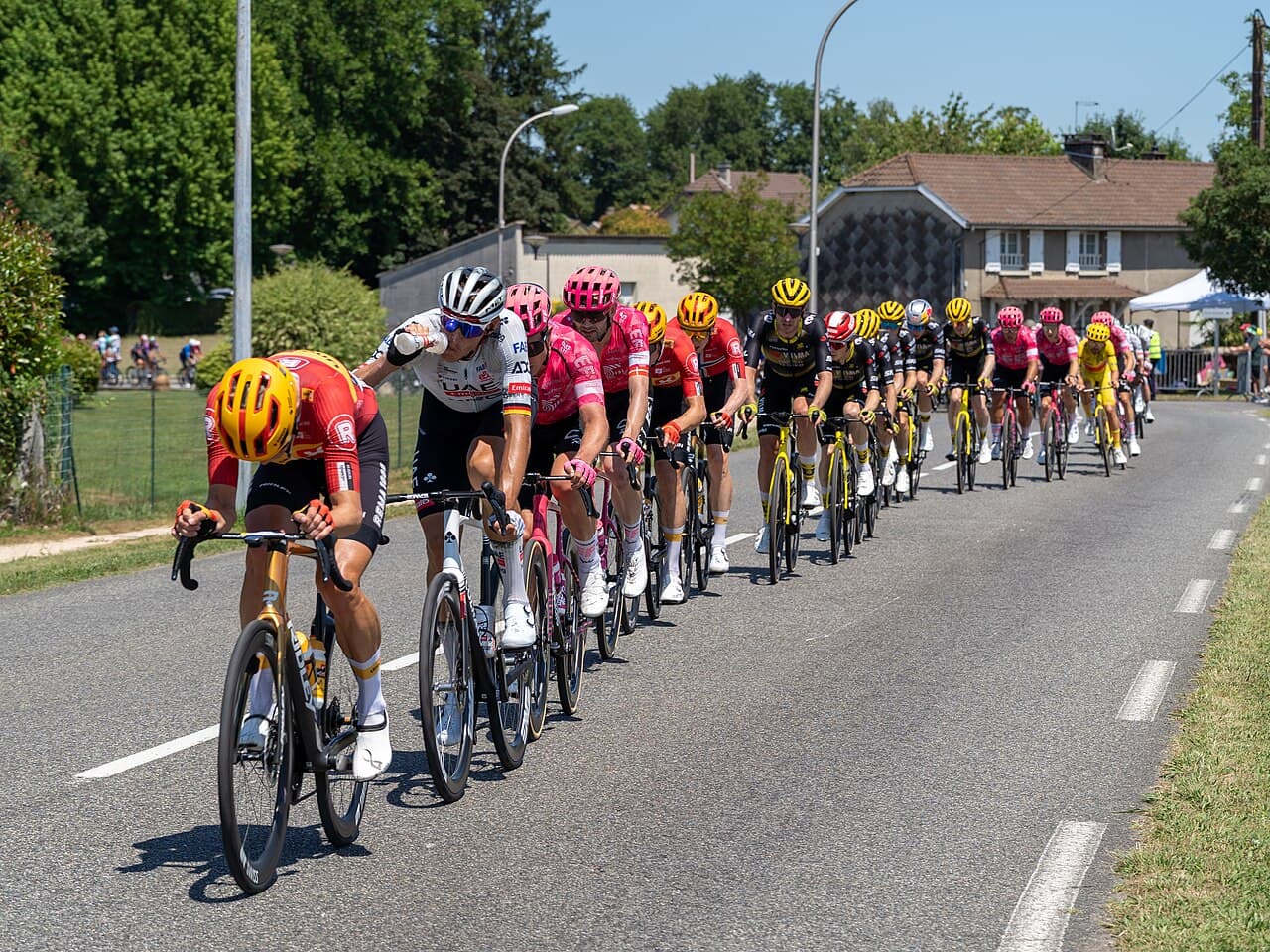
That is why the main pack, the peloton (from a French word that originally meant 'platoon'), never sits still. Riders at the front take the full wind and tire fastest, so after a stint they drift back into the shelter to recover while others move up. Sometimes rivals share the work by taking turns at the front; sometimes one rider simply sits behind another to keep energy for a final attack. Researchers even study pelotons with game theory, as a social dilemma: one computer model found that weaker riders do better by dodging their turn at the front, while stronger riders do better by cooperating.
Cyclists did not invent the trick. Stock car racers stumbled on it at the 1960 Daytona 500, when Junior Johnson discovered that tucking in behind faster cars let his slower Chevrolet keep up, and he won the race. Geese use a cousin of the idea: in a V formation, each bird gets lift from the rising air spun off the wingtip of the bird ahead.
Quiz me
0/3
Recap
The rider in front breaks the air and tires fastest; everyone behind rides in their low-pressure wake for a fraction of the effort.
Surprising fact · Stock car racers only discovered drafting at the 1960 Daytona 500, when Junior Johnson used it to win with a slower car.
Sources (2)
No source, no claim. Every fact in this lesson (17 claims) cites at least one of these.