Why does the Tour de France leader wear yellow?
The most famous jersey in cycling is the colour of a newspaper, and that newspaper was yellow because its rival was green.
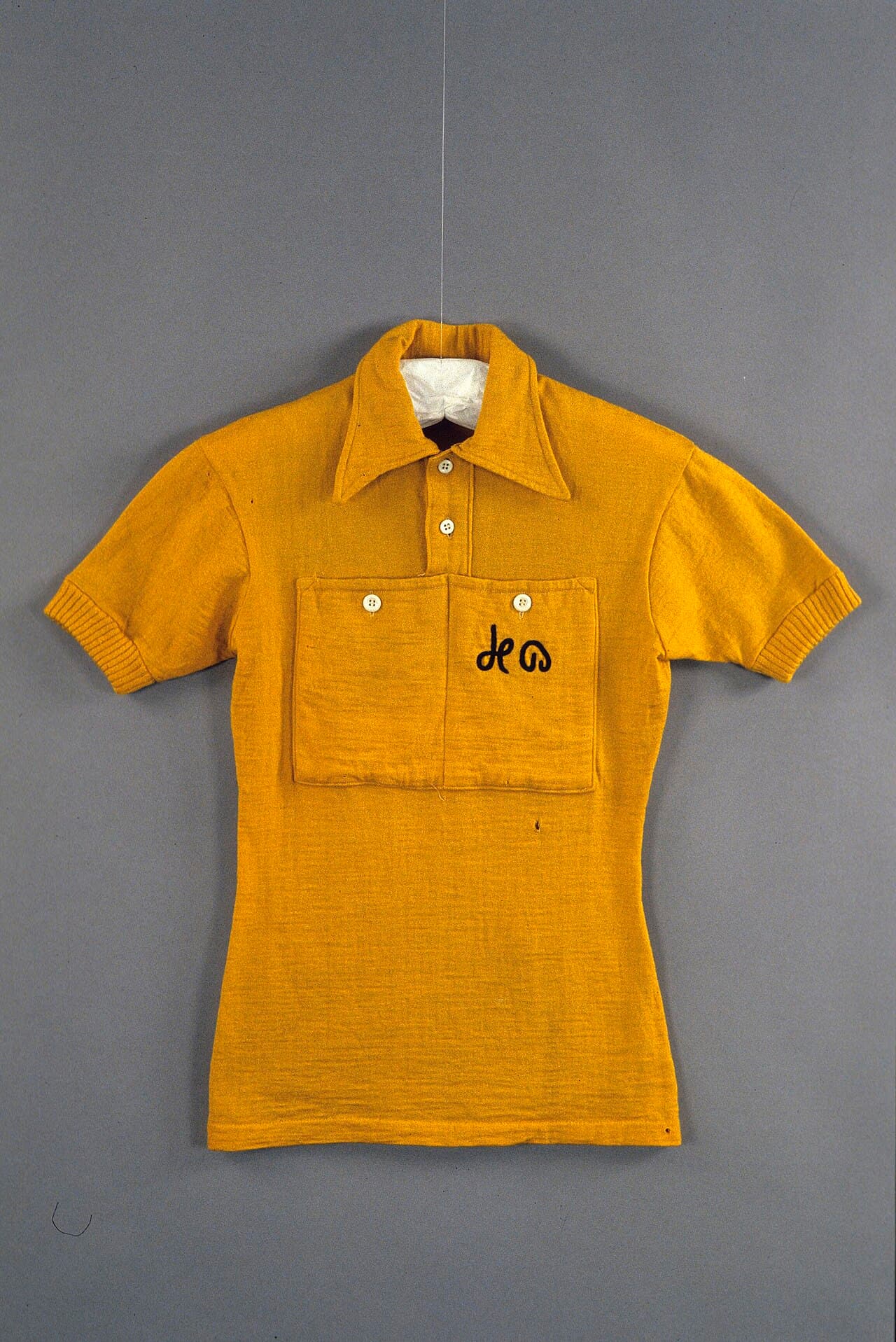
▶ Start the storyThe Tour de France leader wears yellow because of a newspaper. The race was launched in 1903 by L'Auto, a sports paper printed on yellow paper, as a way to sell more copies. When the leader's jersey was introduced in 1919, it came in the colour of L'Auto. The race director, Henri Desgrange, even wrote that the man leading the race should wear a jersey in the colours of his paper.
And why was the paper yellow? Because of a rivalry. L'Auto was created, first as L'Auto-Vélo in 1900, by industrialists angry at a sports paper, Le Vélo, whose editor Pierre Giffard defended Alfred Dreyfus. A court then ruled that the new title was too close to Le Vélo, so it became plain L'Auto. Giffard's paper used a green tint, so L'Auto was printed on yellow.
The gamble paid off. Circulation jumped from 25,000 before the first Tour to 65,000 after it, and reached 500,000 copies a day during the 1923 Tour.
The first official yellow jersey was worn on 19 July 1919 by Eugène Christophe, who did not enjoy it: spectators imitated canaries whenever he rode past. There is another explanation for the colour, that yellow was unpopular and the only colour a maker could supply at short notice, but Desgrange's own words make the newspaper story more likely. Today the rule is simple: after each stage, the rider with the lowest total time pulls on the yellow jersey, and whoever wears it after the final stage in Paris wins the Tour.
L'Auto's circulation, boosted by the Tour
copies
| Circulation | |
|---|---|
| Before 1903 Tour | 25,000 copies |
| After 1903 Tour | 65,000 copies |
| 1908 | 250,000 copies |
| 1923 Tour | 500,000 copies |
Quiz me
0/3
Recap
Yellow jersey = yellow newspaper: the Tour was a marketing idea that became a legend.
Surprising fact · L'Auto was printed on yellow paper because its rival Le Vélo used a green tint.
Sources (2)
No source, no claim. Every fact in this lesson (16 claims) cites at least one of these.