What kind of logic guesses the best explanation?
Wet grass could mean it rained, or that the sprinkler ran, or that dew settled overnight. The logician who built a theory of this everyday guessing admitted that even a well-prepared mind's guesses are wrong more often than right.
▶ Start the storyYou step outside and see the grass is wet. It probably rained overnight, you think. But it could just as easily be dew, or a sprinkler that ran at dawn. That everyday leap, picking the single most plausible explanation for something you've observed, without being able to prove it, is exactly what logicians call abductive reasoning.
It sits alongside two more familiar kinds of logic. Deduction guarantees its conclusion: if Socrates is a man, and all men are mortal, then Socrates is mortal, no room for doubt. Induction generalises from repeated observation, though it can still be wrong later, the way seeing only white swans once supported 'all swans are white,' until black swans turned up. Abduction is different from both: it doesn't generalise and it doesn't guarantee anything, it just proposes the best available explanation for one specific, puzzling observation, like wet grass.
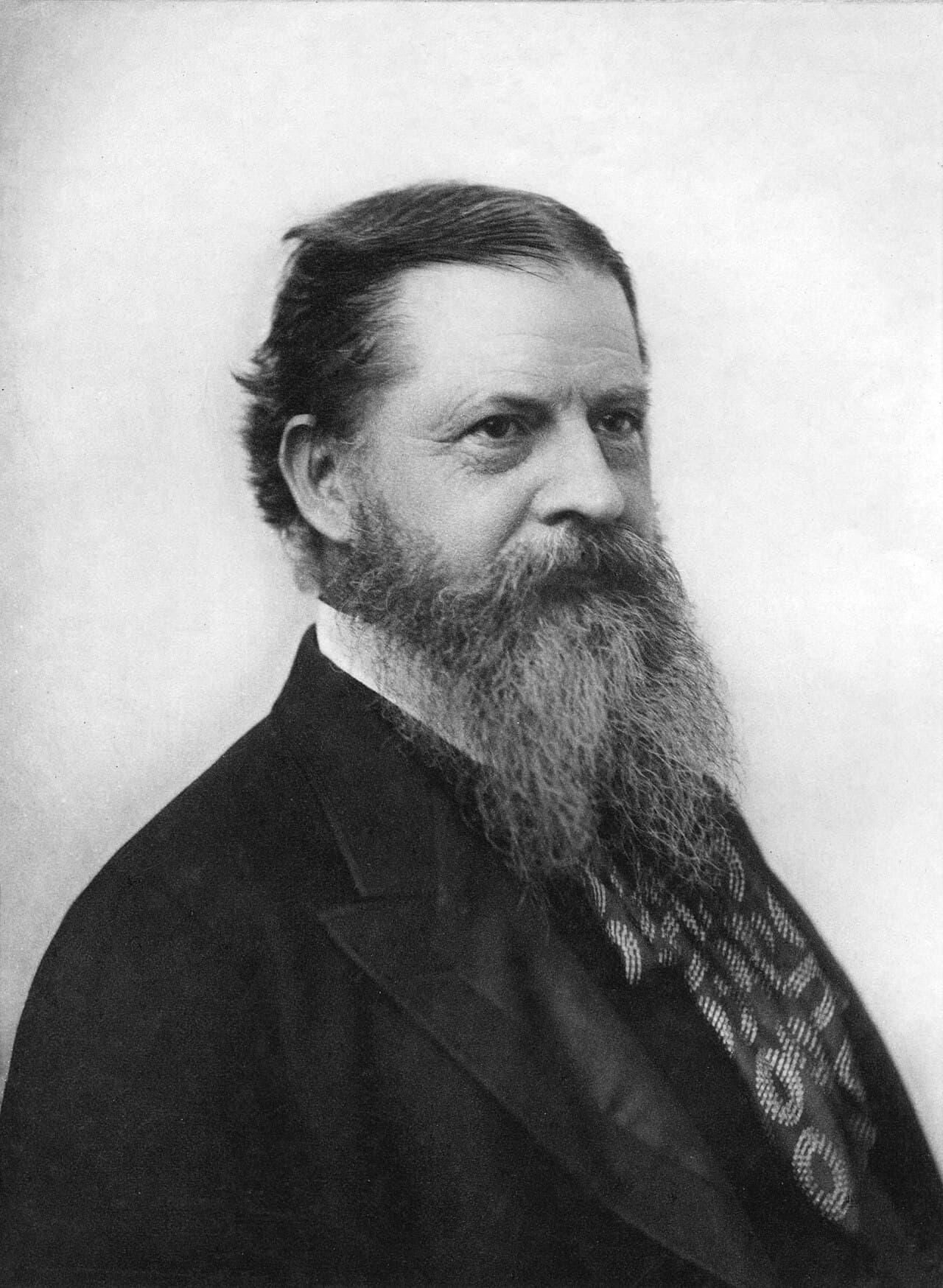
The American philosopher Charles Sanders Peirce developed this idea from the second half of the 19th century, and he was remarkably honest about its limits. In his own words, abduction is really just guessing, 'very little hampered' by strict logical rules, and even a well-trained mind gets its individual guesses wrong more often than right. What makes abduction useful anyway, Peirce argued, is that educated guessing still beats random luck by a wide margin, and it's the only method humans have for generating genuinely new ideas in the first place. In 1910 he even admitted that in almost everything he had printed before 1900 he had more or less mixed up hypothesis and induction.
The idea found a second life a century later. As computing power grew in the 1990s, researchers in law, computer science and artificial intelligence rediscovered abduction, and today diagnostic systems, the kind that guess what's wrong with a patient or a machine from a list of symptoms, routinely run on exactly this kind of reasoning.
Quiz me
0/3
Recap
When you see wet grass and guess it rained, you're not deducing or generalising, you're abducing: picking the best explanation you can, while admitting it might be wrong.
Surprising fact · Peirce himself admitted in 1910 that he had confused abduction with induction in much of his own earlier published work.
Sources (1)
No source, no claim. Every fact in this lesson (12 claims) cites at least one of these.