Is the simplest explanation really the best one?
Occam's razor is named after a medieval friar who never wrote its famous line, and the name itself was coined three centuries after he died.
▶ Start the storyNot exactly. Occam's razor doesn't say the simplest explanation is true. It says that when two explanations account for the facts equally well, you should prefer the one that needs the fewest assumptions. The "razor" shaves away whatever you don't need.
The reasoning is almost arithmetic: every assumption is one more thing that could be wrong, so an assumption that doesn't make a theory more accurate only makes it more likely to fail. Doctors learn a version of it as "When you hear hoofbeats, think of horses, not zebras": reject the exotic diagnosis when a common one is more likely.
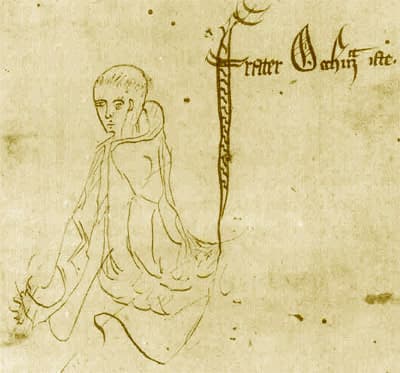
The principle is named after William of Ockham, a 14th-century English friar and philosopher, and is usually quoted as "Entities must not be multiplied beyond necessity". The twist is that Ockham never wrote those words. He didn't invent the idea either: Ptolemy was already recommending the simplest hypothesis in the second century. Ockham simply used it so often and so well that it stuck to him, and the phrase "Occam's razor" only appeared in 1649, three centuries after his death.
c. AD 90–168
Ptolemy praises the simplest hypothesis
1347
William of Ockham dies
1639
John Punch writes the famous version
1649
Libert Froidmont coins "Occam's razor"
The razor is a rule of thumb, not a judge. Appeals to simplicity were once used to dismiss meteorites and continental drift, and atoms looked like an unnecessary complication until evidence showed they were real.
Quiz me
0/3
Recap
The razor picks the explanation with the fewest assumptions among equally good ones; it doesn't guarantee the simple one is true.
Surprising fact · William of Ockham never wrote the line attributed to him, and the name "Occam's razor" was coined in 1649.
Sources (1)
No source, no claim. Every fact in this lesson (16 claims) cites at least one of these.