Why can't we see ultraviolet light, when it's strong enough to burn us?
Your retina can actually detect ultraviolet. It's the lens in front of it that blocks the view, and people without one see UV as a whitish violet.
▶ Start the storyWe can't see ultraviolet mostly because the front of our eye filters it out. Ultraviolet, or UV, is light with wavelengths just shorter than violet, between 100 and 400 nanometres. The lens of the human eye blocks most of it before it reaches the back of the eye, and the cornea stops the shortest wavelengths. Surprisingly, the retina itself is quite sensitive to UVA: people who lack a lens see UV as a whitish blue or violet. Birds, insects and some mammals can see near-UV, and birds even have a fourth colour receptor just for it.
Invisible doesn't mean harmless. Each UV photon carries more energy than visible light, enough to break chemical bonds in molecules, including DNA. That is what lies behind a suntan and a sunburn. The Sun pours out so much UV that life on land would be impossible if the atmosphere, mainly ozone and oxygen, didn't absorb most of it. UV isn't only a villain, though: UVB is what lets our skin make vitamin D.
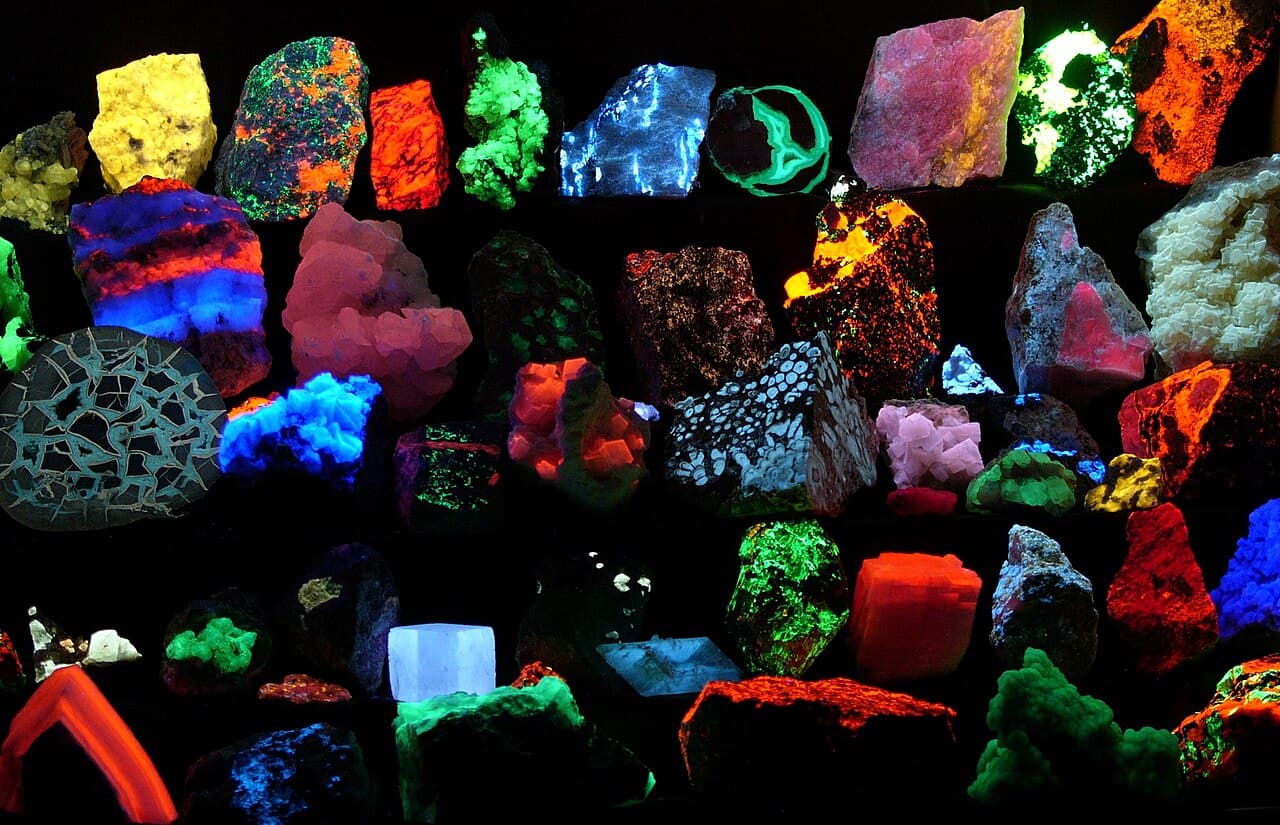
UV was discovered in 1801 by the German physicist Johann Wilhelm Ritter. He noticed that something invisible, just beyond the violet end of the spectrum, darkened paper soaked in silver chloride faster than violet light itself. For most of the 19th century people called it 'chemical rays'.
Quiz me
0/3
Recap
UV is 'beyond violet': more energetic than visible light, blocked by our eye's lens and mostly by the ozone layer.
Surprising fact · Birds have a fourth colour receptor for ultraviolet, giving small birds true UV vision.
Sources (2)
No source, no claim. Every fact in this lesson (18 claims) cites at least one of these.