How did one treaty get ratified by every country in the UN?
It took just 18 months to go from discovering a hole in the ozone layer to a binding global treaty to fix it, and today every UN member state has ratified it.
▶ Start the storyBy making the threat impossible to ignore and the deal possible for everyone to join. The Montreal Protocol, agreed in 1987 to phase out the chemicals destroying the ozone layer, has been ratified by 198 parties: every UN member state, plus the Cook Islands, Niue, the Holy See, the State of Palestine and the European Union. That made it the first universally ratified treaty in United Nations history, and former UN secretary-general Kofi Annan called it "perhaps the single most successful international agreement to date."
The threat came from chemistry. In 1974, chemists Frank Sherwood Rowland and Mario Molina found that CFCs, chemicals used in refrigeration and spray cans, were stable enough to rise into the stratosphere, where ultraviolet radiation would break them apart and release chlorine atoms that could destroy large amounts of ozone. Then, in 1985, British Antarctic Survey scientists measured abnormally low ozone over Halley Bay and linked it to rising CFCs. That unforeseen discovery, NASA's images of the "ozone hole," and that vivid metaphor itself proved shocking enough for negotiators to take the issue seriously.
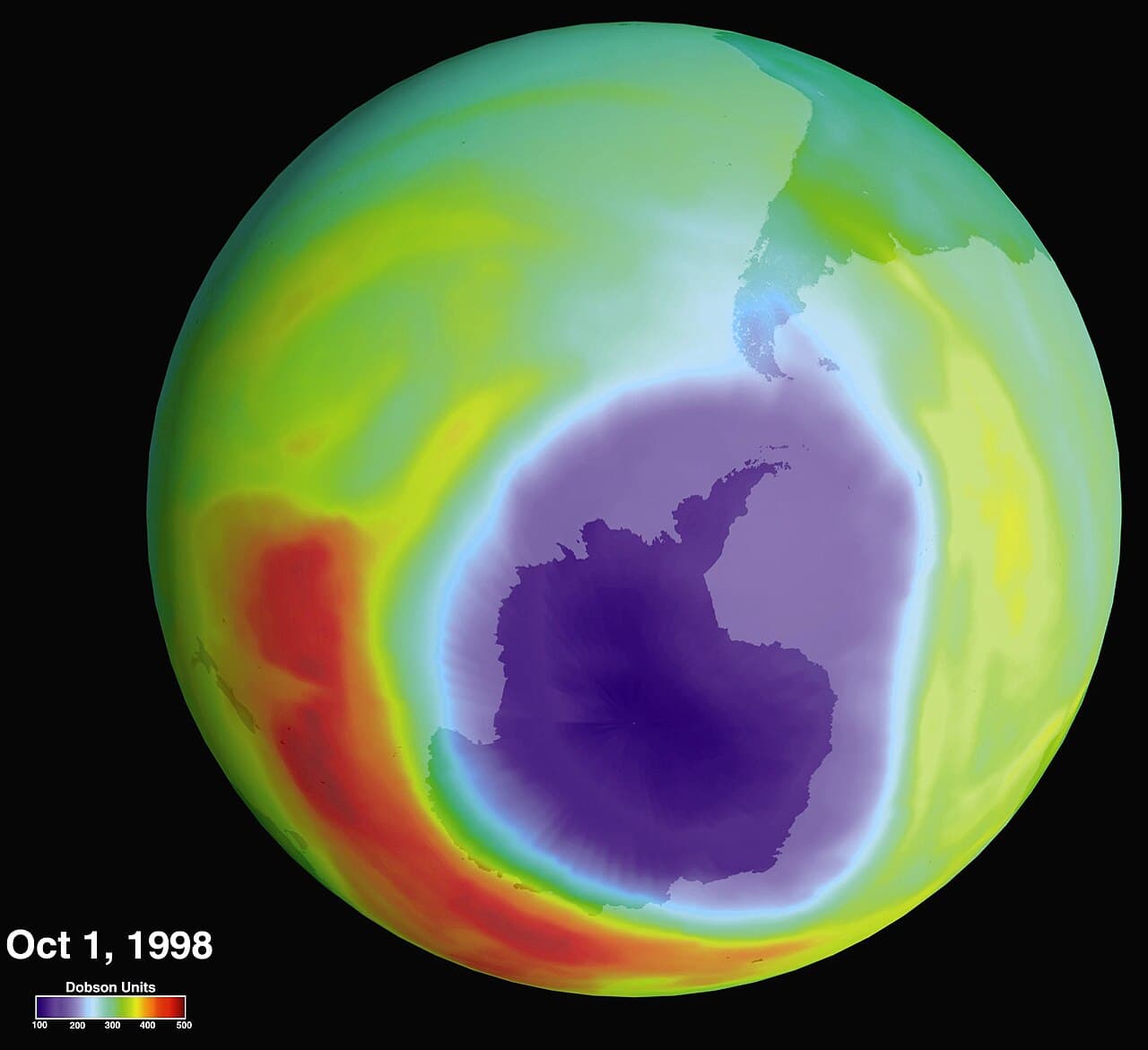
The treaty then moved at a speed treaties almost never do: from the discovery of the ozone hole, it took just 18 months to reach a binding agreement in Montreal. Mostafa Kamal Tolba, then head of the UN Environment Programme, is considered the "father of the Montreal Protocol" for bringing the nations together.
And the treaty was built so that everyone could sign on: developing countries got extra time to comply, plus a financial mechanism to help them do it. The result is measurable: the Antarctic ozone hole is slowly recovering, and the ozone layer is projected to return to 1980 levels around 2040 across much of the world, and by 2066 over Antarctica.
Quiz me
0/3
Recap
The ozone layer is projected to return to 1980 levels around 2040 across much of the world and 2066 over Antarctica.
Surprising fact · It took just 18 months from the discovery of the Antarctic ozone hole to a binding global treaty to address it.
Sources (2)
No source, no claim. Every fact in this lesson (14 claims) cites at least one of these.