How does radar see through clouds, fog and darkness?
A single BBC radio transmitter and a bomber flying around a field in 1935 proved Britain could detect aircraft it couldn't see, and the system built from that test helped win the Battle of Britain.
▶ Start the storyRadar sees through clouds, fog and darkness because it doesn't use light at all: it uses radio waves, and it makes its own. Fog, clouds, rain and falling snow block visible light, but they are usually transparent to radio waves, which the medium they pass through absorbs only weakly. And because a radar sends out its own radio waves, a process called illumination, instead of relying on sunlight or moonlight, night makes no difference to it.
Those waves bounce back especially well off good electrical conductors, like the metal of an aircraft or a ship, seawater or wet ground. Time the round trip of a short pulse, multiply by the speed of the signal and halve it, and you know how far away the object is. If the object is moving toward or away from the radar, the echo's frequency shifts slightly, the Doppler effect, which reveals its speed too.
Making it practical started with a rumour. In 1935 Robert Watson-Watt was asked to judge reports of a German radio "death ray" and handed the question to Wilkins, who calculated it was basically impossible but remembered that aircraft could cause radio interference. On 26 February 1935, in the Daventry Experiment, a powerful BBC shortwave transmitter served as the source, a receiver sat in a field, and a bomber flew around the site. The plane was clearly detected, and funding followed immediately.
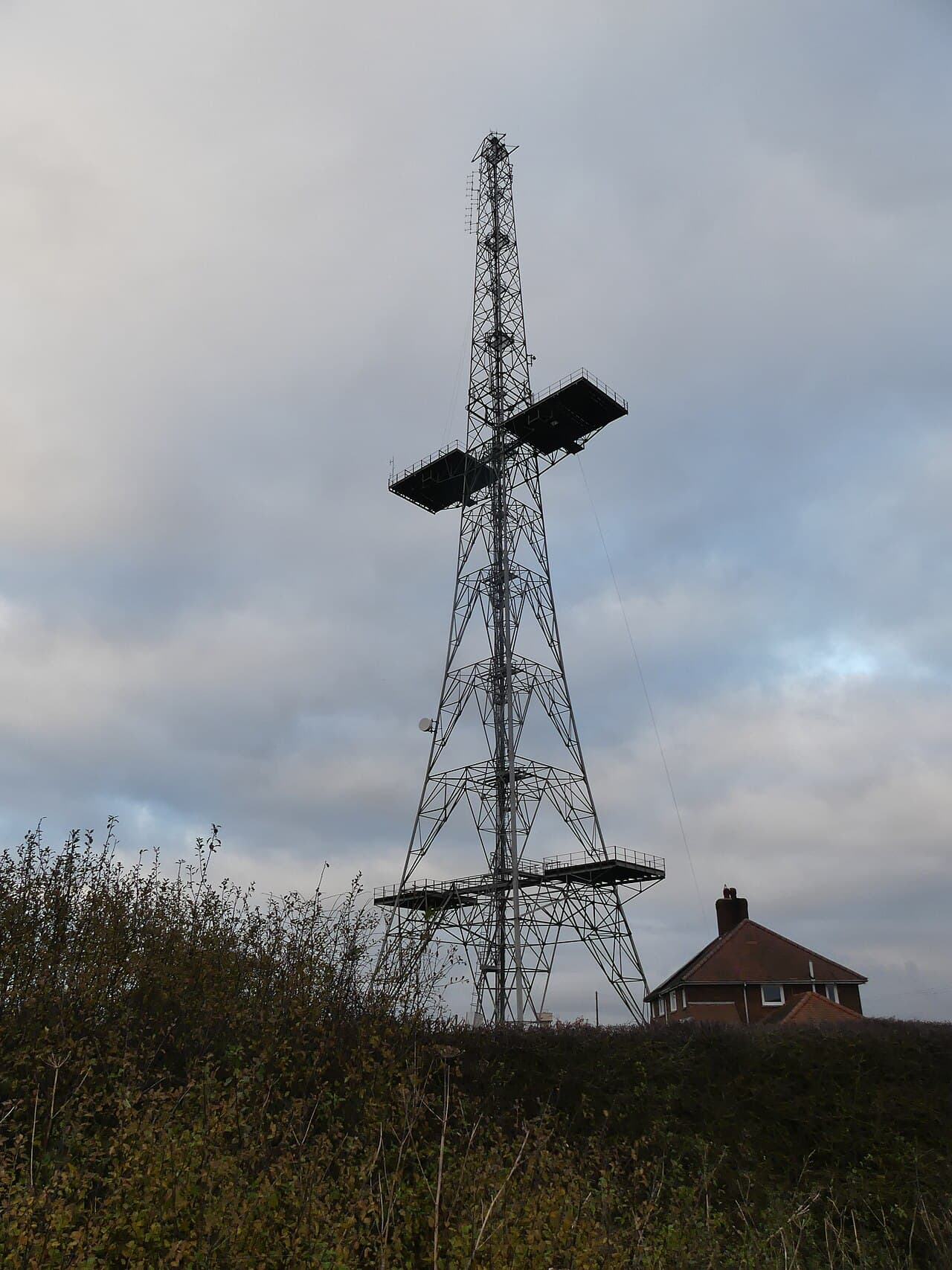
That work led to Chain Home, a network of detection stations along England's East and South coasts, ready for the outbreak of World War II. Its advance warning helped the Royal Air Force win the Battle of Britain: without it, Britain would have needed fighters it didn't have constantly in the air.
Quiz me
0/3
Recap
Radar measures distance from the round-trip time of a reflected radio pulse, and measures speed from the Doppler shift in the frequency of that echo.
Surprising fact · Radar research in Britain began with testing whether a German 'death ray' was real, and a single Daventry field test in 1935 proved aircraft could be detected by radio waves instead.
Connects to
Sources (1)
No source, no claim. Every fact in this lesson (14 claims) cites at least one of these.