How does a camel's body survive for days without water?
The hump isn't a water tank. The real tricks are oval blood cells, a nose that recaptures water from its own breath, and a body temperature that swings six degrees over the day.
▶ Start the storyA camel survives for days without water not because of its hump, but because of a whole set of physiological adaptations working together. It's a common myth that the hump stores water; it actually stores fatty tissue as a reserve of calories, and burning that fat even costs the camel some water, since breathing in the oxygen needed to metabolize it evaporates moisture from the lungs. The real water reserve shows up after a camel drinks: it can down as much as 140 litres in one sitting, and that water goes straight into the bloodstream, not into the humps.
Holding that much extra fluid in the blood is where another oddity helps. Unlike other mammals, camels have oval rather than round red blood cells, a shape that lets them flow during dehydration and withstand the big swings in osmotic pressure of a huge drink without rupturing.
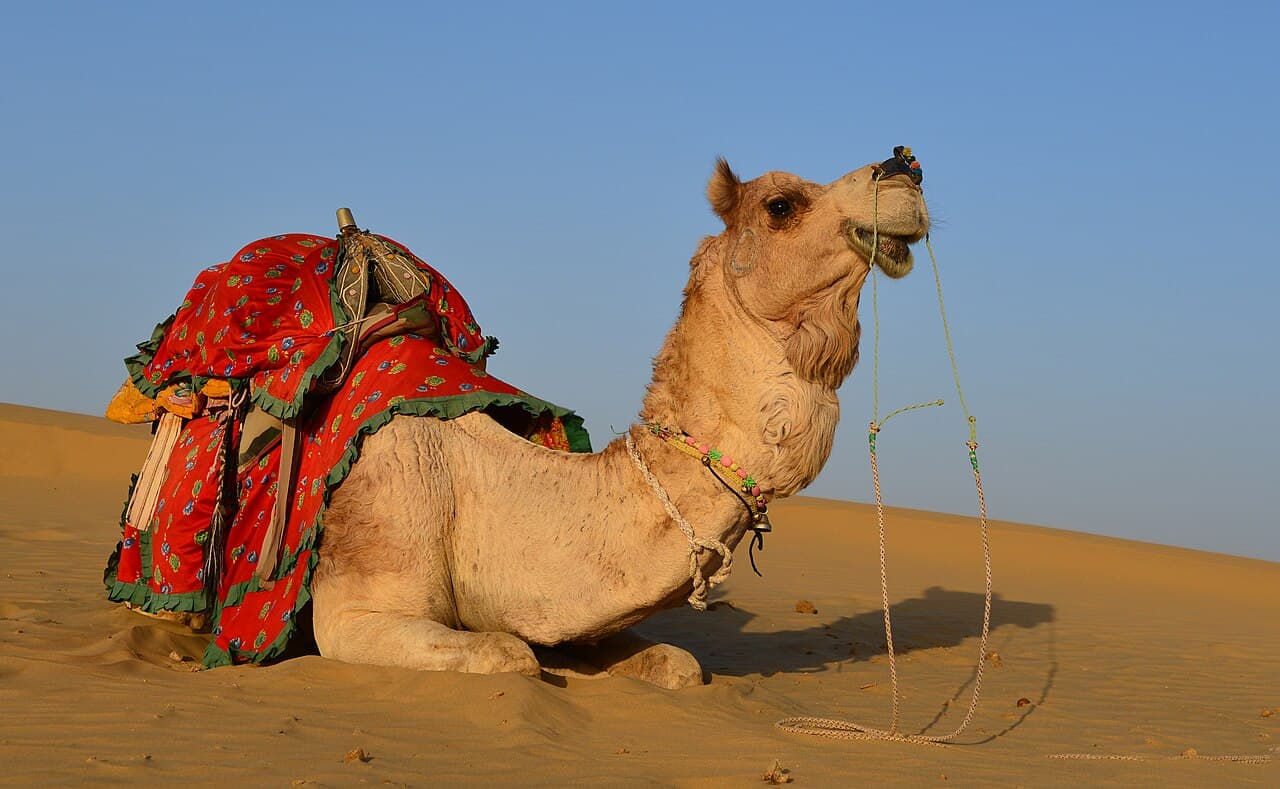
Camels also tolerate swings in body temperature that would kill most other mammals: theirs rises from about 34°C at dawn to 40°C by sunset, then falls again overnight. And they are thrifty: a camel loses only about 1.3 litres of fluid a day, while other livestock lose 20 to 40 litres. The brain still has to be kept within limits, and camels manage that with a rete mirabile, a tight network of arteries and veins whose countercurrent flow cools the blood heading to the brain.
When a camel does sweat, in brutal heat upward of 49°C, the moisture evaporates right at the skin under its coat rather than off the coat's surface, pulling heat from the body itself rather than from the air, and its thick coat insulates it from the heat radiating off the sand: a shorn camel must sweat 50 percent more to avoid overheating. Even its nose helps: breathing out, a camel traps water vapor in its nostrils and pulls it back into the body instead of losing it to the desert air. Altogether, these adaptations let a camel survive losing a quarter of its body weight in water, where most mammals go into cardiac failure after losing just 12 to 14 percent.
Quiz me
0/3
Recap
Camels tolerate a body temperature that swings from 34°C to 40°C across the day, and they lose only about 1.3 litres of fluid daily, against 20 to 40 litres for other livestock.
Surprising fact · A camel's hump stores fat for energy, not water; the water it drinks, up to 140 litres at once, is stored in its bloodstream instead.
Sources (1)
No source, no claim. Every fact in this lesson (12 claims) cites at least one of these.