What was a working day really like in an early British factory?
Twelve hours a day, six days a week, a bell instead of a sunrise — and men who broke machines, a poet who defended them in Parliament, and a mill owner who tried something else entirely.
▶ Start the storyA working day in an early British factory ran from dawn to dusk, six days a week. A bell, not the sun, said when it started. Most workers had no say in any of it.
Factories existed because the new machines, like Arkwright's water frame, were too big for a cottage. So work moved to the machines. Workers were gathered in one place, supervised, and each given a narrow task. Twelve-hour days stayed common until the late 1800s. Women were often paid little more than a quarter of what men earned. Children became a major part of the workforce.
Some workers fought back. From 1811 to 1816, the Luddites smashed machines in protest, first around Nottingham, then in the North West and Yorkshire. In 1812, Parliament made machine-breaking a capital crime. The poet Lord Byron rose in the House of Lords to oppose the law. He said he had seen less wretchedness in the 'most oppressed provinces of Turkey' than in England. Mill owners shot at protesters. Luddites led by George Mellor killed the mill owner William Horsfall, and three of them were hanged.
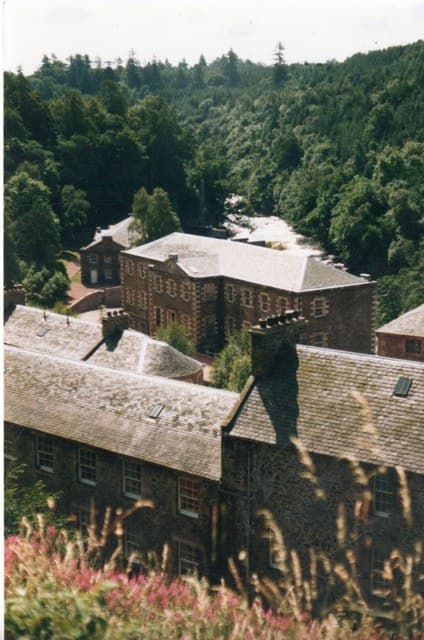
Change came slowly, from two directions. At his New Lanark mills, Robert Owen worked to improve conditions, and became a key thinker of early socialism. In 1832, Michael Sadler's report shocked the public with testimony from women and children. In 1833, a new law created professional factory inspectors. In 1847, millworkers finally won the Ten Hour Act they had long campaigned for. None of the disasters its opponents predicted came true.
1811–1816
Luddites break machines around Nottingham, then in the North West and Yorkshire
1812
Machine-breaking made a capital crime; Byron opposes the law in Parliament
1832
Sadler's report shocks public opinion
1833
A professional Factory Inspectorate is created
1847
The Ten Hour Act finally limits the working day
Quiz me
0/3
Recap
Twelve-hour, six-day weeks were common for most of the 1800s; Luddites smashed machines, Robert Owen tried reform from inside, and the 1847 Ten Hour Act finally shortened the day.
Surprising fact · Destroying a factory machine was made a capital crime in 1812, and Lord Byron spoke against that law in the House of Lords.
Sources (4)
No source, no claim. Every fact in this lesson (14 claims) cites at least one of these.