Can two neighbors solve a pollution dispute without a court?
A farmer's wheat, a rancher's cattle, no fence between them. One economist said that if striking a deal were cheap, the outcome would be the same no matter who the law sides with.
▶ Start the storyIn theory, yes, as long as nothing stands in the way of striking a deal; in practice, Coase himself thought that was rare. That is the surprising claim behind the Coase theorem, named for the economist Ronald Coase, who first worked it out while thinking about a very different problem: two radio stations broadcasting on the same frequency and drowning each other out. Coase argued that as long as the right to broadcast was clearly assigned to someone, it did not actually matter who got it first. The station that stood to make more money from broadcasting would simply pay the other one to back off, and the airwaves would end up used by whoever valued them most.
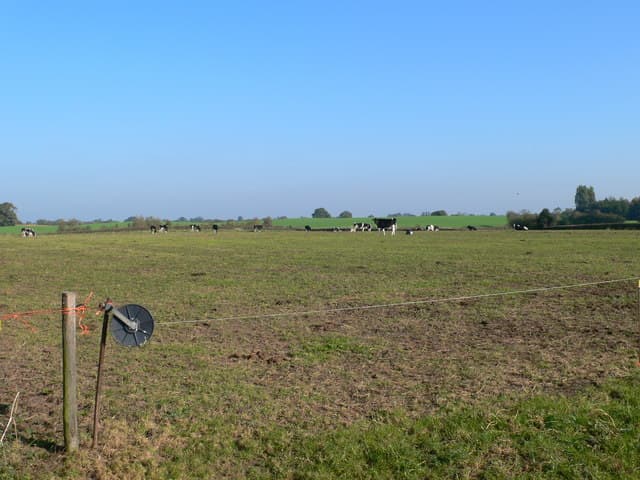
The classic illustration is simpler: a farmer growing wheat next to a rancher's cattle, with no fence between them. If the animals wander in and trample the crops, who should pay? The theorem's answer is that it barely matters whether the law protects the farmer's crops or the rancher's right to graze. If fencing the farm is the cheapest way to stop the damage, bargaining will produce that fence either way, because whichever side is told to pay will prefer to pay for the cheaper fix instead.
The catch, which Coase stressed just as much as the headline result, is the phrase 'as long as nothing stands in the way.' Bargaining only reaches that tidy outcome when property rights are clearly defined, few people are involved, and the cost of striking the deal is close to zero. The moment many people are affected, or nobody can agree on who owns what, negotiation becomes expensive or impossible, and the initial assignment of rights starts to matter a great deal, since someone now has to absorb a cost nobody is paying them to fix.
Step 1: Clear rights
Someone must hold a clearly defined right, even if the law could have assigned it to either side
Step 2: Cheap bargaining
The cost of negotiating a deal must be close to zero
Step 3: Few parties
Only a small number of people need to agree, or organizing them gets too expensive
Step 4: No wealth effects
Who starts out richer must not change which outcome is efficient
Quiz me
0/3
Recap
When a deal is cheap to strike, the fence gets built in the same place no matter who the law says has to pay for it.
Surprising fact · Coase developed the idea while studying interfering radio stations, and he won the Nobel Prize for it three decades after publishing it, at age 80.
Sources (3)
No source, no claim. Every fact in this lesson (15 claims) cites at least one of these.