Why was 1816 the year without a summer?
In June 1816, snow fell in New York State, and a volcano on the other side of the world was to blame.
▶ Start the storyBecause a volcano on the other side of the world had dimmed the Sun. In April 1815, Mount Tambora, in what is now Indonesia, exploded in the most powerful eruption in recorded human history. The blast was heard at least 2,600 kilometres away, and it pushed ash and sulfur gases more than 40 kilometres up, into the stratosphere. From there, winds spread a fine veil around the whole planet.
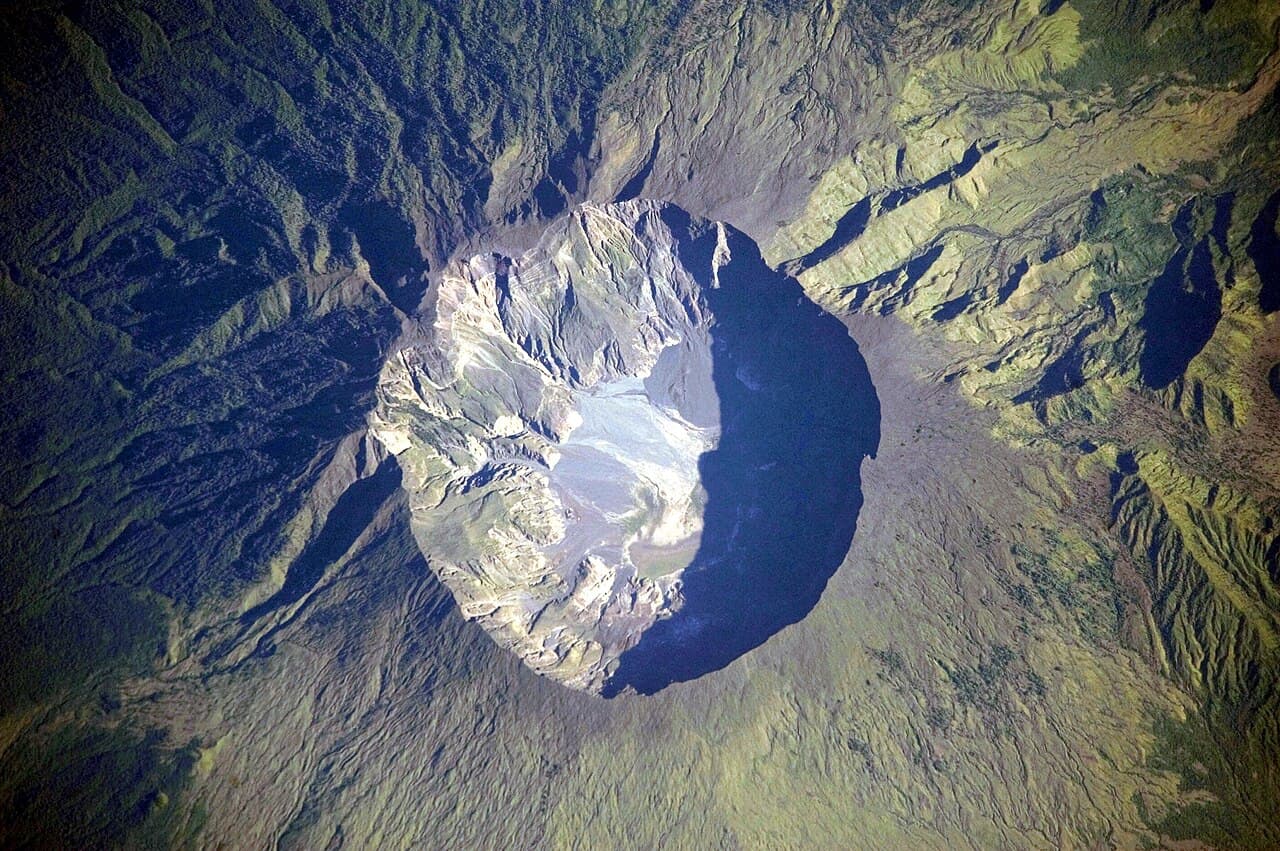
That veil blocked sunlight. The next year, 1816, became known as the Year Without a Summer. Europe had its coldest summer on record between 1766 and 2000. In New England, frost killed crops in May, and on 6 June snow fell in Albany, New York. Across the Northern Hemisphere, harvests failed and food ran short. Europe, still recovering from the Napoleonic Wars, suffered its worst famine of the century, and hungry crowds rioted in its cities.
The strangeness showed up in the sky, too. In the eastern United States, a dry fog dimmed the Sun so much that people could see sunspots with the naked eye. Hungary had brown snow, and red snow fell in northern Italy.
The gloom even left a mark on literature. That June, endless rain kept Mary Shelley, Lord Byron and their friends indoors at a villa in Switzerland. Byron challenged everyone to write a ghost story, and Mary Shelley began Frankenstein.
One mountain, one explosion, and a whole year of summer went missing.
Quiz me
0/3
Recap
Tambora erupted in 1815, and in 1816 the summer went missing.
Surprising fact · In June 1816 snow fell in Albany, New York, and a dry fog let people see sunspots with the naked eye.
Sources (2)
No source, no claim. Every fact in this lesson (34 claims) cites at least one of these.