Why do we play it safe with gains but gamble to avoid losses?
Offered a sure win, most people grab it. Facing a sure loss, the same people roll the dice. Two psychologists turned that flip into a Nobel-winning theory.
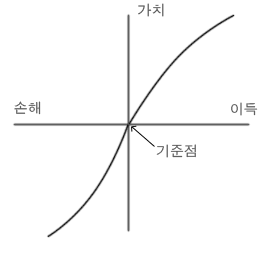
▶ Start the storyWe play it safe with gains and gamble with losses because we don't judge outcomes by how much we end up with, but by whether they feel like a gain or a loss from where we stand now. That is the heart of prospect theory, developed by Daniel Kahneman and Amos Tversky in 1979. Losses hurt more than equal gains please, so we grab a sure win, and we take wild chances to dodge a sure loss.
Facing a gain
- Sure $450, or 50% chance of $1,000
- Most take the sure $450
- Risk averse
Facing a loss
- Sure loss of $500, or 50% chance of losing $1,100
- Most take the gamble
- Risk seeking
Their classic test makes it vivid. Offered a sure $450 or a 50 percent chance at $1,000, most people take the sure money, even though the gamble is worth more on average. Offered a sure loss of $500 or a 50 percent chance of losing $1,100, the same people now gamble, hoping to lose nothing. A quick calculation from those numbers shows the gamble is worth $500 on average in the first case and costs $550 on average in the second: both times, people pick the option a cool calculator would reject.
The theory had a second twist: we give too much weight to rare events and too little to near certainties, treating a 1 percent chance almost like 5 percent. That helps explain why people pay extra for insurance against unlikely mishaps.
The paper became the most cited in economics, and Kahneman won the 2002 Nobel Prize in economics, though he said he never took a single economics course. Tversky, who died in 1996, would have shared it, Kahneman wrote.
Quiz me
0/3
Recap
We play safe when we are winning and gamble when we are losing, because losses loom larger than gains.
Surprising fact · Kahneman and Tversky decided the author order of their first paper with a coin flip, and their 1979 paper became the most cited in economics.
Connects to
- 🎲 How did an unfinished game of chance give birth to probability theory?
- ☕ Why does a mug feel more valuable the moment it becomes yours?
- 📈 If prices already reflect everything we know, can anyone really beat the stock market?
- ⚖️ Do losses really hurt twice as much as gains?
- 🐇 Do we really have a fast mind and a slow mind?
- 🏷️ Why do so many prices end in .99?
Sources (2)
No source, no claim. Every fact in this lesson (20 claims) cites at least one of these.