Why is the Fibonacci sequence named after a man who didn't discover it?
Indian scholars were counting the Fibonacci numbers over a thousand years before Fibonacci was born, and even the name 'Fibonacci sequence' was coined by someone else, 600 years after his book.
▶ Start the storyThe 'Fibonacci sequence' is named after a man who neither discovered it nor gave it that name. Fibonacci numbers, where each one is the sum of the two before it, 0, 1, 1, 2, 3, 5, 8, 13, 21, and so on, were first described in Indian mathematics as early as 200 BC, in a scholar named Pingala's work on counting patterns of long and short syllables in Sanskrit poetry. That's more than a thousand years before Leonardo of Pisa, nicknamed Fibonacci, introduced the sequence to Western European mathematics in his 1202 book Liber Abaci.
The Indian discovery wasn't a one-off either. Sanskrit poets wanted to count every possible pattern of long (two-beat) and short (one-beat) syllables that fit into a line of a given length, and it turns out the number of such patterns is exactly a Fibonacci number. Pingala left a cryptic formula hinting at the rule, Bharata Muni's Natya Shastra (written sometime between about 100 BC and 350 AD) shows knowledge of it too, a scholar named Virahanka worked out the pattern in full around 700 AD (preserved only through a later quotation), and Hemachandra described the same addition rule again around 1150.
Fibonacci himself used the sequence for something entirely different: an idealized, biologically unrealistic thought experiment about how fast a population of rabbits would grow if every pair mated at one month old, produced a new pair from the end of its second month on, and never died. Counting the pairs month by month produces exactly the Fibonacci sequence.
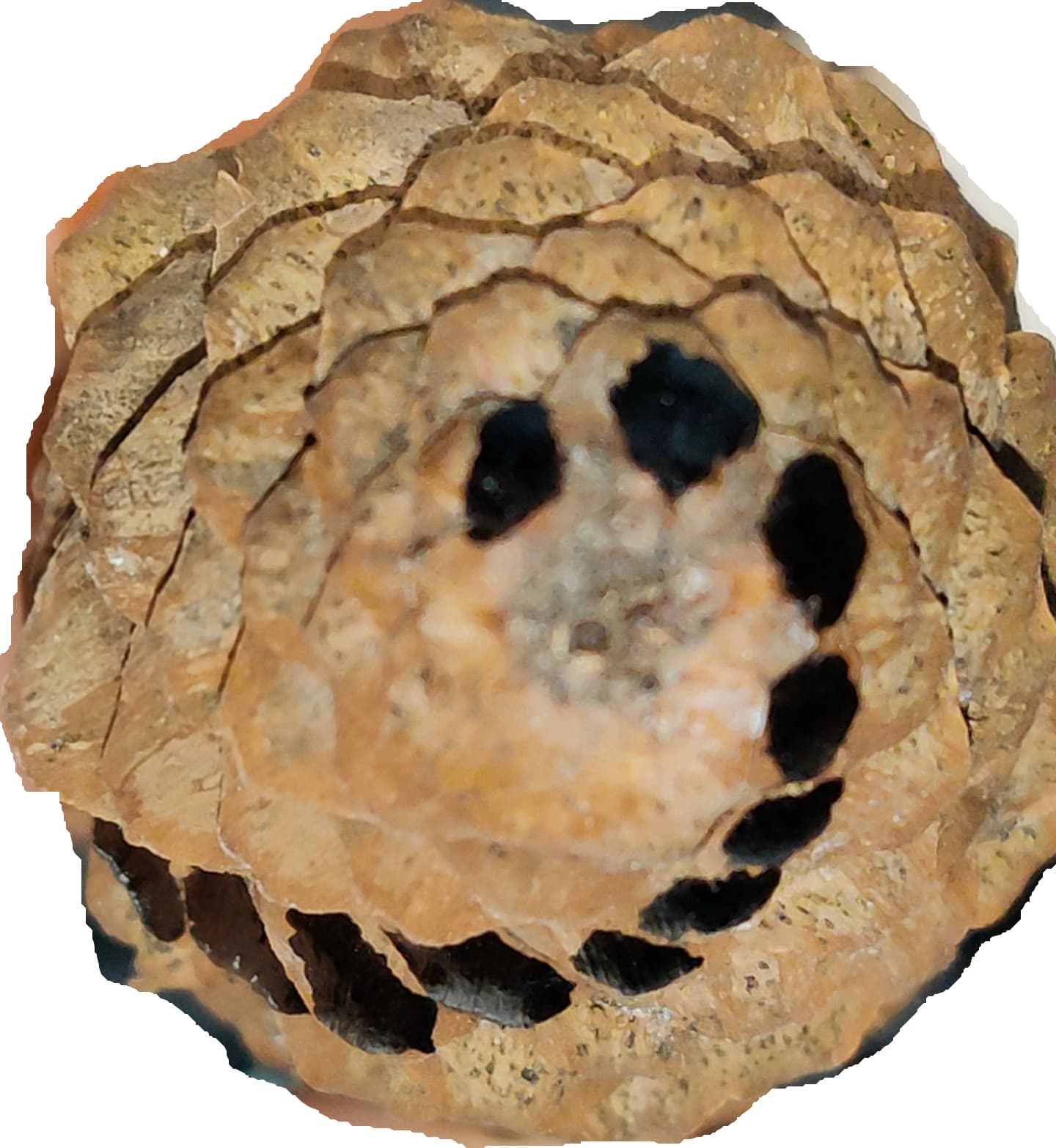
Even the name came from someone else entirely. It wasn't until the 19th century that number theorist Édouard Lucas coined the term 'Fibonacci sequence,' more than 600 years after Fibonacci's book and some two thousand years after Pingala's original insight. Today the numbers turn up far beyond poetry and rabbits, from the spiral arrangement of a pine cone's bracts to computer science data structures like the Fibonacci heap, and they're closely tied to the golden ratio, since dividing consecutive Fibonacci numbers gets closer and closer to it as the numbers grow.
Quiz me
0/3
Recap
Fibonacci popularized the sequence in Europe with a rabbit puzzle, but neither discovered it nor named it himself.
Surprising fact · Indian scholars described the sequence via Sanskrit poetry over a thousand years before Fibonacci's 1202 book, and even the name 'Fibonacci sequence' was coined by someone else centuries later.
Sources (1)
No source, no claim. Every fact in this lesson (16 claims) cites at least one of these.