Why do humpback whales sing?
A navy engineer listening for Soviet submarines heard something else: whales singing songs that change every year and never repeat.
▶ Start the storyHonestly, nobody knows for sure, and that's part of what makes humpback song so fascinating. The popular idea is that males sing to impress females, advertising how fit they are. But that explanation has been challenged. Females don't seem to approach a lone singer, though they may be drawn to gatherings of singing males, a bit like birds that display in groups. And a 2023 study found something odd: as humpback numbers recovered from whaling, singing became less common.
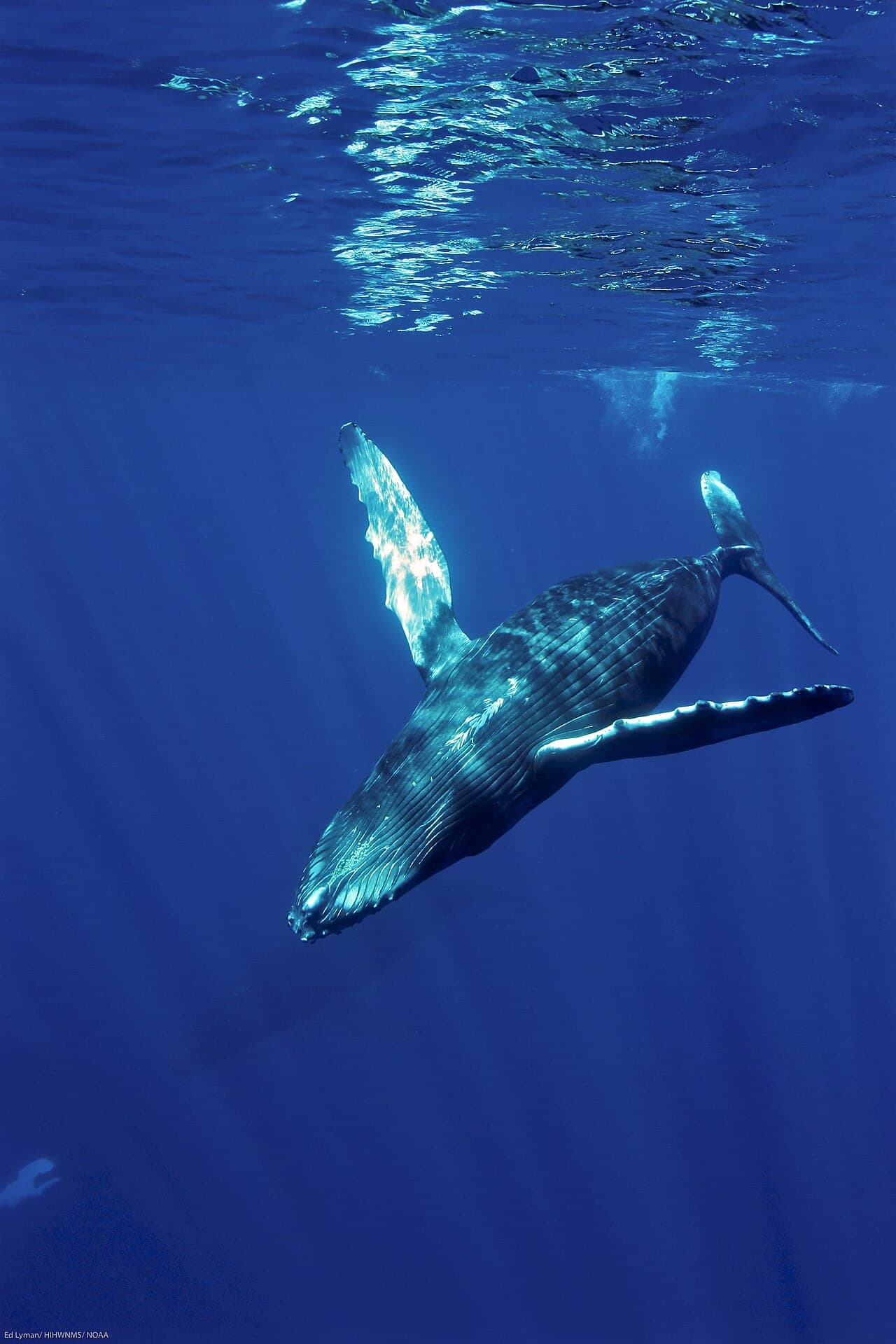
What we do know is that the songs are extraordinary. They are built like Russian dolls. Short sounds, or units, form sub-phrases, which form phrases. A phrase repeated for two to four minutes is a theme, and a set of themes makes a song that can last around 30 minutes, repeated for hours or even days. That nesting is closer to the complexity of human language than bird song, which only runs in a line.
Stranger still, all the whales in an area sing virtually the same song, and that song keeps slowly changing. An analysis of 19 years of recordings found the same combination never came back. Songs can even spread from one population to the next, like a hit crossing borders.
We owe all this to a Cold War accident. Frank Watlington, listening for Russian submarines with underwater microphones off Bermuda, recorded eerie sounds and passed them to researchers Katy and Roger Payne. Their 1970 album, Songs of the Humpback Whale, helped launch the worldwide "Save The Whales" movement.
Quiz me
0/3
Recap
Units make phrases, phrases make themes, themes make songs, and the whole region keeps rewriting the song together.
Surprising fact · As humpback numbers recovered from whaling, singing became less common, according to a 2023 study.
Connects to
- 💿 What message did we send to aliens on the Voyager Golden Record?
- Humpback whale
- Cultural transmission in animals
- Zipfs law
Sources (3)
No source, no claim. Every fact in this lesson (16 claims) cites at least one of these.