Why would evolution produce animals that sacrifice themselves for others?
A geneticist once joked that he would willingly die for two brothers or eight cousins. The joke turned out to be real math.
▶ Start the storyBecause a gene can spread by helping copies of itself in other bodies. Relatives share many genes. So a behaviour that costs an animal dearly, but helps enough of its kin, can still be favoured by natural selection. Biologists call this kin selection.
The geneticist J.B.S. Haldane famously joked that he would willingly die for two brothers or eight cousins. The numbers aren't random. A brother shares, on average, half of your genes by descent. A cousin shares one-eighth. So two brothers, or eight cousins, carry about as many copies of your genes as you do.
In 1964, W.D. Hamilton turned the joke into a rule. A costly act of help spreads when r × B > C. That is: the relatedness between helper and helped (r), times the benefit to the one helped (B), must be greater than the cost to the helper (C). The maths was dense. Two reviewers passed over his paper, and the third didn't fully understand it either. Once published, it was largely ignored. Today it is in biology textbooks.
The rule has passed a neat test. In Yukon, Canada, wild red squirrel mothers sometimes adopt orphaned pups. In a 2010 study, they always adopted when r × B was greater than C, and never when it was smaller.
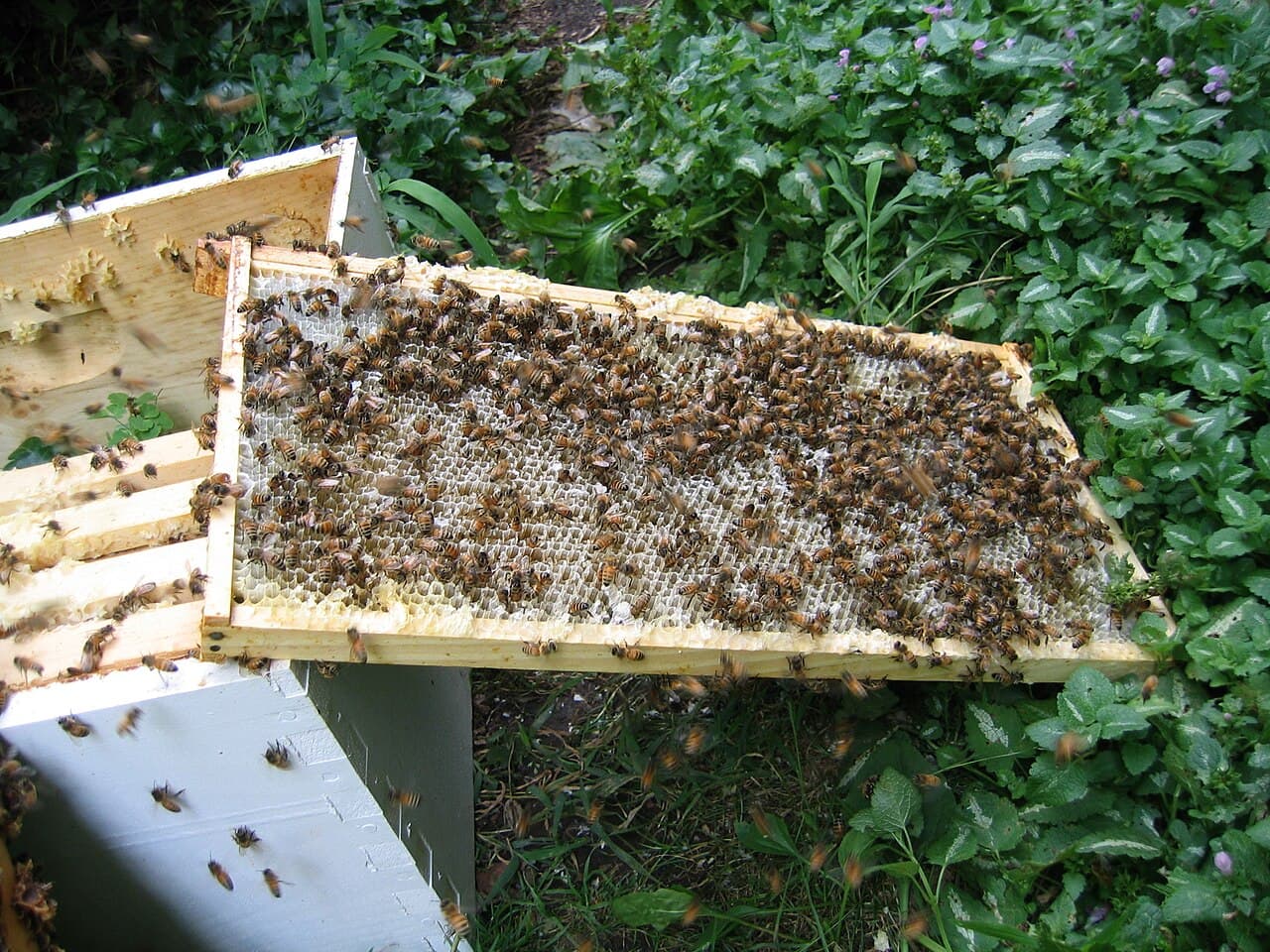
Darwin had already been puzzled by sterile worker bees, which leave all breeding to their mother. Hamilton pointed to the odd way bees, ants and wasps determine sex. It makes females more closely related to their sisters than to their own potential offspring. Helping raise sisters can then pass on more of a worker's genes. It's a plausible explanation, though it has never been shown directly, and rival explanations exist.
Quiz me
0/3
Recap
Hamilton's rule: a costly act of help should evolve when relatedness times the benefit to the relative exceeds the cost to the helper.
Surprising fact · In a 2010 study, wild red squirrels adopted orphaned pups whenever Hamilton's rule said they should, and never when it said they shouldn't.
Sources (2)
No source, no claim. Every fact in this lesson (19 claims) cites at least one of these.