Why do fireflies glow, and why do some use it to lie?
Fireflies flash coded love letters in the dark. One kind of female copies another species' code to lure the males in and eat them.
▶ Start the storyFireflies glow to talk: adult males flash a pattern in the dark, and females of the same species flash back. The light comes from a chemical reaction in their bodies. A molecule called luciferin is oxidized by an enzyme called luciferase, and the energy comes out as light instead of heat. It is a "cold light", with no infrared at all.
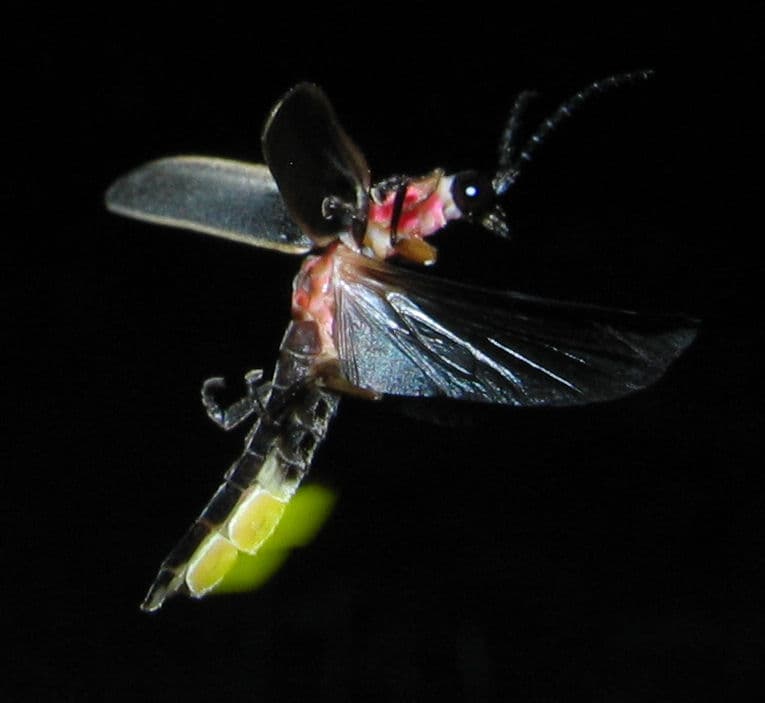
The glow probably did not start as romance. All firefly larvae glow, and most fireflies taste horrible to predators, thanks to toxins similar to those of some poisonous toads. So the first glow was likely a warning sign: don't eat me. Later, adults borrowed that light for courtship, and each species evolved its own code of flashes.
Then came the liars. Females of the genus Photuris copy the flash reply of a different firefly, Photinus. A Photinus male sees what looks like an interested female of his own kind, flies down, and gets eaten. The same light that began as an honest warning became a love letter, and then a trap.
Fireflies are far from alone. Light-making has evolved independently dozens of times, in sea creatures, fungi and bacteria, and the firefly's luciferase is now a tool in genetic research.
Quiz me
0/3
Recap
The firefly's cold light likely began as a warning, became a love signal, and was then hijacked as a trap.
Surprising fact · Some female fireflies fake another species' mating signal to catch and eat its males.
Sources (2)
No source, no claim. Every fact in this lesson (19 claims) cites at least one of these.