Why did engineers cut two ancient temples into 1,036 pieces?
A dam was about to drown two temples carved for Ramesses II more than 3,200 years ago, so workers sawed them apart and rebuilt them on higher ground.
▶ Start the storyWorkers cut Egypt's Abu Simbel temples into 1,036 pieces because the Aswan High Dam, finished in 1970, was about to flood the valley where the 3,200-year-old monuments stood. The dam held back the Nile to control flooding, store irrigation water, and generate electricity, but the reservoir it created, Lake Nasser, would raise the water level at Abu Simbel by up to 60 metres and ruin the sandstone the temples were carved from.
Taming the Nile at Aswan was an old dream. In the 11th century, a Fatimid Caliph summoned the scholar Ibn al-Haytham to regulate the river's floods with an early dam; once his fieldwork convinced him the scheme was impractical, he feigned madness, fearing the Caliph's anger.
For Abu Simbel, engineers argued over several rescue plans. One, based on an idea by the Irish film producer William MacQuitty, would have kept the temples in place inside a dam of crystal-clear water at the same level as the Nile, but sandstone is porous and would have crumbled anyway. A French team proposed an $82 million concrete dam around the site; an Italian team proposed jacking the temples up in one piece, though the Great Temple alone was estimated to weigh 250,000 tons. A Swedish firm's backup idea won instead: carefully saw each temple into blocks, move them, and reassemble them higher up, for about half the cost.
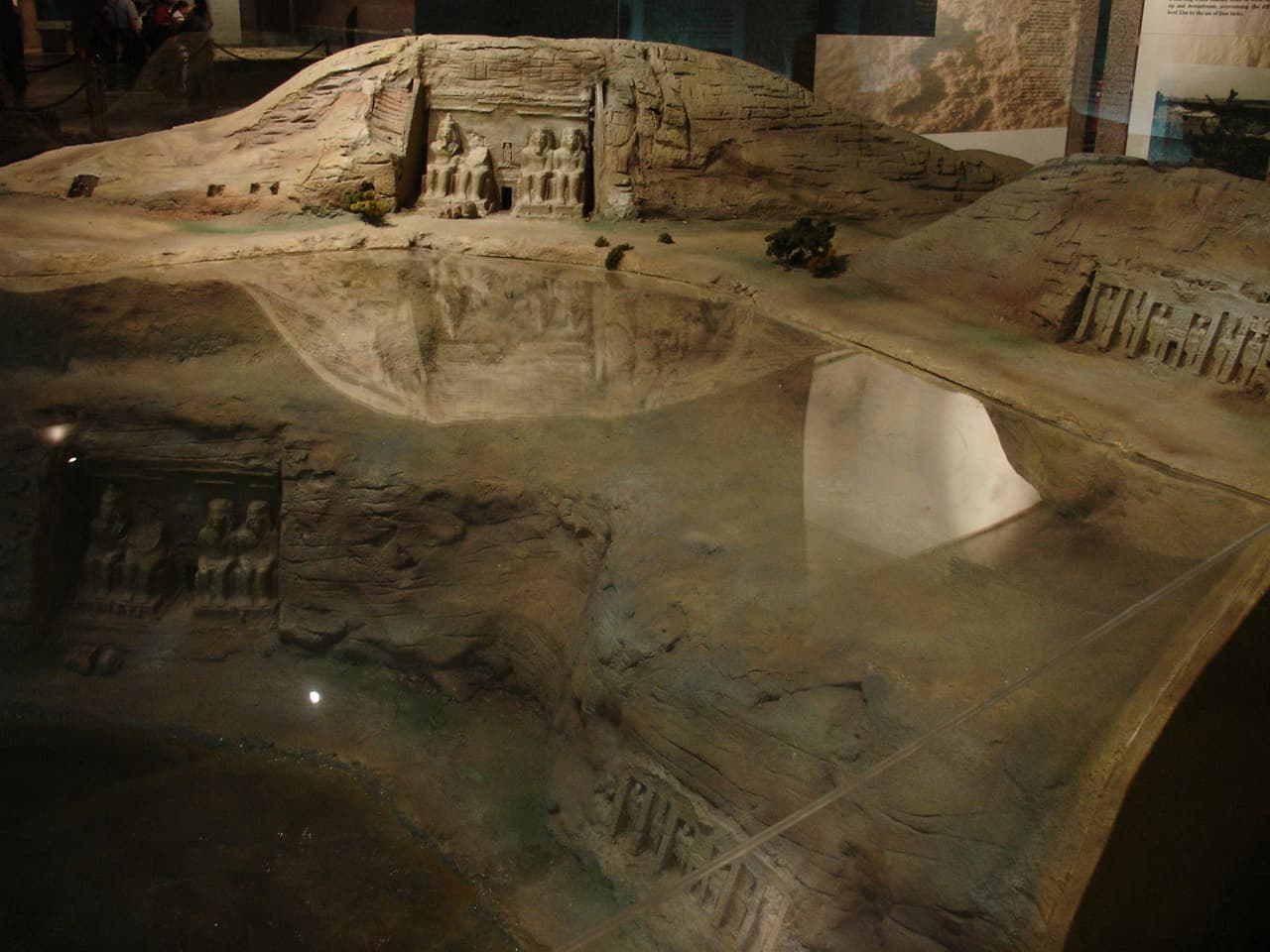
Between late 1965 and April 1966, workers used mostly handsaws, some with diamond-tipped teeth, to cut the temples into 1,036 blocks, the smallest weighing seven tons, finishing two weeks ahead of schedule. The pieces were rebuilt about 200 metres further inland and 65 metres higher, positioned so precisely that the rising sun still lights the inner sanctum on the same two days of the year as before, accurate to five millimetres.
The flooding also displaced the Nubian people whose homeland lay along that stretch of the Nile: 100,000 to 120,000 people were resettled in Sudan and Egypt, and Egypt only began compensating them for their lost homes in 2019 and 2020.
Quiz me
0/3
Recap
When a dam threatened to drown Abu Simbel, engineers cut it into 1,036 blocks and rebuilt it 65 metres higher instead of losing it.
Surprising fact · The rebuilt temple still catches the sun in its inner sanctum on the same two days each year, accurate to five millimetres.
Sources (2)
No source, no claim. Every fact in this lesson (25 claims) cites at least one of these.