Why does a violin have an unglued stick inside called its 'soul'?
Inside every violin stands a little wooden post held by nothing but pressure. Move it half a millimetre and the instrument sounds different.
▶ Start the storyThe 'soul' is the sound post, a small wooden dowel standing upright inside the violin, under the treble foot of the bridge, between the top and the back. It is not glued: the pressure of the top, pushed down by the tension of the strings, wedges it in place. It does two jobs at once. It props up the thin arched top, which is otherwise unsupported in the middle, and it carries vibrations from the top plate to the back, changing the way both plates vibrate and therefore the tone. In French it is called the âme and in Italian the anima, both meaning soul.
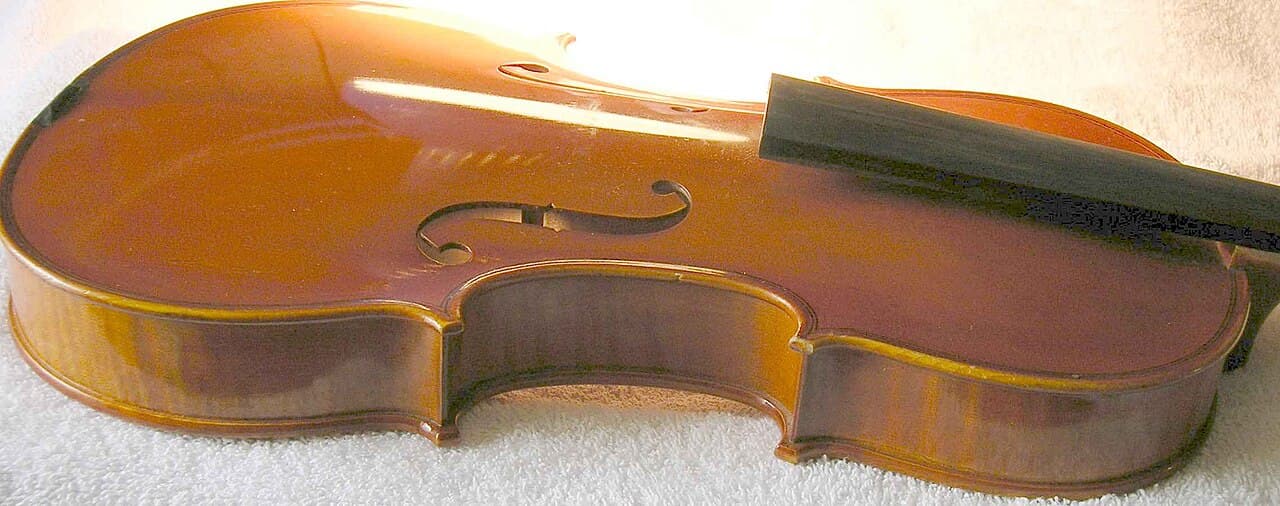
It earns the name because it is so sensitive. Moving it by as little as a quarter or half a millimetre can noticeably change a violin's sound and loudness. Towards the fingerboard, the instrument tends to get more brilliant and louder; towards the tailpiece, quieter and richer. Luthiers call the adjustment as much art as science, and they do it from outside the instrument: they spear the post on a pointed tool, slip it in through the right-hand f-hole, and nudge it into place from outside. Not everyone is convinced, though: some acousticians doubt that millimetre placement matters so much.
There is a twist for lovers of old violins. Because strings got heavier over the centuries, old instruments hardly ever keep their maker's original sound post or bridge. A Stradivari's soul has usually been replaced.
Quiz me
0/3
Recap
Bow makes the string vibrate, the bridge passes it to the top, and the sound post links top to back: small post, big voice.
Surprising fact · Shifting it by 0.25 to 0.5 mm can noticeably change the sound, and old violins rarely keep their original sound post.
Connects to
Sources (4)
No source, no claim. Every fact in this lesson (17 claims) cites at least one of these.