Who were the Neanderthals, and did we interbreed with them?
A 19th-century pathologist decided the first Neanderthal bones came from a sick, ageing modern man. A century and a half later, DNA showed Neanderthals were a people of their own, and part of many of us.
▶ Start the storyNeanderthals were another kind of human, not our ancestors in a straight line but cousins. They lived across Europe and western and central Asia during the Ice Age. They vanished roughly 40,000 years ago, soon after modern humans arrived. And yes, we interbred with them.
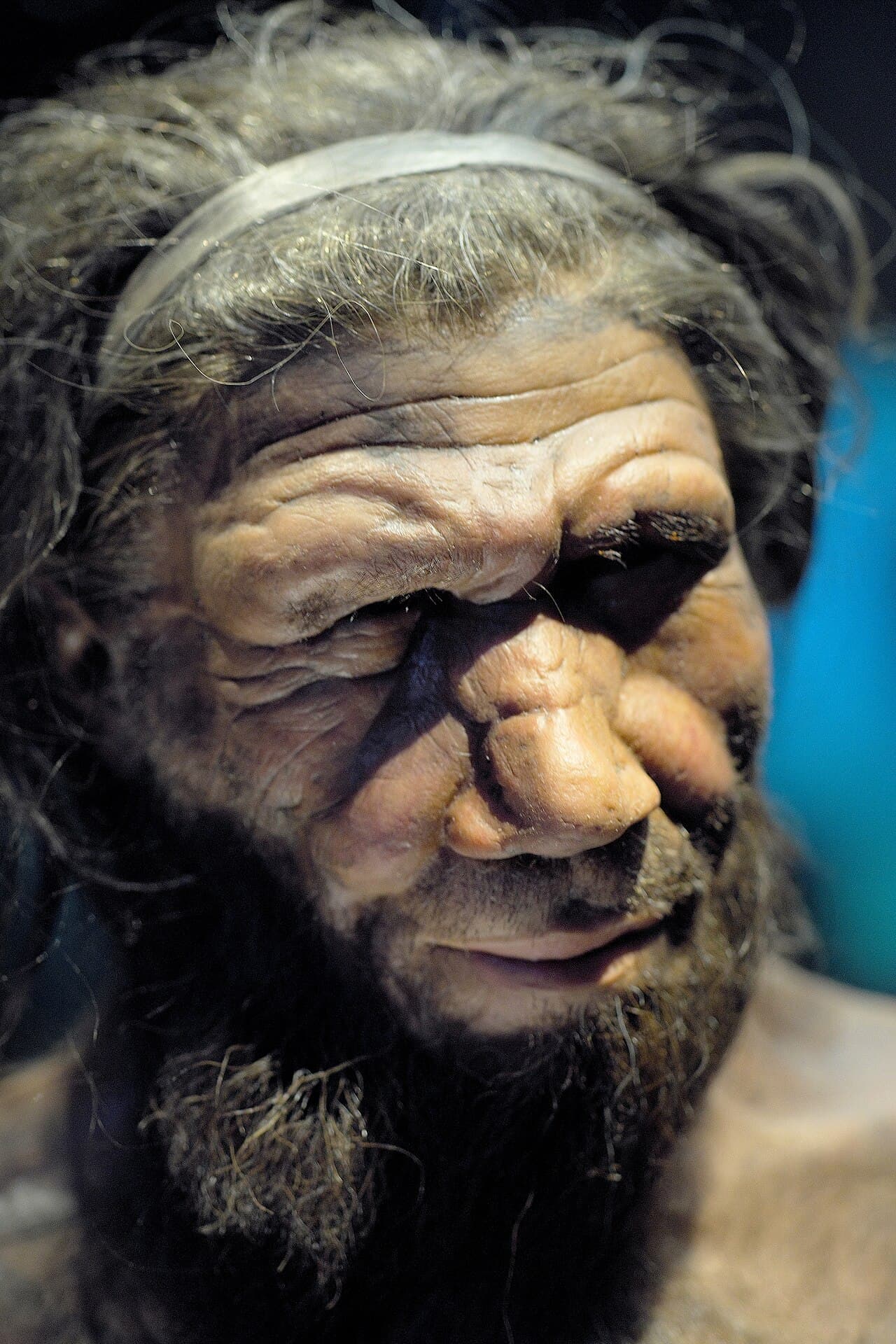
The first known fossil came from Germany's Neander Valley in 1856. The pathologist Rudolf Virchow judged the bones to be a sick, ageing modern man. His view held back research for decades. Later, scientists cast Neanderthals as a crude early stage on the way to us.
The DNA settled the question. In 2010, the Neanderthal genome was sequenced. It showed that Neanderthals and modern humans had children together. People with ancestry outside Africa carry about 1 to 4 percent Neanderthal DNA. Studies disagree on the exact share; around 2 percent is a common estimate. Across all living people, about a fifth of the Neanderthal genome survives in scattered pieces.
1–4%
They were not dim brutes either. Their brains were, on average, larger than ours. They made Mousterian stone tools, probably wore simple clothing and buried their dead. They kept fires, and may have lit them.
Why did they disappear? Nobody knows for sure. Competition with modern humans, who had more babies and better technology, is the leading idea. Neanderthal groups were also small and inbred, which made them fragile. Some may simply have merged into modern human groups.
Outcompeted
- Modern humans had higher birth rates and population
- Better long-distance mobility
- More complex technology and subsistence strategies
Small and fragile
- Small, isolated populations
- Inbreeding left them fragile
- Some may have merged into modern human groups
Quiz me
0/3
Recap
Neanderthals didn't simply vanish before us; in a small but real sense, they live on inside us.
Surprising fact · People with ancestry outside Africa carry roughly 1 to 4 percent Neanderthal DNA, direct evidence of interbreeding.
Sources (2)
No source, no claim. Every fact in this lesson (17 claims) cites at least one of these.