What makes a belief system 'animist'?
A 19th-century scholar coined the word from a biological theory about why bodies get sick, then used it to describe something he thought every religion on Earth started out as.
▶ Start the storyA belief system counts as animist when it holds that spirits or souls aren't limited to humans: that rivers, mountains, plants, animals, and sometimes even words or names carry a kind of life and will of their own, with no hard line separating the spiritual world from the physical one. Water sprites, tree spirits, and vegetation deities are classic examples. A 2016 comparative study even suggested animism was the oldest religious belief of all, present in the most recent common ancestor of hunter-gatherer groups, later shaping how humans imagined unseen forces and spiritual beings generally.
The word itself has an oddly roundabout history. The anthropologist Edward Tylor wanted a name for this worldview in the late 19th century and first considered 'spiritualism,' but that word was already taken by a popular Western religious movement of his day. Instead he borrowed 'animism' from a German scientist named Georg Ernst Stahl, who had coined 'animismus' back in 1708, not for a religion at all, but for a biological theory that the soul was the vital force behind life and disease. The root is the Latin anima, 'breath', 'spirit' or 'life', and Tylor gave the word a new job.
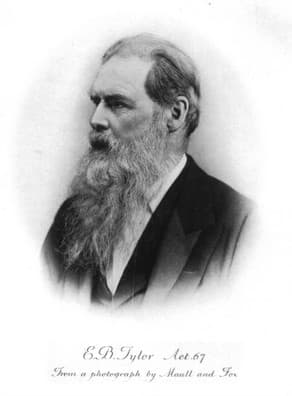
In his 1871 book Primitive Culture, Tylor defined animism as 'the general doctrine of souls and other spiritual beings in general.' He believed it was humanity's very first religion, something that arose rationally enough from early humans trying to make sense of their dreams and visions, but which he still considered, at bottom, a basic error, the first stage of a path he expected to end with humanity abandoning religion for scientific rationality.
Later scholars have challenged this picture. Archaeologist Timothy Insoll called the whole idea of one single 'primitive religion' that every culture passed through unsophisticated and erroneous, arguing that it strips away the real complexity present in every religion, animist or not. Critics have also noted that the 'old animism' assumed animist peoples couldn't tell the difference between a person and a thing, and have accused it of preserving 'colonialist and dualistic worldviews and rhetoric'.
Quiz me
0/3
Recap
If a belief system treats a river, a tree or a mountain as having its own spirit or will, anthropologists call that animism.
Surprising fact · The word 'animism' was borrowed from a 1708 biological theory about disease, not invented for religion at all.
Sources (1)
No source, no claim. Every fact in this lesson (12 claims) cites at least one of these.