Could the victors fairly judge the leaders they'd defeated?
No law had ever made a person criminally responsible for starting a war, until this court. One of the men it sentenced was still in prison 41 years later.
▶ Start the storyPartly. At Nuremberg the victors gave Nazi Germany's leaders a real trial, with evidence, defense lawyers and even acquittals. But only the defeated side was judged, and that criticism has never gone away. After the war, the Allies disagreed about what to do. The Soviet Union wanted a show trial. Britain preferred summary executions. In mid-1945, France, the Soviet Union, Britain and the United States agreed instead on a joint international tribunal in Nuremberg.
From November 1945 to October 1946, it tried 22 leading Nazis and six organizations. Some charges were new. Planning and waging a war of aggression became "the supreme international crime," although no law had made individuals criminally responsible for aggression before. "Crimes against humanity" covered the murder, extermination, enslavement and deportation of civilians, and the Holocaust was a major focus. Those charges held up best: only two defendants charged with them were acquitted.
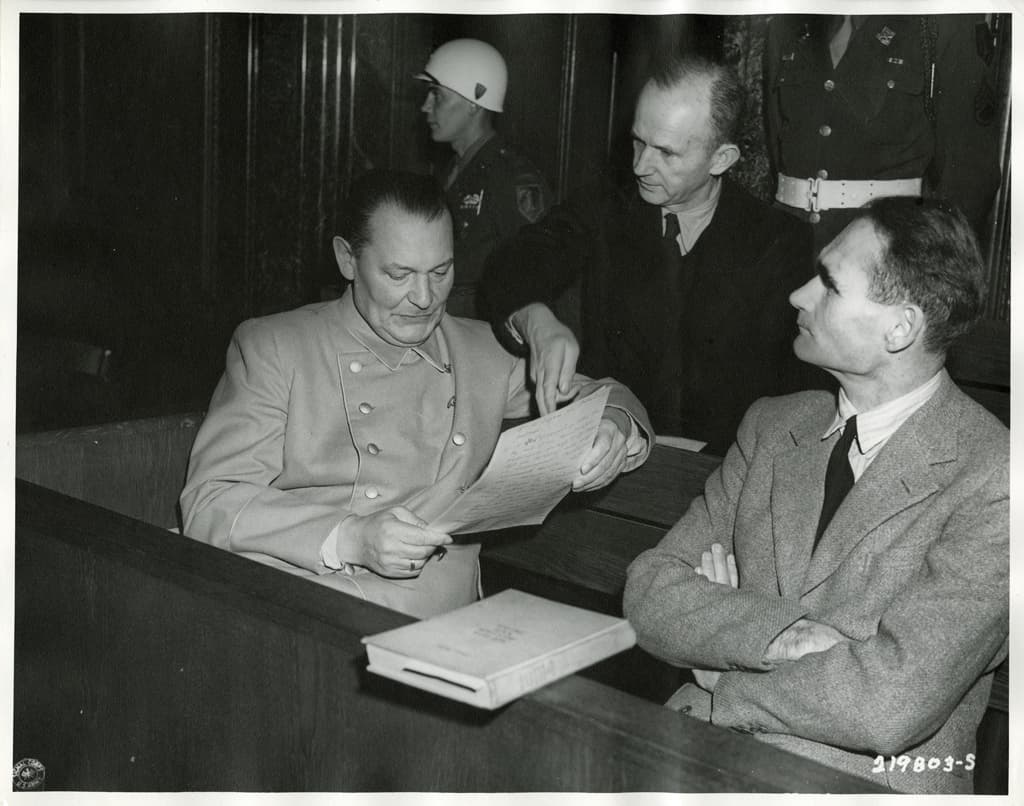
Twelve defendants were sentenced to death. Ten were hanged on 16 October 1946; Hermann Göring killed himself the day before. Seven went to prison, and three were acquitted, to observers' surprise. In 1946, 78 percent of Germans called the trial fair. Four years later only 38 percent did, as more came to see it as "victor's justice."
12 of 22
The critics had a point. Allied actions, such as the Soviet pact with Nazi Germany and the expulsion of millions of Germans from Central and Eastern Europe, would have counted as crimes under the tribunal's own charter, yet were never tried. Later, as the Cold War set in, the United States released early most of the men convicted in its follow-up trials at Nuremberg. Still, the principle that individuals can be held responsible for violating international law is seen as the true beginning of international criminal law.
Quiz me
0/3
Recap
The court invented a new crime, 'crimes against peace,' to prosecute aggression itself, but never judged any Allied power's own wartime conduct by the same standard.
Surprising fact · German public opinion on the trial's fairness fell from 78 percent in 1946 to 38 percent four years later, and most men convicted in the later US-run Nuremberg trials were released early.
Connects to
- ☢️ Why did the US drop atomic bombs on two Japanese cities instead of one?
- 🏚️ How did a 90-minute meeting make Germany's ministries partners in the Holocaust?
- ⚖️ Can a world court actually force a country to obey its ruling?
- 🕊️ How did a declaration that isn't a law become the world's most translated document?
Sources (1)
No source, no claim. Every fact in this lesson (19 claims) cites at least one of these.