Would a scientist who knows everything about colour learn anything by seeing red?
Frank Jackson invented a famous argument that the mind is more than physics, then, decades later, announced he no longer accepted it.
▶ Start the storyPhilosophers still disagree, and the man who posed the question changed his own answer. In 1982, Frank Jackson imagined Mary, a brilliant scientist who has lived her whole life in a black-and-white room, studying the world through a black-and-white screen. She specializes in the science of vision and knows every physical fact about what happens when we see ripe tomatoes or a blue sky. Then one day she walks out and sees a red tomato for the first time.
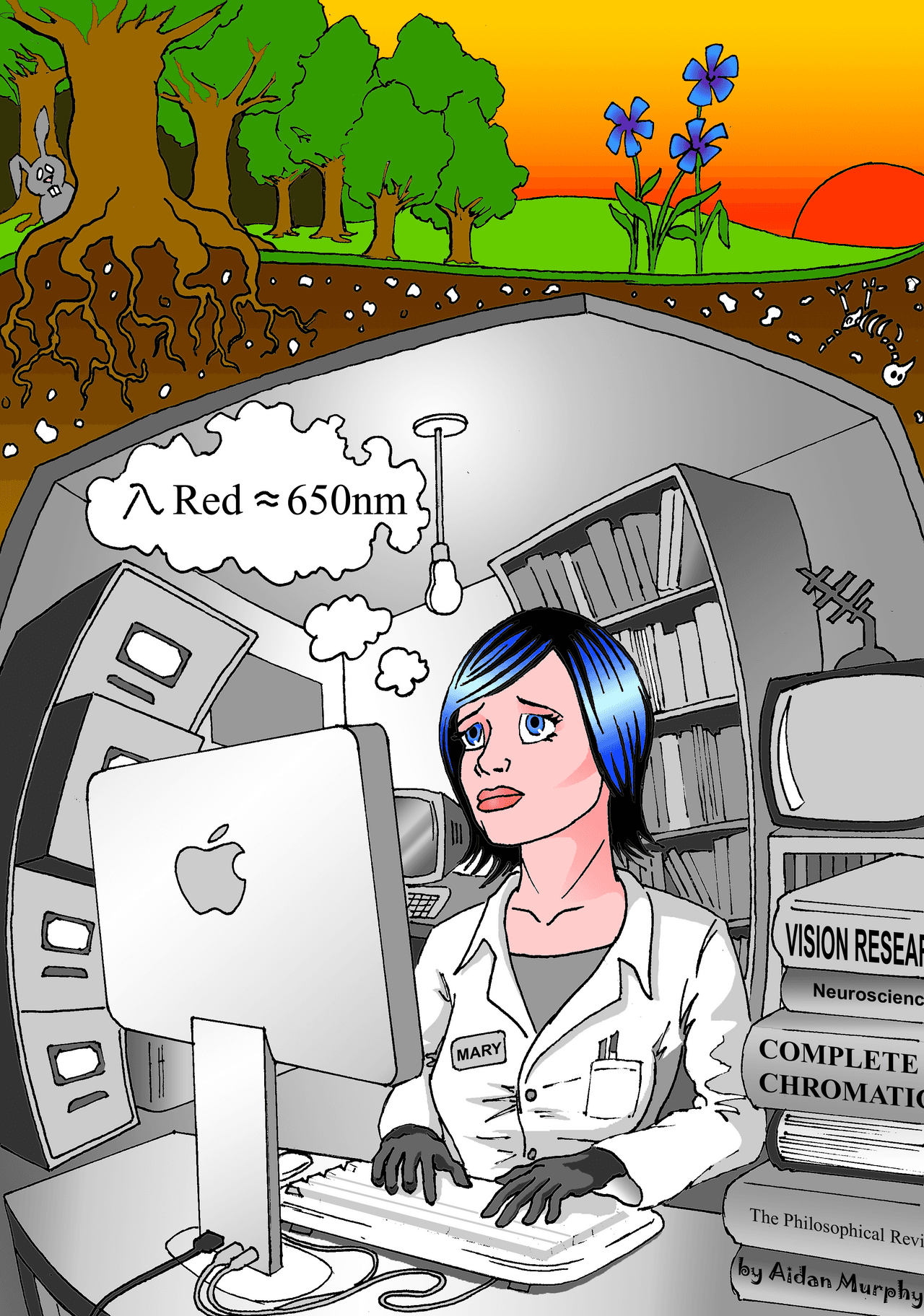
Does she learn something new? Jackson thought it seemed just obvious that she does: she learns what seeing red is actually like. And if Mary already had all the physical facts but still learned something, then physical facts aren't all the facts. That was the point: an argument against physicalism, the view that everything, including the mind, is physical.
Critics pushed back hard. Some say Mary gains no new fact, only a new ability, like being able to imagine or recognise red. Daniel Dennett argued that if Mary truly knew everything about colour, she'd already know exactly what to expect.
The twist is Jackson himself. He eventually became a physicalist, and in 2023 said, "I no longer accept the argument", while insisting physicalists still need to take it seriously. His Mary, meanwhile, is still at the centre of the debate.
Yes (Jackson, 1982)
- She learns what seeing red is like
- So physical facts aren't all the facts
- Qualia exist
Not a new fact (critics)
- She gains an ability or acquaintance (Lewis, Nemirow, Conee)
- Or she already knew what to expect (Dennett)
- Physicalism survives
Quiz me
0/3
Recap
Knowing everything about red versus seeing red: whether that gap is a new fact is the whole debate.
Surprising fact · The argument's author later abandoned it, though he says physicalists must still take it seriously.
Sources (2)
No source, no claim. Every fact in this lesson (16 claims) cites at least one of these.